The Trainee
- 3
- 0
Hi!
I've been reading this forum for a few days now and I'm impressed by how the questions are answered.Short,simple and easy to understand.
So I thought I could get a good answer to my question here.
One day,I was talking with someone who studied mechanical engineering.I told him that my passion is cars and that I'm going to study mechanical engineering too.
So he decided to "test" my knowledge.He showed me an engine performance graph like this one:
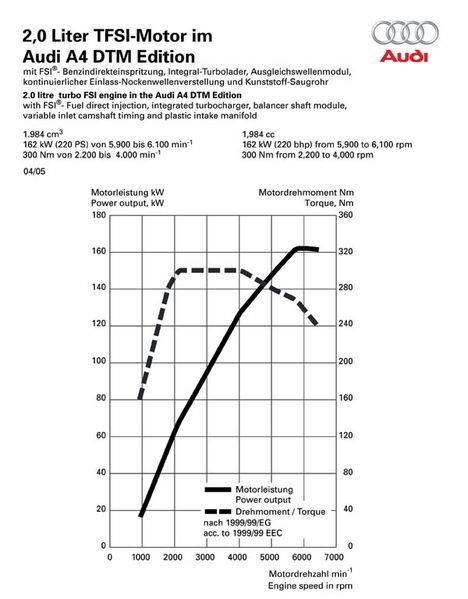
As you can see,this engine has its maximum torque at 4000 rpm and peak horsepower at (more or less) 5800 rpm.
His question was:
Why does the power increases after 4000 rpm eventhough the torque decreases?
I answered that it was easy. Power = RPM*Torque,so even if the engine has less torque after 4000 rpm,it still has more power because of the rpms.
And then the shock: he said I was wrong
He said,it has something to do with the flywheel.He even said that some engines have a lot of torque because of their heavy flywheel and that race engines don't have a lot of torque because those engines have a very light flywheel.
I said,it was non-sense.He got a bit angry and asked me other questions to prove that I know nothing about this stuff and kept saying that HE was the engineer and I was a simple trainee.I couldn't answer any of his questions because I was literally in shock because I thought I knew this kind of stuff for years and all of a sudden someone tells me I was wrong the whole time.
So what do you guys think? Who's right and who's wrong?
Mathematical formulas are very welcome!
Sorry for the long post...I hope I was clear enough.
Thanks
I've been reading this forum for a few days now and I'm impressed by how the questions are answered.Short,simple and easy to understand.
So I thought I could get a good answer to my question here.
One day,I was talking with someone who studied mechanical engineering.I told him that my passion is cars and that I'm going to study mechanical engineering too.
So he decided to "test" my knowledge.He showed me an engine performance graph like this one:
As you can see,this engine has its maximum torque at 4000 rpm and peak horsepower at (more or less) 5800 rpm.
His question was:
Why does the power increases after 4000 rpm eventhough the torque decreases?
I answered that it was easy. Power = RPM*Torque,so even if the engine has less torque after 4000 rpm,it still has more power because of the rpms.
And then the shock: he said I was wrong
He said,it has something to do with the flywheel.He even said that some engines have a lot of torque because of their heavy flywheel and that race engines don't have a lot of torque because those engines have a very light flywheel.
I said,it was non-sense.He got a bit angry and asked me other questions to prove that I know nothing about this stuff and kept saying that HE was the engineer and I was a simple trainee.I couldn't answer any of his questions because I was literally in shock because I thought I knew this kind of stuff for years and all of a sudden someone tells me I was wrong the whole time.
So what do you guys think? Who's right and who's wrong?
Mathematical formulas are very welcome!
Sorry for the long post...I hope I was clear enough.
Thanks