Discussion Overview
The discussion revolves around the pricing of gasoline, the implications of gas station pricing strategies, and personal transportation choices in relation to fuel costs. Participants share their experiences with gas prices, public transport, cycling, and the historical context of pricing conventions like the 9/10 cent notation.
Discussion Character
- Exploratory
- Debate/contested
- Conceptual clarification
Main Points Raised
- Some participants express confusion about the meaning of the 9/10 cent pricing and its implications for fuel costs.
- Others provide context about the historical significance of the 9/10 cent pricing, noting its origins in the 1930s and its psychological impact on consumers.
- Participants discuss their personal experiences with gas prices, with some noting recent increases and others mentioning lower prices in their regions.
- There are mentions of alternative transportation methods, such as public transport and cycling, with participants sharing their preferences and experiences related to these modes of travel.
- Some participants highlight the challenges of cycling in winter conditions, expressing a preference for walking in snow over cycling or driving.
Areas of Agreement / Disagreement
Participants do not reach a consensus on the implications of gas pricing strategies or the best modes of transportation. Multiple competing views on the significance of the 9/10 cent pricing and personal transportation choices remain present throughout the discussion.
Contextual Notes
There are unresolved assumptions regarding the impact of fuel prices on transportation choices and the psychological effects of pricing strategies on consumer behavior. The discussion includes varying regional experiences with gas prices and transportation options.
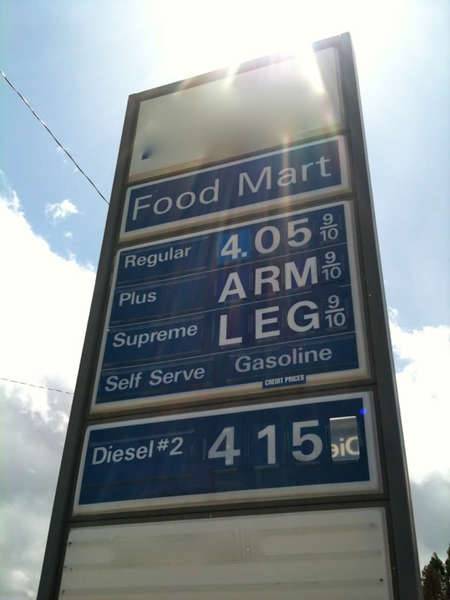
 I wish fuel was that cheap here![/color]
 I got rid of my last car when it became too expensive and public transport started to look comparatively cheaper.
 We've moved down about a thousand feet in elevation so the snow accumulation in the winter season is next to nothing. I don't mind riding in cold weather (I just bundle-up), but I won't ride in the snow! People are just too careless with their driving.