Russ Edmonds
- 18
- 14
- TL;DR
- Lichtenberg Figures
The top two figures that look like fireworks are from positive discharges and the bottom five are from negative discharges. An aluminum cigar tube was placed open end down on the plastic and a charged pie tin was brought near the cigar tube until a spark discharge occurred. The cigar tube was then removed and the plastic was dusted with baking power. The pie tin had an insulating handle and was charged with a Van de Graaff generator (VDG).
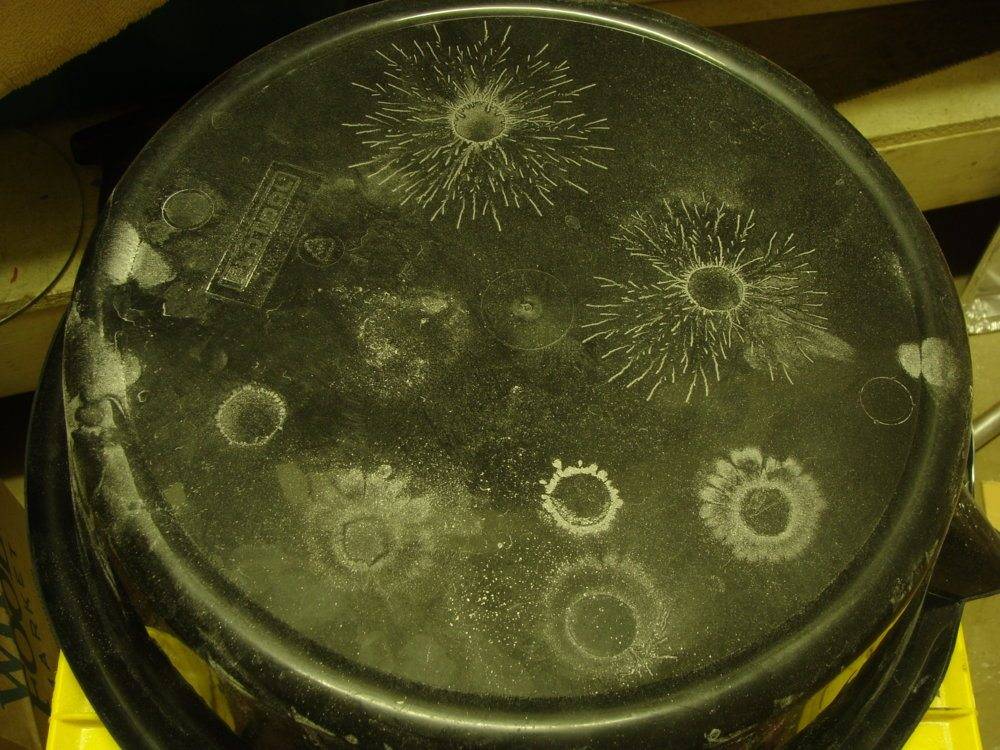
This is almost exactly how G. C. Lichtenberg did it in 1777 only, he used and electrophorus for charging, different powders for dusting and gum-lac, resin for the plastic surface.
A 2 nF salt water cap was used for next photos and it was discharged through the same cigar tube placed on 2 mm thick acrylic sheet. I started grounding the cigar tube before I pick it up and discovered that this grounding was causing a smaller second discharge of opposite polarity to the first.
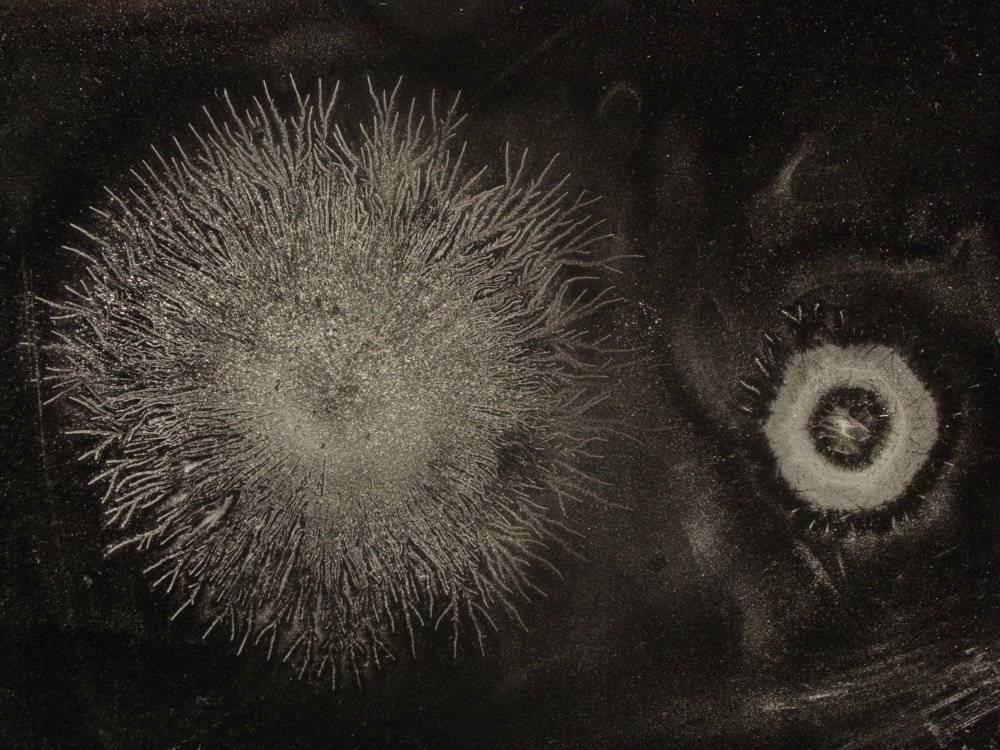
These next two photos are without grounding the cigar tube before removal. Positive on the left and negative on the right.
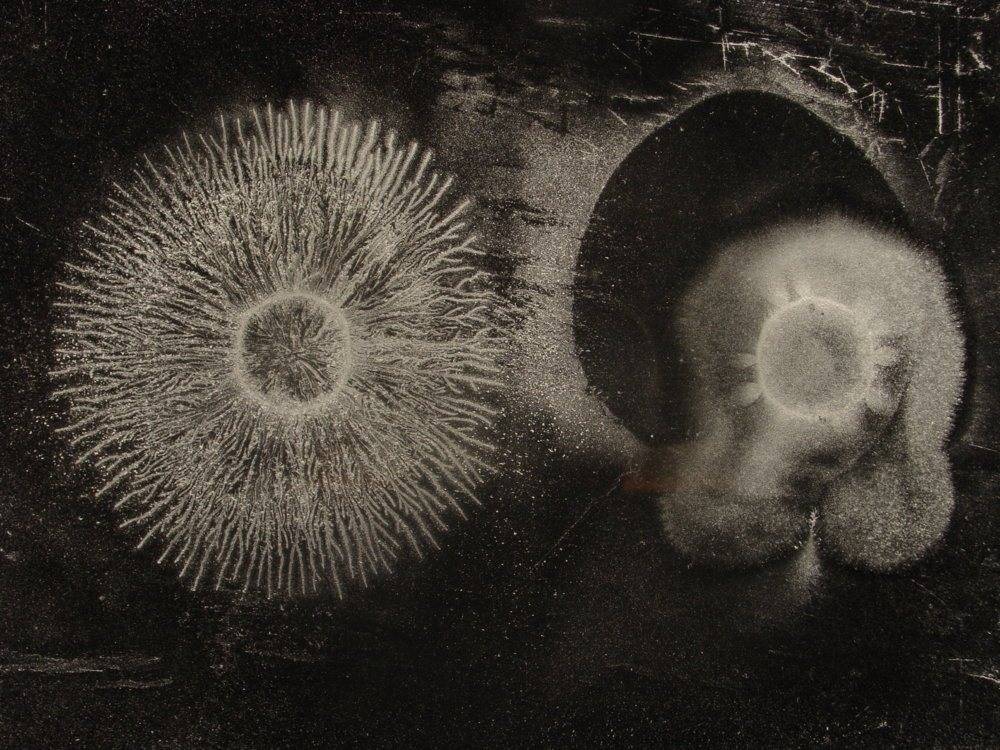
This photo is with grounding the cigar tube before removal causing a secondary discharge of opposite polarity to the first.
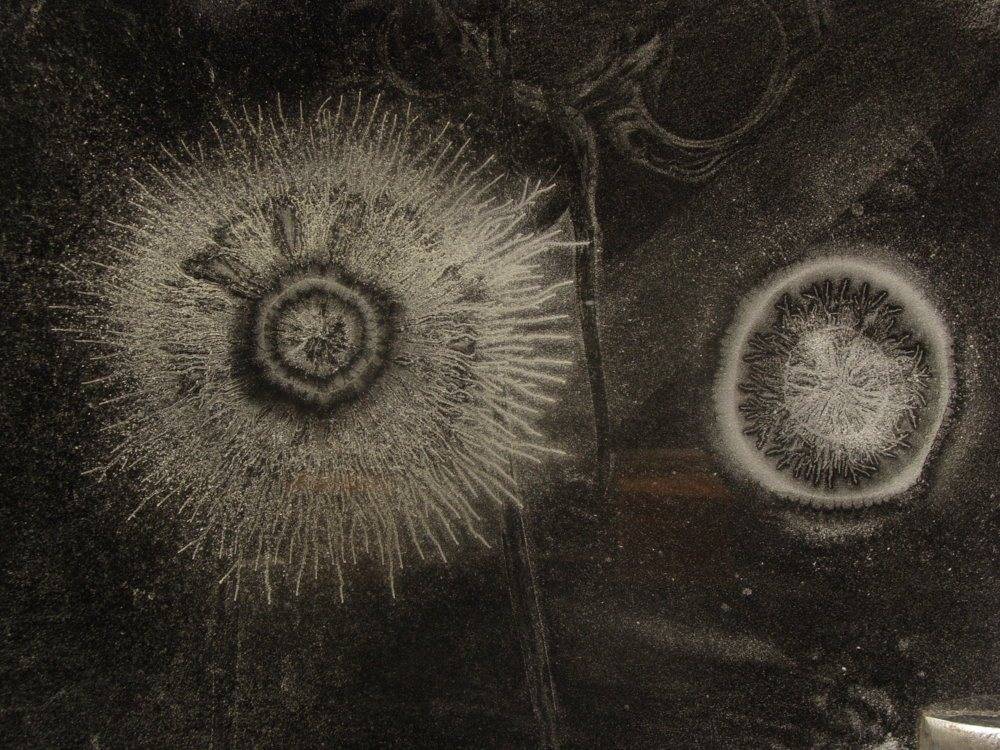
The small inner ring of the positive discharge is the second negative discharge. The negative discharge on the right, has an inner positive discharge that is almost as large as it is. This is because positive figures are much larger than negative for the same voltage.
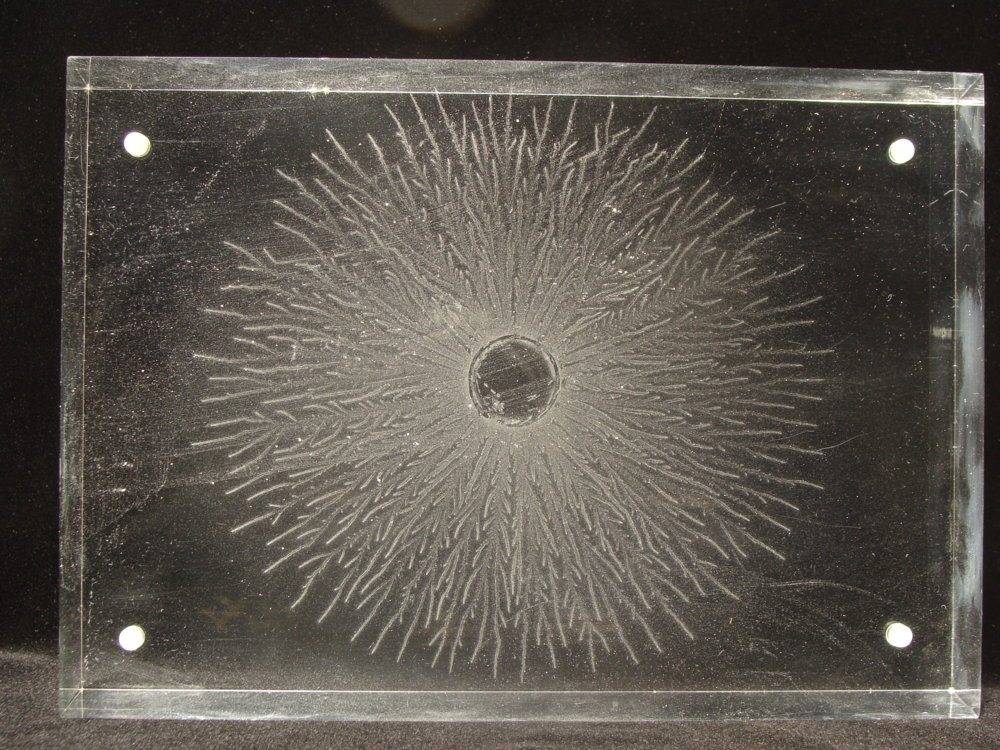
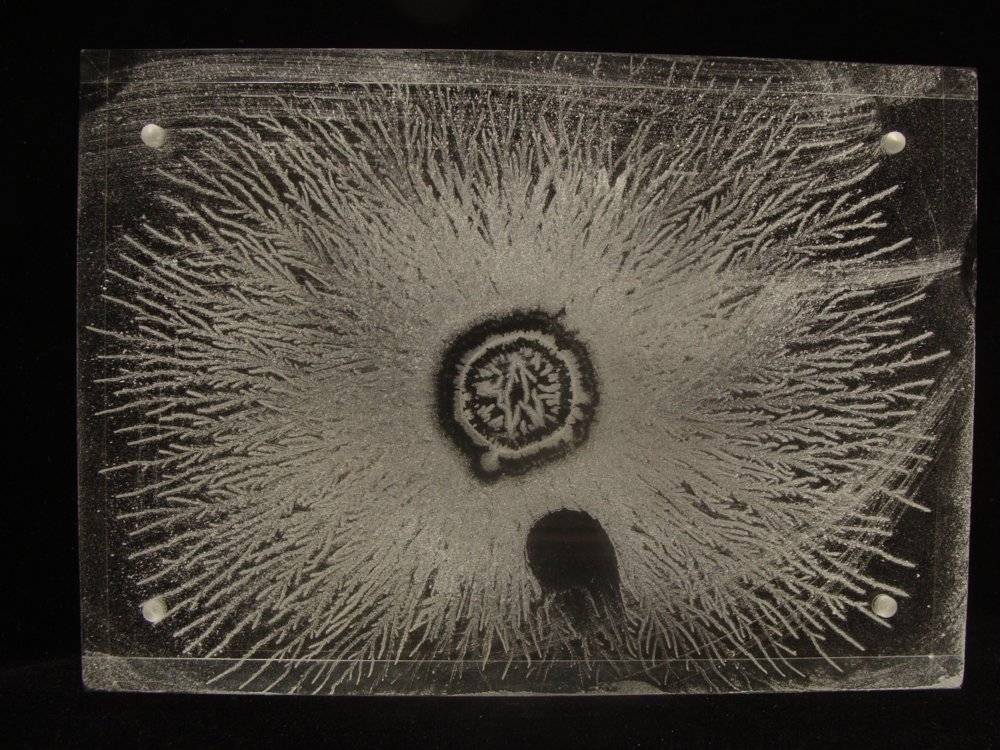
The following two photos show positive figures over 10 cm in diameter using the 2 nF cap on a 11 x 15.5 cm acrylic block 24 mm thick. The count was about 12 seconds charging time. Assuming the VDG is a constant current source of 4.5 uA (which is only approximate because of leakage at these high voltages) the voltage is about 27 kV.
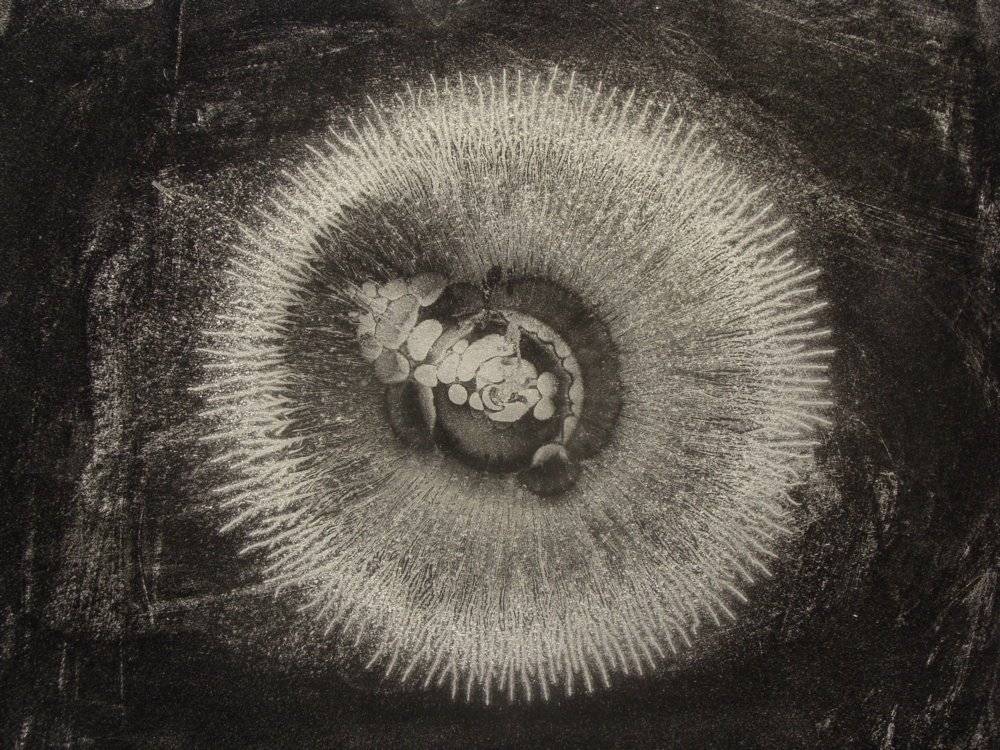
And finally, one of the more “artsy” figures. Positive discharge thru 48 mm diameter metal sphere resting on 2 mm thick acrylic with grounded back plane. After discharge the sphere was accidentally grounded and rolled a little toward the upper left. Blobs of negative discharge can be seen as the sphere rolled.
This is almost exactly how G. C. Lichtenberg did it in 1777 only, he used and electrophorus for charging, different powders for dusting and gum-lac, resin for the plastic surface.
A 2 nF salt water cap was used for next photos and it was discharged through the same cigar tube placed on 2 mm thick acrylic sheet. I started grounding the cigar tube before I pick it up and discovered that this grounding was causing a smaller second discharge of opposite polarity to the first.
These next two photos are without grounding the cigar tube before removal. Positive on the left and negative on the right.
This photo is with grounding the cigar tube before removal causing a secondary discharge of opposite polarity to the first.
The small inner ring of the positive discharge is the second negative discharge. The negative discharge on the right, has an inner positive discharge that is almost as large as it is. This is because positive figures are much larger than negative for the same voltage.
The following two photos show positive figures over 10 cm in diameter using the 2 nF cap on a 11 x 15.5 cm acrylic block 24 mm thick. The count was about 12 seconds charging time. Assuming the VDG is a constant current source of 4.5 uA (which is only approximate because of leakage at these high voltages) the voltage is about 27 kV.
And finally, one of the more “artsy” figures. Positive discharge thru 48 mm diameter metal sphere resting on 2 mm thick acrylic with grounded back plane. After discharge the sphere was accidentally grounded and rolled a little toward the upper left. Blobs of negative discharge can be seen as the sphere rolled.

