PDA

View Full Version : Magnesium Injection Cycle (MAGIC) engine


kach22i
Aug29-07, 10:49 AM
MAGIC engine
http://www.mitsubishi.com/mpac/e/monitor/back/0608/green.html
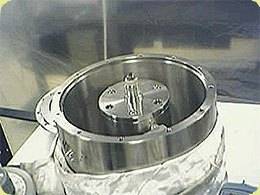
Mitsubishi Corporation (MC) and the Tokyo Institute of Technology (Tokyo Tech) have recently made a significant announcement—the completion of a first prototype CO2-free engine called the Magnesium Injection Cycle (MAGIC) engine. Although still at the experimental stage, this joint project, initiated in 2005, has developed a prototype that has successfully worked without the need for fossil fuels.
The Magnesium Injection Cycle engine is powered without using fossil fuels

Power is generated by the chemical reaction between magnesium and water, which produces high-power steam and hydrogen. The hydrogen is burned at the same time to produce more high-power steam, and the two steam sources power the engine. The new technology produces no carbon dioxide or other harmful emissions and the only by-products from this reaction are water and magnesium oxide. The magnesium is separated from the oxide through a solar-powered laser process and is reused over and over again as fuel. This clean energy cycle, which is supported by solar power, has the potential to steer society away from its dependence on fossil fuels, and could bring about a paradigm shift in the way future energy needs are met.

The new MAGIC technology is very versatile, and has potential for use in cogeneration, automobiles, ships and many other areas. MC and the Tokyo Tech team believes it will take another three years of further research and experimentation before it is launched for commercial use.

http://www.mitsubishi.com/mpac/e/monitor/back/0608/images/gd-p4.jpg

The exciting thing about the MAGIC engine is that it introduces competition to the market, the first time since the demise of the steam and electric motor cars.

Just watch oil prices drop like a brick striving to hedge it out of the market before it gains a foothold. No conspiracy theories, just open/free market greed at work.

Mech_Engineer
Sep5-07, 03:13 PM
I suspect magnesium would be a very expensive fuel, and I'm guessing there isn't enough of it to fuel even a fraction of the energy needs they are suggesting it could address.

Also, saying that the reaction is "emission free" is a little too optimistic in my opinion since it would require that the EXACT right amount steam to react with the magnesium at any one time. If there is excess steam in the reaction, it will create magnesium hydroxide (milk of magnesia), so we'll all end up driving Mylanta factories...

Magnesium does not react with water to any significant extent ... Magnesium metal does however react with steam to give magnesium oxide (MgO) (or magnesium hydroxide, Mg(OH)2, with excess steam) and hydrogen gas (H2).

Mg(s) + 2H2O(g) → Mg(OH)2(aq) + H2(g)


http://www.webelements.com/webelements/elements/text/Mg/chem.html

I'm having a tough time finding exatly how much energy is avaible from this reaction, perhaps someone else will chime in...

EDIT:

Looking at this more closely, I think it may have the inner workings of an impossible engine...

They're reacting magnesium with water which creates Hydrogen gas and Magnesium oxide, which they in turn "separate" back into Magnesium and Oxygen using a "solar laser"; but how much power does that laser take? It would seem to me that the basic process is:

Magnesium(s) + Water(g) ->
Hydrogen(g) + Magnesium Oxide(aq) ->
Hydrogen(g) + Oxygen(g) + Magnesium(s) ->
Magnesium(s) + Water(g)

The net power output will always be zero (or probably much less than zero), meaning the only power input you get is from the "solar laser" which Im assuming is powered by solar panels... why bother with all the magnesium hubub when you can just run it off a battery?!

kach22i
Sep10-07, 08:52 AM
What makes steam reactions so different from reactions to water?

Isn't that key to understanding this engine?

Mech_Engineer
Sep11-07, 10:26 AM
What makes steam reactions so different from reactions to water?

Isn't that key to understanding this engine?

The key to understanding any engine is a basic grasp of thermodynamics.

Because the magnesium is "recycled" in this engine, the only net input is from the "Solar Laser" which separates the Magnesium Oxide into it's constituent parts. This essentially means it is a solar car, which is bad news because the only truly effective solar cars out there right now are highly exotic racing vehicles. It takes a lot of surface area to extract a useful amount of energy from the sun using solar panels after all.

You have to look at what they are saying- they take steam and magnesium, do some stuff with it, and in the end end up with steam and magnesium again. The start and end states of the process are the same, therefore there cannot possibly be any energy gained in the process (without some input from somewhere else).

This is not some magical engine that will destroy the oil conglomerate, it is at best an interesting new way to utilize solar energy in a vehicle, and at worst an inefficient way to do it...

AlephZero
Sep11-07, 05:57 PM
Cynic that I am, I wondered if this was first published on the Japanese equivalent of April 1st.

Mech_Engineer
Sep11-07, 08:28 PM
Personally, I think it sounds like Mitsubishi could have saved a lot of money by just asking an engineer with some background in Thermo/Chemistry whether it was worth pursuing or not...

It's essentially an engine that runs on hydrogen, but uses solar energy to create the H2 and O2 rather than having a tank of Hydrogen and using atmospheric O2. I think it would be a much better idea to just carry a lot of Magnesium and collect the Magnesium Oxide at the exhaust for later reprocessing. That way you create H2 using the Steam-Magnesium reaction, and use atmospheric O2 for the rest. Reprocessing plants could be used to take the "waste" Magnesium Oxide, and separate them using this super-special laser for re-use.

This is all assuming of course there's even enough magnesium available for such an operation, which I doubt. There are no obvious advantages of this system over any other proposed Hydrogen-fueled car; it seems that you would be better off using solar panels to run an electrolysis plant, and then run off the hyrdogen and oxygen that is produced.

AlephZero
Sep12-07, 08:43 AM
Don't assume Mitsubishi are stupid. Crazy research projects sometimes get done because somebody is prepared to pay you a crazy price to do them. In the long term it might be better to have keep a research team together trying to extract sunbeams from cucumbers for a while, rather than close down the lab because of lack of funds.

cwpa
Oct23-07, 03:04 AM
Magnesium is the 7th most common element on this planet - about 1800 trillion tons of the stuff in the ocean so quantity isn't the problem - it's just the form it is in - thats where the solar powered laser comes in, to convert magnesium oxide into metallic magnesium - about 4000K is required. At 10 times the energy density of hydrogen, a relatively small quantity goes quite a long way. But for the squeamish who don't like the idea of carrying hydrogen around, magnesium is much more of a problem - if it ignites (in an accident) there is no putting it out - even under water it continues to burn furiously - and at such a high temp that traditional ways of quenching fires won't cut the cheese. Aside from the safety issues though, it's a novel way of storing energy in a chemical form, with none of the traditional pollution issues

Im a Marty
Jun19-11, 12:27 PM
First post here.

Not exactly physics inclined, just theory, however year 9 science many years ago, we did an experiment of dropping a block of sodium into water. It exploded, the bucket had a tear through it, and the water went about 5 ft in the air.

On another forum, I was discussing if this would be possible to create an internal combustion engine, others scoffed at the idea, but it seems a similar process is working.

Not sure on the abilities of extracting Sodium from salt water, but the mere fact that both are in our oceans, would be a super neat fuel.

Thanks for this information!

Marty