image
Physics Forums Logo
image
image
* Register * Upgrade Blogs Library Staff Rules Mark Forums Read
image
image   image
image

Go Back   Physics Forums > Physics > General Physics


Closed Thread

image Particle-Particle Simulation: Magnetic/Electric Fields & N-body Orbitals Share It Thread Tools Search this Thread image
Old Jan8-09, 03:35 PM       Last edited by PlayStationX; Jan8-09 at 03:45 PM..            #1
PlayStationX

PlayStationX is Offline:
Posts: 3
Particle-Particle Simulation: Magnetic/Electric Fields & N-body Orbitals

it is interesting i could not find many particle-particle simulators that simulate electrical fields even thought dynamics is pretty similar to that of planetary orbitals. there are few i could find but they are mostly 2D and defining problem in mathematical/geometrical terms, with sin/cos or some harmonic oscillator functions. none, however, i could find that simulate CLASSICAL ELECTRODYNAMICS (Stochastic El.Dynm. - SED) in 3D n-body system and even less to include MAGNETIC FIELDS, which are the effect of moving electric fields, says Lorentz and friends...


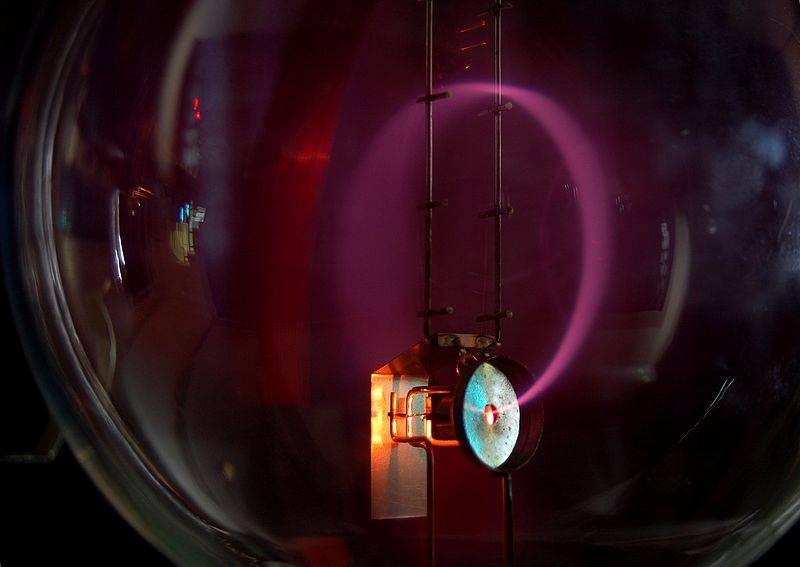
this is kind of situation and type of particles i want to simulate: http://en.wikipedia.org/wiki/Magnetic_field

what is the force behind covalent bond? what came first, chicken or egg?

Merovingian:
- You see, there is only one constant. One universal. It is the only real truth - Causality. Action, reaction.
- Cause and effect.


how wonderful,
the mystery and essence of Life, Universe and Everything lies in contradiction - the cause that is an effect of itself. ah, beautiful self-emerging craziness... im talking about field forces here, magnetic and electric.


...are magnetic dipoles the essence of Life, Universe and Everything? these dipoles would then need to be infinitely divisible while retaining its original properties, including the Yin-Yang duality, which is also kind of holographic quality, fractalous smell it has.... but, what the hell does it all mean?

ehmm, would you not think infinity goes both ways? infinite microcosmos, as well as macrocosmos... did you really think humans are on some "bottom" of grand scale of dimensions? hahaha... it's funny because its true, but not in the spatial sense, size does not matter scale-wise.


well, if there is any meaning in this blabbering, then let it be that universe is ANALOG, rather then digital... so, these particle accelerators and search for the smallest indivisible "atom" from which everything is composed will always be futile and more and more expensive, until it causes black hole and doom us all. science is great!


...its like smashing a clock off the wall in a hope to figure out how it works,
by looking at all the broken pieces flying around.


Equations: http://www.phys.unsw.edu.au/PHYS1169...magnetism.html
You may have mused in the past, why one of my ....., or my girlfriend's .... is smaller than the other? well, look at that photo above, CHIRALITY is built-in. this universe is rather quier, it pulls on one side more than on the other. breaking of the symmetry...


- CHARGES & MAGNETO-ELECTRIC FIELD FORCES -

Magnetic Fields - test1
http://www.youtube.com/watch?v=DUNP4z-Vaac


Electric and Magnetic Fields: Positron & Electron do the helix dance
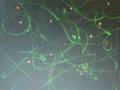
http://www.youtube.com/watch?v=JpI-klsq9nQ


DIPOLE MAGNETIC FIELDS due to moving electric charges (not spin yet)... HydrogZen-2
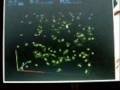
http://www.youtube.com/watch?v=2bIaGw3V6OQ


HydrogZen-1, Spontaneous formation of NEUTRAL Quazi-Hydrogen atoms
http://www.youtube.com/watch?v=aYBMrGM6IpM


- MASS & GRAVITY FIELD FORCE -


Chaos in a Box: Inverse Square and Fractal kind of Randomness
http://video.google.com/videoplay?do...69507182595610


little twitching worms,
all right, lets see how does it compare...


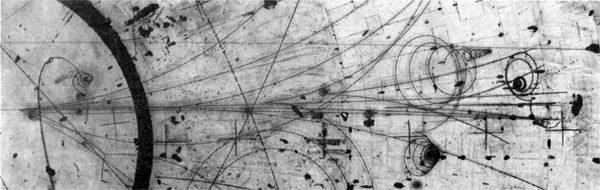
http://www.bo.infn.it/antares/bolle_proc/foto.html


in essence,
i hope to be able to manage and somehow force these virtual atoms to aggregate with the use of "covalent bonds" by simulating it all with classical mechanics rather than quantum, which is contradictory to the "analog universe" somewhat....

anyway, any idea? any similar software out there?
 
Old Jan8-09, 04:52 PM                  #2
ZapperZ

PF Mentor
 
ZapperZ's Avatar

ZapperZ is Offline:
Posts: 16,841
Re: Particle-Particle Simulation: Magnetic/Electric Fields & N-body Orbitals

Originally Posted by PlayStationX View Post
it is interesting i could not find many particle-particle simulators that simulate electrical fields even thought dynamics is pretty similar to that of planetary orbitals. there are few i could find but they are mostly 2D and defining problem in mathematical/geometrical terms, with sin/cos or some harmonic oscillator functions. none, however, i could find that simulate CLASSICAL ELECTRODYNAMICS (Stochastic El.Dynm. - SED) in 3D n-body system and even less to include MAGNETIC FIELDS, which are the effect of moving electric fields, says Lorentz and friends...


this is kind of situation and type of particles i want to simulate: http://en.wikipedia.org/wiki/Magnetic_field
Your post is very confusing.

If this is ALL that you want to "simulate", then I'm thoroughly confused. This is nothing more than an electron beam in a uniform magnetic field. What is there to simulate? It is a very simple application of the Lorentz force equation, i.e.

F = qv x B.

Similar setup is used to measure the mass and energy spread of charge particles in spectrometers. In the scheme of things, this is not that complicated and requires no computer simulation at all.

{scratching head}

Zz.
 
Old Jan8-09, 05:23 PM                  #3
PlayStationX

PlayStationX is Offline:
Posts: 3
Re: Particle-Particle Simulation: Magnetic/Electric Fields & N-body Orbitals

Your post is very confusing.
im sorry, what part do you find unclear?

please, let me rephrase it, i would like answer to these questions:

1.) what is the force behind covalent bond?

2.) links and info about 3D n-body simulation software that deals with dynamics of charges and taking into account both electric and magnetic fields?

3.) did you really think humans are on some "bottom" of grand scale of dimensions and that particle accelerators could be close to finding the fundamental-indivisible particles?


If this is ALL that you want to "simulate", then I'm thoroughly confused. This is nothing more than an electron beam in a uniform magnetic field. What is there to simulate? It is a very simple application of the Lorentz force equation, i.e.

F = qv x B.
that is not all, i want to simulate Life, Universe and Everything, but the first problem at hand is to simulate - covalent bonding - of hydrogen atoms by simulating classical mechanics rather than quantum, would you know about anything like that?

simple or not,
can you point some links to some software that does this in 3D with n-body system, just like in those YouTube videos in OP?


thanks
 
Old Jan8-09, 06:13 PM                  #4
ZapperZ

PF Mentor
 
ZapperZ's Avatar

ZapperZ is Offline:
Posts: 16,841
Re: Particle-Particle Simulation: Magnetic/Electric Fields & N-body Orbitals

This is getting weirder. What makes you think that you can "simulate" something like molecular bonding using classical physics? If that's true, there would be no need for quantum mechanics.

Chemistry came into existence WAY before quantum mechanics. While they could see the effect, they have no way to explain why. It was until after QM came into existence that many of these observations could be explained and quantitatively described.

Classical N-body system does not show any resemblance to QM many-body system. Try deriving superconductivity, for example, which is a prime example of QM many-body system.

You still haven't addressed the fact that THAT picture that I quoted is nothing more than a simple Lorentz law. So what were you intending to "simulate"?

Zz.
 
Old Jan8-09, 09:22 PM       Last edited by PlayStationX; Jan8-09 at 09:40 PM..            #5
PlayStationX

PlayStationX is Offline:
Posts: 3
Re: Particle-Particle Simulation: Magnetic/Electric Fields & N-body Orbitals

Zzzz,


You still haven't addressed the fact that THAT picture that I quoted is nothing more than a simple Lorentz law. So what were you intending to "simulate"?
my comment for the picture was:
-this is *KIND OF* situation and *TYPE OF* particles i want to simulate

then, i have addressed it second time when i said that im trying to simulate *COVALENT BONDS* (simple 4 particle simulation - 2 electrons and 2 protons forming 2 hydrogen atoms and then bonding with covalent bond in H2).


if you have further questions of your own then please start a thread and i'll come there and answer all your questions. but, since this thread is about my questions its only fair these to be answered first:


1.) what is the force behind covalent bond?

2.) links and info about 3D n-body simulation software that deals with dynamics of charges and taking into account both electric and magnetic fields?

3.) did you really think humans are on some "bottom" of grand scale of dimensions and that particle accelerators could be close to finding the fundamental-indivisible particles?


This is getting weirder.
sorry, what part confuses you?


What makes you think that you can "simulate" something like molecular bonding using classical physics?
experience.

but i do not need to be able to predict outcome, this is *simulation* - it is a way to experiment, so i will try this nevertheless just because i can... and because it has never been done this way before. i simply have to do this, who else?


Chemistry came into existence WAY before quantum mechanics. While they could see the effect, they have no way to explain why. It was until after QM came into existence that many of these observations could be explained and quantitatively described.

Classical N-body system does not show any resemblance to QM many-body system. Try deriving superconductivity, for example, which is a prime example of QM many-body system.
ok, thanks. i suppose you are not aware that classical mechanics can indeed be used to model atomic and molecular interactions with the similar results and predictions as quantum mechanics. thought, im not expert on classical approach, i believe the most popular ones deal with "electron radiation".


now, do you think you can try to answer these:

1.) what is the force behind covalent bond?

2.) links and info about 3D n-body simulation software that deals with dynamics of charges and taking into account both electric and magnetic fields?


unless you try to provide some answer to Q2, you will never understand what im talking about - my approach is NEW, this has not been tried, ok? but, feel free to show me otherwise.


anyway, i hope you do not have any more questions for me until you at least try to answer some of mine:

3.) did you really think humans are on some "bottom" of grand scale of dimensions and that particle accelerators could be close to finding the fundamental-indivisible particles?


ta
 
Old Jan9-09, 11:34 AM                  #6
ZapperZ

PF Mentor
 
ZapperZ's Avatar

ZapperZ is Offline:
Posts: 16,841
Re: Particle-Particle Simulation: Magnetic/Electric Fields & N-body Orbitals

Originally Posted by PlayStationX View Post

ok, thanks. i suppose you are not aware that classical mechanics can indeed be used to model atomic and molecular interactions with the similar results and predictions as quantum mechanics. thought, im not expert on classical approach, i believe the most popular ones deal with "electron radiation".
You have posted a lot of unverified and speculative issues here. In case you missed it the first time you signed up, please review the PF Guidelines that you had agreed to. Please provide valid references from peer-reviewed sources to back up your claim, especially this one.

You may send it to me via PM. Till then, this thread is in violation of the guidelines and is locked.

Zz.
 
image image
Closed Thread

Tags
electron, magnetic, n-body, orbits, proton
Thread Tools


Similar Threads for: Particle-Particle Simulation: Magnetic/Electric Fields & N-body Orbitals
Thread Thread Starter Forum Replies Last Post
magnetic/electric particle deflection scholio Introductory Physics 12 Jun3-08 11:54 AM
two body problem - effective particle maria clara Advanced Physics 1 May12-08 09:53 AM
speeding up particle simulation fargoth Programming & Comp Sci 5 Sep26-07 12:31 PM
Magnetic Fields; effect on unknown particle? exi Introductory Physics 11 Aug1-07 12:21 PM
Magnetic fields inducing electric fields - turning on lightbulb with magnetic field vaxopy Introductory Physics 3 Apr4-05 11:15 PM

Powered by vBulletin Copyright ©2000 - 2009, Jelsoft Enterprises Ltd. © 2009 Physics Forums
Sciam | physorgPhysorg.com Science News Partner
image
image   image