Ashyboo
- 1
- 0
Hey guys.
I want to design an AC coupled amplifier, to be powered by a 12V supply. The input voltage should be less than 30mV and the gain of the circuit should be 24dB. The circuit has 2 stages with the gain of the 1st transistor amplifier being used to amplify the signal going into the 2nd transistor.
I already know how the circuit should look but I need to ensure that the input impedance is greater than 1.2million ohms and the output impedance less than 180ohms.
From the circuit below, does anyone know what resistor values I should use for this criteria?
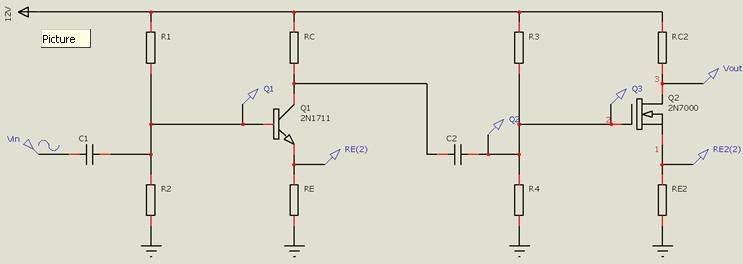
Thanx in advance.
I want to design an AC coupled amplifier, to be powered by a 12V supply. The input voltage should be less than 30mV and the gain of the circuit should be 24dB. The circuit has 2 stages with the gain of the 1st transistor amplifier being used to amplify the signal going into the 2nd transistor.
I already know how the circuit should look but I need to ensure that the input impedance is greater than 1.2million ohms and the output impedance less than 180ohms.
From the circuit below, does anyone know what resistor values I should use for this criteria?
Thanx in advance.