| New Reply |
Laplacian and Einstein manifold |
Share Thread |
| Jan31-13, 12:46 PM | #1 |
|
|
Laplacian and Einstein manifold
I am researching a hypothesis and looking for anyone who is familiar with differential topology (specifically Einstein manifolds). I have access to the Besse book Einstein Manifolds but am also looking for any open questions in differential topology that I am not aware of. I am attempting to develop a solid proof link between the Laplacian and Einstein manifolds (listed in the book as not found yet, free meal up for grabs!). I have seen somewhere that there is a discrepancy concerning the physical representation of Minkowski space, but there were no details listed and can't find the reference anymore. If anyone happens to know a paper detailing this it would be appreciated.
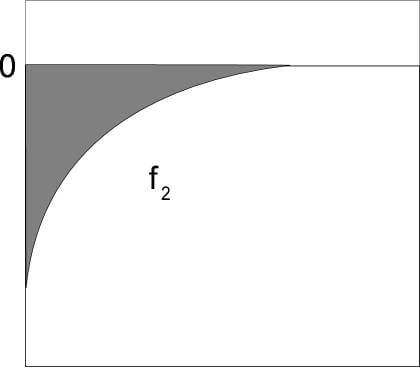
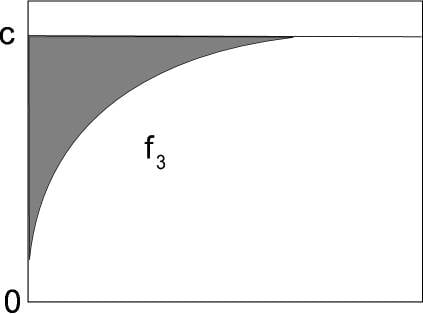
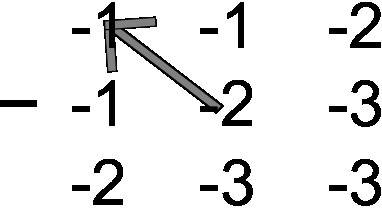
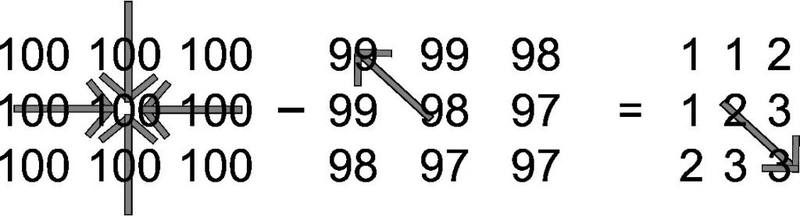
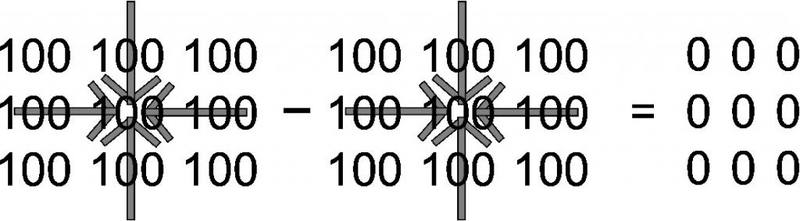
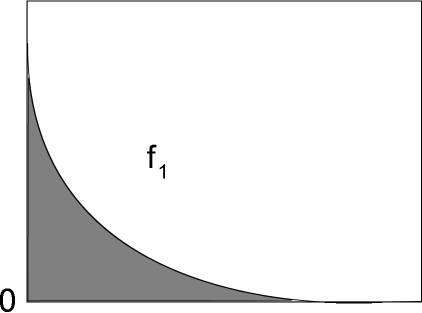
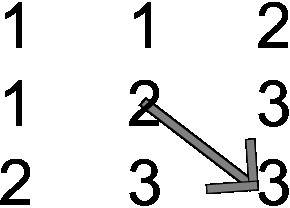
The math is pretty basic, sort of a gauge theory of the Laplacian. In graphical form (as the equations might be confusing without them). So whether function goes to all zero scalars or some arbitrary scalar values will give the same Laplacian [itex]\nabla^2(C-f)=\nabla^2\Phi=0[/itex] Attempting to equate this to [itex]4\Lambda-R=0[/itex] If we flip the integrable function f about the x axis, there is no distinction between the derivatives of the following plots: ![]() ![]() ![]() so for two dimensional gradients easier to see: ![]() ![]() ![]()
|
| Jan31-13, 06:54 PM | #2 |
|
|
As for a link between the Laplacian and Einstein manifolds, I would think that any serious study would take you into Ricci flows. You can look at http://en.wikipedia.org/wiki/Ricci_flow for an obvious 2d example and references. |
| Jan31-13, 08:24 PM | #3 |
|
|
![]() but the gradient of [itex]\Phi[/itex] isn't unique, since we could just as easily "flip the integral over" and use a scalar function that decreases from some value [itex]\frac{d(C-f_3)}{dx}=\frac{d\Phi}{dx}[/itex]: ![]() What interests me is comparing the weak field approximation [itex]1-2\Phi[/itex] to a normalized version of the decreasing scalar function: ![]() ![]() I am trying to determine if I can link a scalar constant with a constant multiple of the metric. Approximating the last plot with the 00 component of a normalized Einstein manifold [itex]R/\Lambda=g[/itex]. |
| Jan31-13, 10:22 PM | #4 |
|
|
Laplacian and Einstein manifold
You should still try to more precisely state what it is that you want to do. Are you considering metrics which are asymptotically flat, i.e.,
[tex]g_{ab} = \delta_{ab} + h_{ab},~~~~\lim_{r\rightarrow\infty} h_{ab} \rightarrow \frac{C}{r}.[/tex] You'd seem to need something like this for a weak-field approximation to make sense. Now you can derive conditions such that g will be Einstein to linear order in h. The analysis should be similar to that in Ch 12 in Besse, which leads to a linearized Einstein equation for h, involving the Lichnerowicz Laplacian. It's probably an important point that the difference between your functions f and [itex]\Phi[/itex] are the boundary conditions. As above, the weak-field approximation is only compatible with boundary conditions such that the harmonic function vanishes sufficiently fast at infinity (like [itex]\Phi[/itex] does). Perhaps how this applies to what you're doing will be clearer when you make a mathematically precise definition of your problem. |
| Jan31-13, 10:53 PM | #5 |
|
|
[tex]R=\Lambda g_{ab}[/tex] [tex]\frac{R}{\Lambda}=g_{ab}=diag(1,-1,-1,-1)[/tex] [tex]g_{ab}-\frac{R}{\Lambda}=diag(1-1,-1+1,-1+1,-1+1)=\delta_{ab}-h_{ab}[/tex] [tex]\lim_{r\rightarrow\infty} h_{00} \rightarrow \frac{R_{00}}{\Lambda_{00}}=\frac{f_3}{C}=1[/tex] [tex]\lim_{r\rightarrow 0} h_{00} \rightarrow \frac{R_{00}}{\Lambda_{00}}=\frac{f_3}{C}=0[/tex] |
| Feb1-13, 01:06 AM | #6 |
|
|
[tex]0=\text{diag}(1-1,-1+1,-1+1,-1+1)=\delta_{ab}-h_{ab},[/tex] then it just means that [itex]h_{ab}=\delta_{ab}[/itex], which would be another constant, flat metric. Anyway, looking back at your graphs, you seem to want a source-free solution to the Einstein equations that is an increasing function of the radius. This is impossible, as the vacuum equations admit the Schwarzschild solution as the only spherically symmetric solution. Technically this is due to Birkoff's theorem, but on physical grounds it is the statement that the Newtonian potential must decrease as we move away from a point-mass at the origin. |
| Feb1-13, 08:59 AM | #7 |
|
|
[tex]R_{ab}-\frac{1}{2}Rg_{ab}=\Lambda g_{ab}[/tex] [tex]R_{ab}=0[/tex] when [tex]g_{ab}=diag(1,-1,-1,-1)[/tex] [tex]-\frac{1}{2}Rg_{ab}=\Lambda g_{ab}=diag(\Lambda,-\Lambda,-\Lambda,-\Lambda)[/tex] [tex]-\frac{1}{2}Rg_{00}=\Lambda g_{00}[/tex] [tex]-\frac{1}{2}R\frac{1}{\Lambda}g_{00}=g_{00}=1[/tex] I had assumed from [tex]g_{ab} = \delta_{ab} + h_{ab},~~~~\lim_{r\rightarrow\infty} h_{ab} \rightarrow \frac{C}{r}.[/tex] that you were considering [tex]h_{ab}[/tex] as a perturbation and not as a constant. |
| Feb1-13, 11:50 AM | #8 |
|
|
[tex]g = \text{diag} (f(r), - 1/f(r) , r^2, r^2\sin^2\theta),[/tex] [tex] f(r) = 1 - \frac{r_s}{r} - \frac{\Lambda r^2}{3}.[/tex] For [itex]\Lambda>0[/itex], the corresponding potential does begin to increase at large enough r, where the effect of the CC dominates the source at the origin. This space has positive curvature asymptotically. For [itex]\Lambda=0[/itex], we have the ordinary Schwarzschild black hole. For [itex]\Lambda<0[/itex], we call it anti-de Sitter-Schwarzschild and the space is asymptotically negatively curved. Birkoff's theorems tell us that these are the only solutions and that they are static. Our source has delta function support at the origin (because the stress tensor is zero), and the parameter [itex]r_s[/itex] is a constant (by Birkoff). Physical considerations like the weak energy condition would suggest that [itex]r_s<0[/itex] is unphysical, but there's no mathematical reason not to consider the possiblity. |
| Feb1-13, 02:13 PM | #9 |
|
|
|
| Feb1-13, 03:30 PM | #10 |
|
|
[tex] R_{ab} - \frac{1}{2} R g_{ab} +\Lambda g_{ab}=0,[/tex] [tex] \frac{2-n}{2} R + n \Lambda=0,[/tex] which allows us to rewrite [tex] R_{ab} = \frac{2n\Lambda}{n-2} g_{ab} = k g_{ab}.[/tex] This last condition is the definition of an Einstein metric and from a mathematical perspective, we don't necessarily care that [itex]k[/itex] is even related to the CC. When [itex]k=0[/itex], we have a special case of Ricci-flat metrics, of which Minkowski space is a simple example. It's impossible for the Ricci scalar to be nonzero if the Ricci tensor is zero, since the former is the trace of the latter. We can also see that [itex]\Lambda\neq 0[/itex] does in fact mean that [itex]R\neq 0[/itex]. The problem with your previous post is that, in an intermediate step, you were taking [itex]g_{ab}[/itex] as the Minkowski metric, which is necessarily flat, so not a solution when [itex]\Lambda\neq 0[/itex]. I probably helped a bit to confuse you by introducing perturbations around a flat metric in post #4. In your OP you were already considering a nonzero CC, for which flat space is not a solution. |
| New Reply |
Similar discussions for: Laplacian and Einstein manifold
|
||||
| Thread | Forum | Replies | ||
| Mapping Torus of a Manifold is a Manifold. | Differential Geometry | 7 | ||
| How does changing the metric on a manifold affect the shape of the manifold? | Differential Geometry | 8 | ||
| Einstein's Nordic Assembly Speech,Einstein Quotations Etc. | General Discussion | 1 | ||
| Einstein GR is dead, viva Einstein-Cartan Gravity? | Special & General Relativity | 7 | ||
| sasaki-einstein manifold | Beyond the Standard Model | 3 | ||