Kutt said:
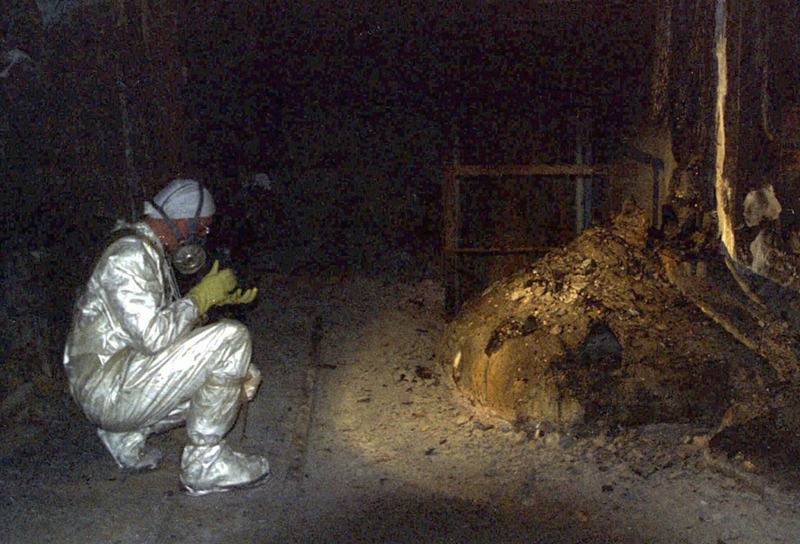
Standing within a few feet of melted uranium for any period of time is enough to become dangerously contaminated with radiation. Even less than one minute of exposure will get you a dose of 20-40 rads.
No offense but you need to know what you are talking about before you make statements.
First off, uranium is virtually negligible in terms of radiation. Uranium gives off very low levels of alpha particles and will do virtually nothing to you. I've physically held fuel pellets in the manufacturing facility and received 0 exposure, none, zip. It is the waste/fission products and other byproducts of utilizing uranium that give off dangerous levels of radiation, NOT the Uranium (exception U-232...but that's generally only seen in thorium type reactors).
Secondly, just standing next to radioactive material does not contaminate you. If your claim was true, that just standing next to it would contaminate you, then that means that somehow, magically, standing next to as solid chunk of core material magically causes all that radioactive material to go into your body, then you carry the radioactive material and emit radiation wherever you go. That's not the case. RADIATION != CONTAMINATION.
Contamination is the uncontrolled spread of radioactive MATERIAL. NOT RADIATION.
RADIATION and RADIOACTIVE MATERIAL are different. RADIOACTIVE MATERIAL GIVES OFF RADIATION. But RADIATION does not make an object radioactive.
That solid mass of core material (which is what it should be called, not "uranium"), is a solid form. It is not going to be somehow releasing radioactive material into the air around it. Any radioactive MATERIAL in the area is stuff that was already there. It is not going to somehow magically contaminate you. Contamination is when radioactive material gets ON or IN your body in an uncontrolled fashion. The danger with contamination is prolonged internal exposure. If the MATERIAL does not get ON or IN you, you are NOT contaminated.
Simply standing in a radiation field does NOT contaminate you.
The solid mass of core material DOES give off a very high radiation field.
This is an ACUTE exposure of radiation. Acute exposures of radiation typically have low impact on your overall cancer risk (As in less than 1%, of the 40% you normally have just for being a living breathing human). Simply getting blasted once or twice in your lifetime with a very high rad dose in a short period of time will not give you a massive cancer risk increase. It may cause radiation poisoning effects, but it will not magically make your cancer rates skyrocket.
It is CHRONIC exposure, that is, exposure to moderate levels of radiation for extended periods of time, especially internal exposure, that start to greatly increase your cancer risk.
There are some exceptions. Iodine-131 is an exception as it bioaccumulates and gives a very dangerous accute dose which will damage the thyroid.
Long story short, you really need to go out and get some understanding of the differences between radiation and contamination.
And last but not least, stop making statements that are not only incorrect, but not backed up by science. For example, see this link: http://hps.org/publicinformation/ate/q2410.html
For exposures in the 15-20 Rem range, it is actually very difficult to show ANY change in cancer risk. Your claim that somehow 20-40 rads will give you a DRASTIC increase in cancer risk is nothing more then speculation and sensationalism. And there are MANY different studies by reputable organizations which are all consistent that low to moderate chronic doses are very difficult to even determine if it affected your cancer rate.