Barry_G
- 68
- 0
This thread is to move this discussion away from another thread in order to talk about it in more detail, so here is a brief recapitulation of how that went to make an opening for the discussion...
A photon is quanta of electromagnetic radiation, and despite the name, despite there are, I mean could very well be, magnetic and electric fields constituting a photon, it is still electrically and magnetically neutral, which means its electric and magnetic field is measured to be zero.
The article says electromagnetic field is a physical field produced by moving electrically charged objects. I'd say "electrically charged object" describes electron, positron, proton or some ion, but I don't see how it describes photon at all since photons are not electrically charged.
The article says the theorem is a purely mathematical one.
In regards to "null electromagnetic field" mentioned above the article says: "the invariants reveal that the electric and magnetic fields are perpendicular...", which seems to imply there is at least two electric and two magnetic fields, otherwise they should have said "electric field is perpendicular to magnetic field", if that's what is supposed to be the meaning. But then how could they be perpendicular if there is only one of each, what property of each field would define its vector orientation to judge such geometrical relation?
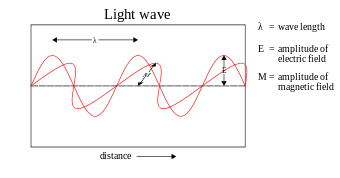
http://en.wikipedia.org/wiki/Photon
According to this picture there are indeed only one electric and one magnetic field and what's perpendicular about them seems to be the plane of their oscillation. However, it doesn't seem to me energy of the photon defines the strength of those fields, but rather the other way around. That is the amplitude/wavelength of their oscillation is what defines energy of the photon, where the strength of the fields remains constant.
Furthermore, how could there be a single magnetic field on its own, wouldn't that be a monopole? And also, how could there be an electric field in motion without creating yet another magnetic field directly around itself, which can't be the same one that is oscillating perpendicularly to it?
I don't see any reference to "source-free" equation or anything similar that would relate to zero net charge of a photon.
You do realize that a photon IS electromagnetic field, right?
A photon is quanta of electromagnetic radiation, and despite the name, despite there are, I mean could very well be, magnetic and electric fields constituting a photon, it is still electrically and magnetically neutral, which means its electric and magnetic field is measured to be zero.
http://en.wikipedia.org/wiki/Electromagnetic_field
Electrons are not electromagnetic fields, so no, this doesn't apply to them.
The article says electromagnetic field is a physical field produced by moving electrically charged objects. I'd say "electrically charged object" describes electron, positron, proton or some ion, but I don't see how it describes photon at all since photons are not electrically charged.
The EM field associated with a photon (more precisely, associated with a classical electromagnetic wave, which is the best classical approximation to a photon) is a particular type of EM field called a "null electromagnetic field", as described, for example, here:
http://en.wikipedia.org/wiki/Electromagnetic_field
The article says the theorem is a purely mathematical one.
How many electric fields and how many magnetic fields a single photon has, exactly?
Um, one of each?
In regards to "null electromagnetic field" mentioned above the article says: "the invariants reveal that the electric and magnetic fields are perpendicular...", which seems to imply there is at least two electric and two magnetic fields, otherwise they should have said "electric field is perpendicular to magnetic field", if that's what is supposed to be the meaning. But then how could they be perpendicular if there is only one of each, what property of each field would define its vector orientation to judge such geometrical relation?
What is the the strength of those fields?
It depends on the energy of the photon.
http://en.wikipedia.org/wiki/Photon
According to this picture there are indeed only one electric and one magnetic field and what's perpendicular about them seems to be the plane of their oscillation. However, it doesn't seem to me energy of the photon defines the strength of those fields, but rather the other way around. That is the amplitude/wavelength of their oscillation is what defines energy of the photon, where the strength of the fields remains constant.
Furthermore, how could there be a single magnetic field on its own, wouldn't that be a monopole? And also, how could there be an electric field in motion without creating yet another magnetic field directly around itself, which can't be the same one that is oscillating perpendicularly to it?
So, if net electric charge of a photon is zero, does that mean it contains both positive and negative electric fields, or what?
It means the electric and magnetic fields satisfy the source-free Maxwell's Equations:
http://en.wikipedia.org/wiki/Maxwell's_equations
I don't see any reference to "source-free" equation or anything similar that would relate to zero net charge of a photon.