TSny's latest activity
-
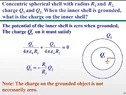
 TSny replied to the thread Conducting Sphere and Dipole Problem.Is this taken directly from your teacher's PowerPoint slides? Does it represent your teacher's solution to the problem of post #1? Are...
 -
TSny replied to the thread Conducting Sphere and Dipole Problem.This problem is not the same as the one given in your first post. It appears to be totally unrelated. You mention your teacher's...
-
-
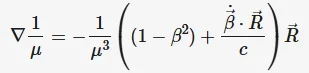
TSny replied to the thread Help with derivation of electric field of a moving charge.Besides the error pointed out by @anuttarasammyak, check your work for the following: I get an additional term proportional to...
-
-
TSny replied to the thread Conducting Sphere and Dipole Problem.Your homework statement mentions dielectrics. But the actual problem statement does not mention dielectrics. It's not clear to me...
-
TSny replied to the thread Undergrad Is Callen right in claiming dQ=TdS for all quasi-static processes?.It appears to me that Callen’s deduction of ##dQ = T dS## for quasi-static processes is essentially contained in sections 1.8 and 2.1...
-
Hey guys! Sorry for jumping into the thread after so long, but I came across a link that might be of interest to you. I recently...
-
TSny reacted to Steve4Physics's post in the thread Flux through a ring due to two charges with
 Like.
@palaphys, for an intuition, it helps to visualise flux lines. In the following diagram, the magnitude of the flux through the loop due...
Like.
@palaphys, for an intuition, it helps to visualise flux lines. In the following diagram, the magnitude of the flux through the loop due... -
TSny reacted to Dale's post in the thread Undergrad Coulomb gauge implies instantaneous radial electric field? with Like.
As was pointed out by @QuarkyMeson, no, because it is only part of the field. However, Maxwell’s equations admit causality-reversed...
-
TSny reacted to QuarkyMeson's post in the thread Undergrad Coulomb gauge implies instantaneous radial electric field? with Like.
Longitudinal electric field isn't an observable, E is. (Save some electrostatic near field stuff when E is approx ##E_{\parallel}## and...
-
I'm a bit rusty so forgive me -- but in both of those examples, the magnetic field ##\mathbf{B}## is a constant* (in the lab frame), so...
-
I used the approximation from the 3,4,5 triangle. Also, no I am not familiar with lagrangian mechanics I'm still in HS. Here's the...
-
TSny replied to the thread A bead-mass oscillatory system problem.👍 I get the same result. I found the calculation to be fairly tedious. Easy to slip up.
-
TSny replied to the thread Undergrad Does Poisson's equation hold due to vector potential cancellation?.In your example in post #1, ##\large \frac{\partial A_y}{\partial y} \neq 0## for points along the x-axis. So, ##\nabla \cdot \mathbf{A}...