nixego
- 1
- 0
Hey folks,
Here's my problem:
Knowing that for reciprocal lattice vectors K and real space lattice vectors R:

and using the Kronecker delta:
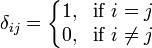
I need to prove b1, b1, b3 as shown http://www.doitpoms.ac.uk/tlplib/brillouin_zones/reciprocal.php" :
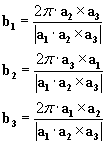
I understand that for the first equation above, the exponential needs to equal zero for the expression to equal 1. So I have K.R=0 as one piece of information, but I don't see how this leads me to the expressions for b1, b1, b3 which I'm trying to find.
I'm assuming this is part of the proof:

But how do I use this and where does the 2*pi come from?
Thanks all!
Here's my problem:
Knowing that for reciprocal lattice vectors K and real space lattice vectors R:
and using the Kronecker delta:
I need to prove b1, b1, b3 as shown http://www.doitpoms.ac.uk/tlplib/brillouin_zones/reciprocal.php" :
I understand that for the first equation above, the exponential needs to equal zero for the expression to equal 1. So I have K.R=0 as one piece of information, but I don't see how this leads me to the expressions for b1, b1, b3 which I'm trying to find.
I'm assuming this is part of the proof:
But how do I use this and where does the 2*pi come from?
Thanks all!
Last edited by a moderator: