Sugar, salt and processed foods is finally good for you

  • Thread starter Thread starter mgb_phys
  • Start date Start date
  • Tags Tags
    Salt Sugar
Click For Summary

Discussion Overview

The discussion revolves around the nutritional claims made by processed foods, particularly breakfast cereals like Froot Loops, and the implications of marketing strategies that may mislead consumers regarding health benefits. Participants explore the validity of health claims, the role of advertising, and the potential for consumer deception in food labeling.

Discussion Character

  • Debate/contested
  • Conceptual clarification
  • Technical explanation

Main Points Raised

  • Some participants express skepticism about the nutritional claims made by cereal manufacturers, questioning the validity of labeling that emphasizes vitamins while downplaying high sugar content.
  • Concerns are raised about the misleading nature of health logos, such as the "Health Check" symbol in Canada, which may imply endorsement rather than sponsorship.
  • Participants discuss the legality and ethics of advertising practices that highlight nutritional benefits derived from added ingredients (like milk) rather than the product itself.
  • There are observations about the excessive vitamin content in some products and the potential for waste or adverse effects, such as high levels of B vitamins leading to unusual urine coloration.
  • Some participants share personal anecdotes about discovering misleading nutritional information while reading cereal boxes, leading to conclusions about healthier alternatives.
  • One participant mentions the existence of pharmaceutical nutritional supplements that differ from those found in children's cereals, suggesting a distinction in quality or form of nutrients.
  • Others advocate for better consumer education to navigate misleading advertising practices in food marketing.

Areas of Agreement / Disagreement

Participants generally agree on the misleading nature of certain food marketing practices and the need for consumer awareness. However, there are competing views on the extent of the problem and the effectiveness of current labeling regulations.

Contextual Notes

Limitations include the potential for varying interpretations of nutritional information and the influence of marketing strategies on consumer perceptions. The discussion does not resolve the legality of specific advertising practices or the effectiveness of consumer protection laws.

Who May Find This Useful

This discussion may be of interest to consumers concerned about food labeling, nutritionists examining marketing ethics, and educators focused on consumer awareness in health and nutrition.

mgb_phys
Science Advisor
Homework Helper
Messages
7,901
Reaction score
15
Excellent - froot loops are now good for you (according to their makers)

Worried that the government food health labelling is a bit of downer, "you can't eat this, you can't eat that" they have decided to launch their own positive labelling.
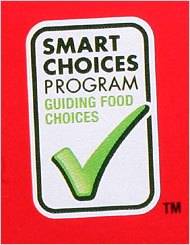
05smartB-nrml.jpg


“Froot Loops is an excellent source of many essential vitamins and minerals and it is also a good source of fiber with only 12 grams of sugar,” said Celeste A. Clark, senior vice president of global nutrition for Kellogg’s, which makes Froot Loops. “You cannot judge the nutritional merits of a food product based on one ingredient.”

Apparently 12g of sugar is the maximum FDA permitted level in a cereal - and can't be far of the maximum amount you can chemically get to stick to it.

http://www.nytimes.com/2009/09/05/business/05smart.html?_r=2&
 
Physics news on Phys.org
That's pretty funny. I wonder how much it costs to spray some cheapo vitamin juice on a box of sugary junk. A penny a box?
 
I got curious one day and read the side of the box of some super-sweet cereal that claimed to contain vitamins and minerals. There were two lists of numbers. One list of numbers was the nutritional value of the cereal without milk and the next list was the cereal plus milk. Guess which column of numbers contained vitamins and minerals?

In Canada (I don't know about the States, maybe someone here can tell me) we have this symbol

http://www.nutrexsolutions.com/wp-content/uploads/2009/05/healthcheck_logo.jpg

the "Health Check" logo on some packaged foods (and another that I can't recall right now because I can't find anything in my fridge with the symbol on it). If only glanced at, it leads one to believe (which is what I initially thought) that the product was endorsed by the Hearth and Stroke Foundation as a favourable food choice. Then I read the fine print on the side of the package. The logo on the package means that the product manufacturer donated money to the Heart and Stroke Foundation, and is not an endorsement by the foundation. It's terribly misleading.
 
Last edited by a moderator:
mgb_phys said:
Apparently 12g of sugar is the maximum FDA permitted level in a cereal - and can't be far of the maximum amount you can chemically get to stick to it.

http://www.nytimes.com/2009/09/05/business/05smart.html?_r=2&
According to the article, Froot Loops are 41% sugar. It's hard to see how that qualifies as a smart nutritional choice unless you have to choose between giving your kids either a sugar-laden cereal or a Snickers bar for breakfast. Tough choice, though - at least a Snickers bar has lots of peanuts.
 
You can see something has to be wrong with Fruit Loops when you're eating it and see chunks of sugar stuck to certain ones.

I'm at the point where if I see anything that's packaged, I know it's not healthy. I'm glad to see people trying to get healthy and lose weight, but the food companies are taking advantage of the ignorant. They tell you the massive protein content on the label and suddenly bacon is healthy. They tell you all the vitamins and minerals in poptarts and act like they're healthy. People don't realize that a lot of vitamins in excess just get passed right through you. You're buying that B vitamin with 18000% of the recommended value for the energy? Cool, now your urine has 17900% B vitamin content for the toilet.
I did that. Then I wondered why I was urinating highlighter ink.
 
GeorginaS said:
I got curious one day and read the side of the box of some super-sweet cereal that claimed to contain vitamins and minerals. There were two lists of numbers. One list of numbers was the nutritional value of the cereal without milk and the next list was the cereal plus milk. Guess which column of numbers contained vitamins and minerals?
Wow. I wonder if that's even legal? It seems there must be some sort of consumer protection laws or truth in advertising laws that wouldn't let you claim that a cereal has vitamins if the vitamins only come from the milk you're pouring over it.

And, that symbol in the OP is also terribly misleading. I think we need better education in the schools to teach people not to be so easily misled by these rather underhanded advertising tricks.

leroyjenkens said:
You're buying that B vitamin with 18000% of the recommended value for the energy? Cool, now your urine has 17900% B vitamin content for the toilet.
I did that. Then I wondered why I was urinating highlighter ink.

:smile:
 
speaking of strokes and such, there actually are some pharmaceutical nutritional supplements available now, but they are not forms of the vitamins that you will find in kids' cereals. e.g. - methylfolate, not folic acid

http://www.pamlab.com/Products
 
Last edited by a moderator:
GeorginaS said:
I got curious one day and read the side of the box of some super-sweet cereal that claimed to contain vitamins and minerals. There were two lists of numbers. One list of numbers was the nutritional value of the cereal without milk and the next list was the cereal plus milk. Guess which column of numbers contained vitamins and minerals?QUOTE]

I made the same discovery some time ago - while explaining the chart to my kids. One of them actually came to the conclusion it was better to just drink the milk and eat a piece of fruit.
 
WhoWee said:
I made the same discovery some time ago - while explaining the chart to my kids. One of them actually came to the conclusion it was better to just drink the milk and eat a piece of fruit.

Smart kid!
 
  • #10
Yep, the "Smart Choice" logo is deceptive as is this one I linked

healthcheck_logo.jpg


At first I thought it meant an endorsement. The fine print tells me it's not; it's sponsorship. Talk about misleading.

And yes, Calluna, it was requirements for truth in packaging that led to the two columns of numbers in the first place, because, prior to that, cereals claimed all sorts of healthy elements that were derived from the addition of milk. Given that cold cereals are intended to be eaten with milk, the food companies could pose a semi-reasonable argument. Hence why they're forced.
 
  • #11
I like breakfast cereals but stick with Cheerios, Raisin Bran, or the umpteen grain cereals. Those all seem to be pretty good.

I also love milk. :biggrin: