Sun observation (Gregor / Teneriffa)

  • Context: Stargazing 
  • Thread starter Thread starter fresh_42
  • Start date Start date
  • Tags Tags
    Observation Sun
Click For Summary

Discussion Overview

The discussion centers around the differences between popular science representations of solar observations and the technical details presented in scientific papers, specifically focusing on the GREGOR telescope in Tenerife. Participants explore the implications of these differences for future astronomers and the importance of engineering in producing high-quality images of the sun.

Discussion Character

  • Debate/contested
  • Technical explanation
  • Conceptual clarification

Main Points Raised

  • Some participants argue that popular science often oversimplifies or misrepresents the complexities of actual scientific work, as exemplified by the GREGOR telescope's capabilities.
  • Others question what constitutes "popular science," seeking clarification on whether the photos themselves are considered as such.
  • There is a discussion about the absence of sample images in the scientific paper, with some expressing regret over this omission, while others find it understandable given the paper's focus on technical details.
  • Some participants highlight the importance of engineering and instrumentation in achieving high-quality solar images, suggesting that without these advancements, the impressive photos would not be possible.
  • One participant compares the marketing of telescopes to the presentation of scientific results, noting that promotional images often do not accurately represent what can be seen through the equipment.
  • There is a mention of the GREGOR telescope's significance as a leading solar observation tool in Europe, emphasizing its role in advancing solar physics research.

Areas of Agreement / Disagreement

Participants express differing views on the relationship between popular science and technical scientific communication. While some agree on the need for clearer connections between the two, others maintain that the technical focus of the paper is appropriate. The discussion remains unresolved regarding the necessity of including sample images in scientific reports.

Contextual Notes

Some participants note that the paper linked in the discussion is more of a report on the instrument's capabilities rather than a traditional scientific paper, which may affect expectations regarding included imagery and results.

fresh_42
Staff Emeritus
Science Advisor
Homework Helper
Insights Author
2025 Award
Messages
20,819
Reaction score
28,461
TL;DR
New images from the sun observed by Gregor on Teneriffa
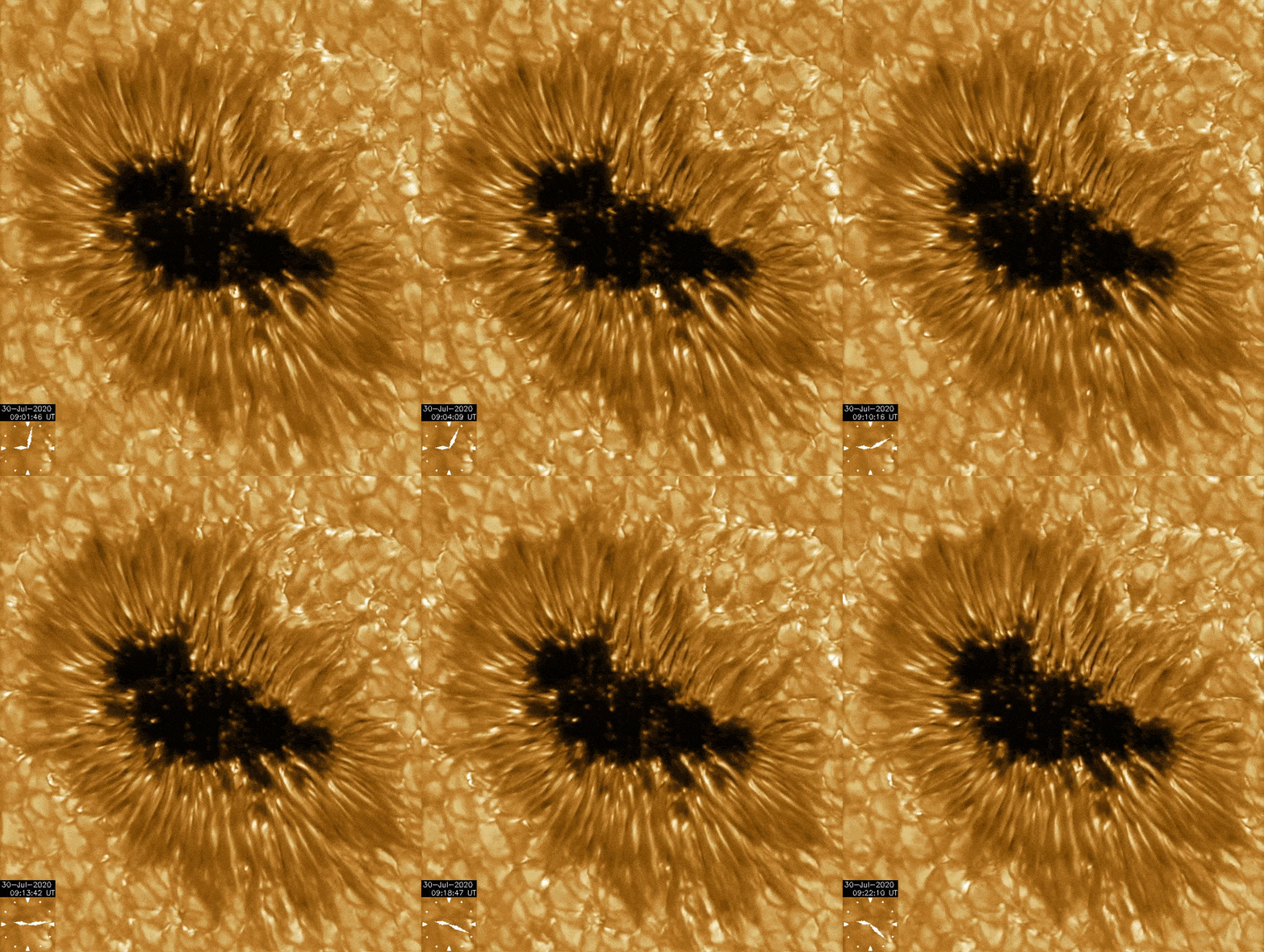
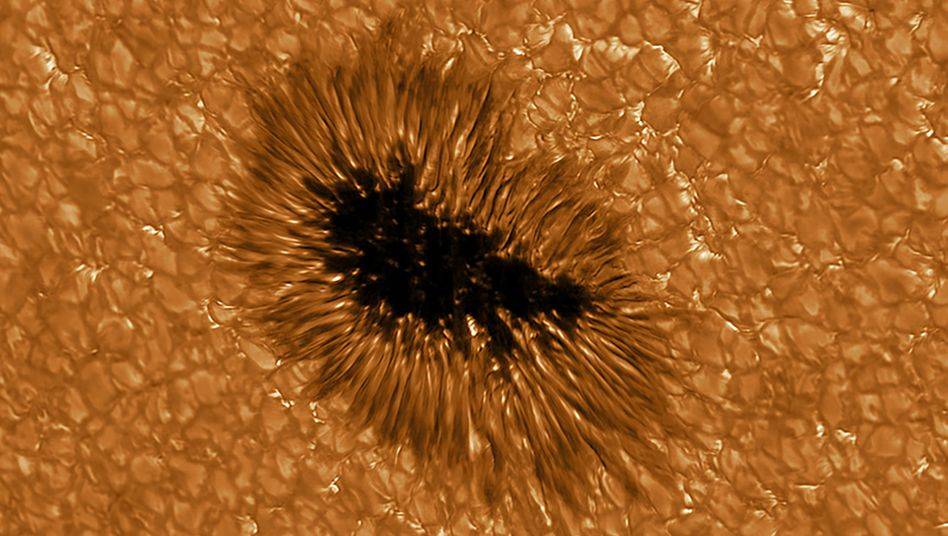
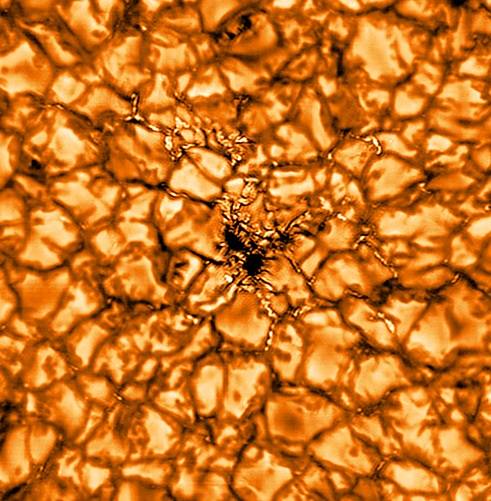
Here is a nice example which shows how far popular science and actual science are apart. On one hand we have the eye catching photos of the sun's surface:
10ad-4d2c-b070-90fd6836c1d4_w948_r1.77_fpx47_fpy53.jpg


l2-2020-07-08T115241.524cut2.jpg


bdm-2020-09-01-mov.gif
whereas the corresponding scientific paper on the other hand is very different:

GREGOR: Optics redesign and updates from 2018–2020
https://www.aanda.org/articles/aa/pdf/2020/09/aa38208-20.pdf
The GREGOR telescope was inaugurated in 2012. In 2018, we began a complete upgrade, involving optics, alignment, instrumentation, mechanical upgrades for vibration reduction, updated control systems, and building enhancements, and in addition, adapted management and policies. This paper describes all major updates performed during this time. Since 2012, all powered mirrors except for M1 were exchanged. Since March 2020, GREGOR observes with diffraction-limited performance and a new optics and instrument layout.
 
  • Like
  • Love
Likes   Reactions: PAllen, Charles Link and etotheipi
Astronomy news on Phys.org
fresh_42 said:
Summary:: New images from the sun observed by Gregor on Teneriffa

whereas the corresponding scientific paper on the other hand is very different:
I don't get what you think is very different ?
what specifically is your issue ?
 
  • Like
Likes   Reactions: russ_watters
I just wanted to point out why we normally aren't happy with popular science sources, and give an example to future astronomers, at least for the experimental physicists among them, how a result of their work typically looks like.

And besides this, of course, I like the incredible details of the photos.
 
  • Like
Likes   Reactions: davenn
fresh_42 said:
Summary:: New images from the sun observed by Gregor on Teneriffa

On one hand we have the eye catching photos of the sun's surface:

etc
However, it has to be true that, without a vast amount of engineering detail and enthusiasm for equipment, there would be no nice pictures. The equipment and the engineering has vast appeal, once you've been bitten by the bug.

The same sort of thing applies to Broadcasting, Communications and even creative arts and sport.
 
I think it is regrettable that the paper does not link to a source with sample images. Why not include:

http://www.leibniz-kis.de/en/institute/pictures-of-the-month/single-view/europes-largest-solar-telescope-gregor-unveils-magnetic-details-of-the-sun-1/

as a link for results of the improved optics in the paper? (Note, this link points to the paper, but not vice versa).
 
  • Like
Likes   Reactions: russ_watters
PAllen said:
I think it is regrettable that the paper does not link to a source with sample images. Why not include:
Is it really regrettable? To me, it's perfectly understandable. The paper is full of appropriate images of equipment and of measurement results, which is what the readers want. Which solar images would they choose to link to which could actually demonstrate the difference in image quality (before and after)? There would be a fair bit of work to pick out suitable images - just for the punters.
 
  • Like
Likes   Reactions: russ_watters
fresh_42 said:
Here is a nice example which shows how far popular science and actual science are apart. On one hand we have the eye catching photos of the sun's surface:
[separate post]
I just wanted to point out why we normally aren't happy with popular science sources...
davenn said:
I don't get what you think is very different ?
what specifically is your issue ?
@fresh_42 I'm not seeing any examples of "popular science" here. What am I missing? Are you saying the photos are "popular science"? Are they really?
PAllen said:
I think it is regrettable that the paper does not link to a source with sample images. Why not include:
Part of my confusion about this thread is that the paper linked in the OP isn't really a scientific paper, it is a report describing the capabilities and construction of an instrument. I tend to agree that providing a sample image would be nice, but it isn't necessarily needed when discussing the technical details of the instrument. But of course when the telescope produces scientific output, at least samples of that output will often be included in the resulting papers. The pretty pictures are the source data and/or the output!

For example, the black hole photo from last year:
https://iopscience.iop.org/article/10.3847/2041-8213/ab0ec7/pdf
 
Last edited:
  • Like
Likes   Reactions: davenn
sophiecentaur said:
Is it really regrettable? To me, it's perfectly understandable. The paper is full of appropriate images of equipment and of measurement results, which is what the readers want. Which solar images would they choose to link to which could actually demonstrate the difference in image quality (before and after)? There would be a fair bit of work to pick out suitable images - just for the punters.
I could go either way. When you go to a department store to buy a telescope you will often find sample images on the box. The choice of image would be arbitrary but representative. But I certainly agree the most important picture to include is a picture of the telescope!
 
russ_watters said:
@fresh_42 I'm not seeing any examples of "popular science" here. What am I missing? Are you saying the photos are "popular science"? Are they really?
I only took one photo from the article. Yes, I did not link it. It carried not much information and people are looking for the photos anyway. The original article had only one photo and was in german. I took the other two photos from the source @PAllen has linked above.
 
  • #10
russ_watters said:
When you go to a department store to buy a telescope you will often find sample images on the box.
Very true. And, btw, those images are all lies. They never show you the subtle view you can see with your eyes through a scope. They are advertising material, using highly processed astrophotographs.
The advertising material in that German paper is the performance data and graphs.
I guess if there were a 'Piano Tuner's Weekly' magazine, all the articles and ads would be about equipment and techniques for tuning pianos and not about performances by concert pianists.
 
  • Like
Likes   Reactions: russ_watters
  • #11
Good collection of videos of our sun, start at 00:36,1:20, 2:09, ect.

1599328223295.png


After ten years of development, the new German solar telescope GREGOR will start operating at Observatorio del Teide of the Instituto de Astrofísica de Canarias on Tenerife. It is the largest solar telescope in Europe and number three worldwide. It will provide the Spanish, German and international communities of solar physicists with new and better instrumentation which will enable them to investigate our home star in unprecedented detail. The GREGOR solar telescope has been built by a German consortium under the leadership of the Kiepenheuer-Institut für Sonnenphysik in Freiburg with the Leibniz-Institut für Astrophysik Potsdam and the Max-Planck-Institut für Sonnensystemforschung in Katlenburg/Lindau as partners, and with contributions by the Instituto de Astrofísica de Canarias, the Institut für Astrophysik Göttingen, and the Astronomical Institute of the Academy of Sciences of the Czech Republic.
 

Similar threads