Discussion Overview
The discussion revolves around the historical legality of selling a wife in Scotland during the 19th century, exploring societal norms and legal frameworks regarding marriage and property rights. Participants reference historical documents and cultural practices related to marriage and ownership.
Discussion Character
- Historical
- Meta-discussion
Main Points Raised
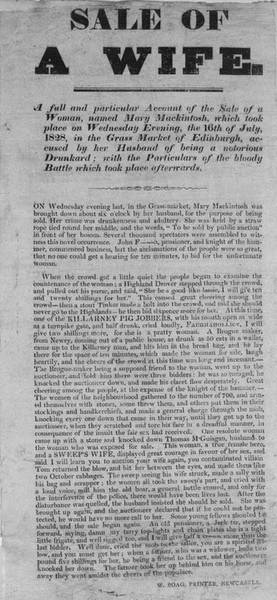
- Some participants suggest that women in early 19th century Scotland were viewed as property of their husbands and could be sold, citing an example of a woman sold for 2 pounds, 5 shillings.
- One participant expresses surprise at the legality of such practices occurring relatively recently in history.
- Another participant notes that while women could not sell their husbands, dowry practices in various cultures involve women effectively "buying" their husbands, indicating a broader context of marriage transactions.
- Links to historical broadsides and newspaper reports are shared, suggesting further exploration of the topic through primary sources.
Areas of Agreement / Disagreement
Participants express varying degrees of surprise and commentary on the historical practices, but there is no consensus on the implications or moral judgments regarding these practices. Multiple perspectives on the legality and cultural context remain present.
Contextual Notes
Participants reference specific historical documents and cultural practices without resolving the complexities of legal definitions or societal norms of the time.
Who May Find This Useful
Readers interested in historical legal practices, gender studies, and cultural anthropology may find this discussion relevant.

 . In fact this is still practiced today in some parts of the world.