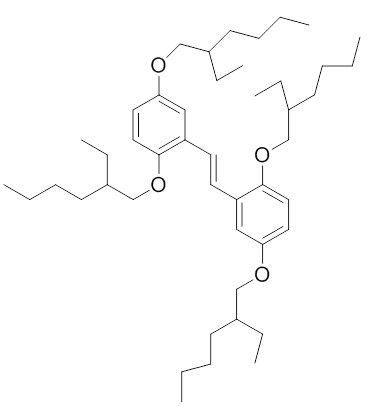
Which Materials Are Conjugated Polymers?

  • Thread starter Thread starter Agalev
  • Start date Start date
Click For Summary

Discussion Overview

The discussion revolves around identifying which materials qualify as conjugated polymers, focusing on the definitions and characteristics that distinguish them from non-conjugated materials. Participants explore the structural requirements, such as the presence of pi bonds and the arrangement of single and double bonds, as well as the implications of aromaticity.

Discussion Character

  • Exploratory
  • Technical explanation
  • Debate/contested

Main Points Raised

  • One participant seeks clarification on which materials are conjugated polymers and expresses difficulty in identifying them.
  • Another participant questions the definition of conjugated polymers and the role of pi bonds in their identification.
  • It is suggested that the presence of alternating single and double bonds is necessary for a molecule to be considered conjugated.
  • A participant challenges the assertion about alternating bonds in a specific molecule, indicating a disagreement on the structural interpretation.
  • There is a discussion about whether round molecules can exhibit alternation in bonding and how that relates to conjugation.
  • One participant posits that for a polymer to be considered conjugated, the conjugated bond system must extend throughout the entire molecule.
  • Another participant expresses confusion about the concept of alternation in the context of aromatic compounds and their properties.

Areas of Agreement / Disagreement

Participants do not reach a consensus on the criteria for identifying conjugated polymers, with multiple competing views presented regarding the structural requirements and the role of aromaticity.

Contextual Notes

Limitations include varying interpretations of what constitutes alternating bonds, the impact of molecular shape on conjugation, and the specific requirements for aromatic compounds in relation to conjugation.

Who May Find This Useful

Individuals interested in polymer chemistry, materials science, and the structural characteristics of conjugated materials may find this discussion relevant.

Agalev
Messages
7
Reaction score
0
Please post this type of questions in HW section using the template. You have to show your attempts at solving the problem to receive help, this is a forum policy.
Hey,

I'm having a problem for some time finding out which of these materials are conjugated polymers and which aren't.

Can somebody please help me?
polymeren1.png

polymeren2.png
 
Physics news on Phys.org
How are they defined?
 
This is the only thing I got are the pictures and the defenition of conjugated materials. But I don't know which one's have pi-bonds
 
Sole presence of pi bonds is not enough.

But let's start from here. What is a pi bond? Where is it present?
 
There has to be an alternating single and double bond like in the second molecule. Also in the thirth a double bound can shift to a single
 
There are no alternating single and double bonds in the second molecule!
 
they have to be round molecules? So 3,4 and the last one are the conjugated polymers
 
Nope. What does "alternate" mean? Compare

-=-=-=-=-=-

and

---=---=---=---

Which one would you call "alternate"?
 
Yes the first one is alternating. But how does the alternation work when the molecule is round? Is it like the last molecule?
 
  • #10
It doesn't have to go all the way around, but in general it is the same, you are looking for a path consisting of alternate double/single bonds.

To make things more complicated some of these "round" systems are aromatic, which makes their properties different, but that's another story.
 
  • #11
Ok thanks for your help so far! I thought alternating meant that a bound switches from single to double and vicacersa.

So they are all conjugated except for te second one?

Or is something else to be conciderid for the aromatic compounds?
 
  • #12
Fro the polymer to be considered conjugate I don't think it is enough that it contains conjugate bonds - I think the conjugate bond system must extend to the whole molecule (which means it must go through the "main linking chain" of the polymer).
 
  • #13
Thanks a lot, you helpt me a great deal
 

Similar threads

  • · Replies 2 ·
Replies
2
Views
2K
Replies
2
Views
3K
  • · Replies 4 ·
Replies
4
Views
2K
  • · Replies 6 ·
Replies
6
Views
5K
  • · Replies 8 ·
Replies
8
Views
3K
Replies
4
Views
4K
  • · Replies 2 ·
Replies
2
Views
3K
  • · Replies 2 ·
Replies
2
Views
2K
  • · Replies 1 ·
Replies
1
Views
2K
Replies
6
Views
2K