| New Reply |
Chernobyl reactors 1-3 |
Share Thread | Thread Tools |
| Jan26-13, 07:42 PM | #1 |
|
|
Chernobyl reactors 1-3
After the Chernobyl NPP was fully and permanently shut down in 2000, did they remove the fuel from reactors 1-3 as well as from the spent fuel pools?
Construction on reactors 5-6 was cancelled after the meltdown in 1986.
|
| Jan28-13, 02:12 AM | #2 |
|
|
As far as I know, reactors #1, #2, and #3 still have some fuel contained within, as well as some in the spent fuel ponds. Over the years, a number of proposed contracts for defueling and transportation of the spent fuel to a long term storage facility have fallen through due to budgets overrunning and the difficulty in dealing with the politics of the region (Western companies tend to have a hard time overcoming the bureaucracy, as Ukraine likes to appear to be pro-Russian rather than pro-Western).
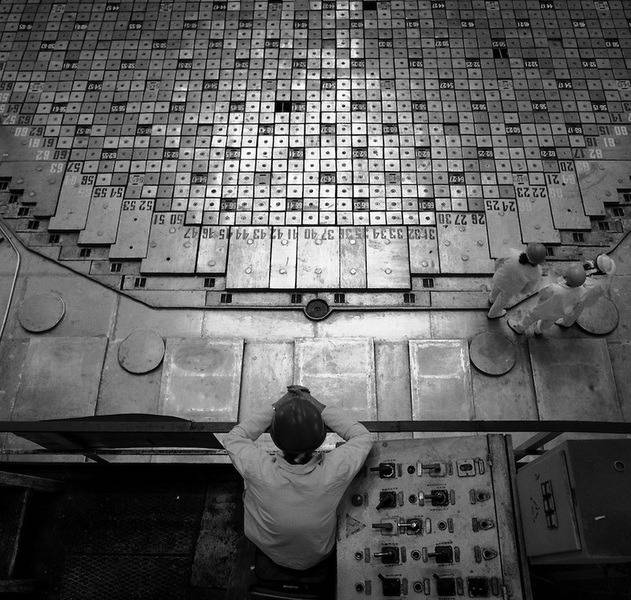
Recently there's been an increase in pressure from the IAEA as well as the Chernobyl-Fukushima human interest group to completely decommission the site. From what I understand, the current plan is to finish the previous abandoned ISF-2 storage site after the Sarchophagus replacement, and then defuel 1 - 3 (no idea how they will attempt to decommission number 4 though!). That's an awesome picture btw, here's one of the scrapped reactors 5 and 6 I took whilst I was there, complete with cranes and half-finished buildings where construction was suddenly halted. Spooky! |
| Jan28-13, 02:21 AM | #3 |
|
|
Love that pic.
|
| Jan28-13, 02:24 AM | #4 |
|
|
Chernobyl reactors 1-3There was also another proposed plan of burying the reactor ruins with millions of tons of sand and concrete and leave it like that forever.. Chernobyl is old hat, the new problem is dealing with Fukashima Daiichi in Japan. Which is said to be even more dangerous and highly radioactive than the Chernobyl exclusion zone. Most of the radioactive core material is contained within Chernobyl's "sarcophagus" and it is relatively safe for people to visit "the zone" while wearing the proper protective equipment and respirators, for a very short period of time. The Fukashima exclusion zone is much "hotter" than Chernobyl because it is a fairly recent event and has not yet been completely contained. Fortunately, the severity and radiological release of Fukashima was much less than 1/10th that of Chernobyl according to this televised documentary. |
| Jan28-13, 02:56 AM | #5 |
|
|
Well they in the process of building a replacement sarcophagus to fit over the rather hastily built one. It is being built on-site, just a few hundred yards form reactor #4, constructed on rails so it will simply 'slide' over the old structure. In the last couple of months they announced that the first stage had been completed, the basic frame of the sarchophagus mk 2 now up. The company in charge is called 'Novarka' (google 'em to see some sarchophagus pics, it's pretty cool!).
The final plan will probably be a combination of both your suggested ideas. Using radiation-resistant robots to try and clear away as much of the fuel and high-level waste as possible, the last stage will probably be to use concrete and seal the building completely. This could in all probability decrease the dose rate outside the building to around background levels! At the moment the dose rate in the air close to the NPP is around 0.9 μSv/hr (about 3 times normal background). That's mainly due to the reactor itself. The dose rate on the ground is higher in places (hot spots due to contamination from the explosion and the cloud). See a couple more pics to highlight this. I wouldn't say that Chernobyl is old hat, at least not to the international nuclear community and to the people of Ukraine. I also don't know who said that the Fukushima exclusion zone is more 'dangerous' or 'hotter' than the Chernobyl one, but let's just agree that qualitative and emotive expressions like these don't really have any place in a scientific discussion ;). Since the CNPP exclusion zone is actually a hive of activity (about 3,000 scientists and engineers living there), as well as being home to some 300 settlers who have moved back in (oh and don't forget the Chernobly national park, a wildlife haven for animals), it's certainly not as bad as you make out. You don't need protective clothing or respirators, and in most place the dose rate is actually LOWER than in cities, since you don't get nearly the same amount of traffic. The only comparison I can make between Fukushima and Chernobyl that is related to your original question is that much of the same robotic technology and containment procedures will be applied between the two. There's a great deal of scientific collaboration in this regard. |
| Jan28-13, 04:11 AM | #6 |
|
|
The current state of Chernobyl site very much looks like a giant permanent source of kickbacks.
For example: The basements and ground floors of Chernobyl Unit 4 can be just filled with concrete, completely covering all corium and heavily contaminated structures; then the remaining structures on top can be dismantled. But that is way too CHEAP! |
| Jan28-13, 04:15 AM | #7 |
|
|
What's the problem with leaving melted fuel and high-level waste where it is now? |
| Jan28-13, 04:24 AM | #8 |
|
|
In Fukushima, melted cores were contained inside reactor buildings. Only volatiles (caesium, strontium) escaped. Plutonium escaped in very small amounts. |
| Jan28-13, 04:46 AM | #9 |
|
|
2) At the moment it's not exactly in a safe state. Since high-level waste will remain active for thousands of years, the nuclear industry and the public want assurances that it won't leak out of its container and find its way into a major river (the Dnieper in the case of the CNPP, which flows through Kiev). The CNPP sarcophagus is not such a container, it was hastily constructed and has required constant maintenance over the years. Simply filling everything in with concrete provides absolutely no guarantee that you prevent further contamination over time. The entire building is slowly collapsing and despite a lot of remote viewing we don't yet have a clear picture (AFAIK) of the locations of all the fuel hot-spots inside. You also can't overlook the socio-environmental implications of leaving Chernobyl as it is, a constant source of fuel for the anti-nuclear brigade. Imagine a fully decommissioned Chernobyl, with the fuel removed and the on-site background dose reduced to normal levels. That would show the world that the nuclear industry is the only energy industry that is fully capable of true environmental remediation. This thing has to be done properly, not the half-arsed Soviet-era guesstimations that caused the accident in the first place. I should also mention that it's not just the management of the CNPP that goes on in the zone, there's also a great deal of environmental research. |
| Jan28-13, 07:09 PM | #10 |
|
|
http://www.chnpp.gov.ua/index.php?op...id=101&lang=ru
You can watch the construction of a new "sarcophagus" (new safe konfeyment on our own. НБК ) through this online camera. |
| Jan28-13, 07:11 PM | #11 |
|
|
http://www.chnpp.gov.ua/index.php?lang=en
This is the official site of the Chernobyl nuclear power plant. |
| Jan28-13, 07:20 PM | #12 |
|
|
A lot of information (videos, photos, forum) about the Chernobyl katostrofy here.
http://pripyat.com/en And also here http://chornobyl.in.ua/en/ |
| Jan29-13, 01:06 PM | #13 |
|
|
And secondly, how turning basements in a monolithic slab of rock "provides absolutely no guarantee"? It is definitely way better than current state. In other words, even is Chernobyl site itself will be cleaned up to a state of pristine clean patch of grass, it will be still useless economically. I think that such a PR operation is "a little bit" too costly. Having a first-hand knowledge about said government, I don't expect prospects of rapid changes; I am sure massive squandering of money while making some progress at glacial pace will continue. |
| Jan29-13, 08:57 PM | #14 |
|
|
The Chernobyl exclusion zone is a bustling haven for variously environmental and scientific research. It would probably be a better decision to just build a secondary sarcophagus to reduce radiation levels in Pripyat and surrounding areas to normal background levels. The only place in Chernobyl that has DANGEROUS levels of radiation is inside the reactor block itself. All of the nuclear fuel is contained entirely inside the sarcophagus and poses no environmental threat. |
| Jan30-13, 01:02 AM | #15 |
|
|
The background outside Unit 4 isn't coming from Unit 4. Fuel and debris inside Unit 4 needs to be covered not so much in order to shield its emissions, but to prevent it from weathering and spreading around in the form of dust or dissolved salts in rain- and groundwater. |
| Jan30-13, 05:20 AM | #16 |
|
|
Nikkkom, your concrete plan is still impractical it makes no attempt to account for the fuel inventory.
As I said before, we don't know how far the fuel has penetrated the concrete bedrock and its subsequent distribution, so even if you fill the entire building with grade A triple rad protection concrete (not a cheap idea BTW ) you can't guarantee you've prevented long-term contamination.Criticising the socio-environmental benefits on economic grounds also is a weak argument, as it digresses from my point. I would be inclined to say this thread seems to have dissolved into sweeping generalisations, misinterpretations, and ill-informed opinions. I would recommend reading a.ua.'s links (thanks for those!) as it may help you to look at things a little more objectively. Finally: I posted a picture above that showed a gamma dose rate on a soil hotspot of 13.27 μSv/hr. The nuclear industry considers this a 'dangerous level'. Whilst much of the exclusion zone is low in dose rate, these hotspots are what make the area unsafe (from a radiological point of view, there are other dangers). |
| Jan30-13, 05:57 AM | #17 |
|
|
While you worry about long-term contamination, today a bird can fly into Sarcophagus through one of numerous holes and land on the (still highly radioactive) Upper Biological Shield of the former 4th reactor. Today, rainwater pours into Sarcophagus, and then OUT of it, measured in TONS. It's been 26 *years*, and not much have been done since 1990 (apart from billions stolen). I would risk stating that I know what I'm talking about. |
| New Reply |
| Thread Tools | |
Similar Threads for: Chernobyl reactors 1-3
|
||||
| Thread | Forum | Replies | ||
| After visiting Chernobyl... | General Discussion | 12 | ||
| effects the Chernobyl accident caused are evident now? | Earth | 7 | ||
| Chernobyl - Can someone answer a few questions please? | Nuclear Engineering | 74 | ||
| A trip to Chernobyl | General Discussion | 1 | ||
| Chernobyl 20th anniversary. | Nuclear Engineering | 2 | ||