Physicsfreek
- 4
- 0
The Lorentz Transformations on a Block of Space
Reference system V, RSV, is a block of three-dimensional space that has a velocity, v, reference to a block of space that is at rest, RSR. The Lorentz transformations express the measurement of length, mass and time in RSV, as measured by RSR, as RSV approaches the speed of light. Within RSV, the measurement of length, mass and time in RSV remains the same as if RSR does not exist.
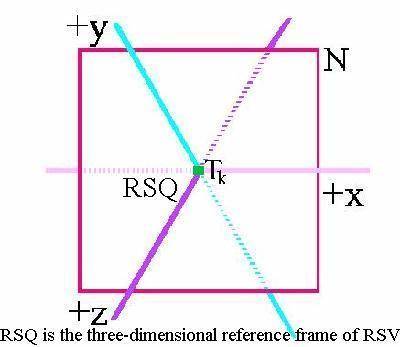
RSQ is the three-dimensional reference frame of RSV and is situated in RSV reference to plane N in the following manner: Plane N lies within the plane of the page and the three positive axes of RSQ extend 35° above the plane of the page. The axis of propagation of RSV, Tk, is perpendicular to the plane of the page.
Length Transformation
Plane N, a plane of reference in RSV is perpendicular to the axis of propagation of RSV. RSQ is a three-dimensional, spatial reference frame with x, y and z-axes. Viewing plane N in the plane of the page, zero of RSQ is in plane N, the three positive axes of RSQ extend 35 º above the plane of the page and the three negative axes extend 35 º below the plane of the page. Tk, the axis of propagation of RSV, intersects the x, y and z axes of RSQ at zero and is perpendicular to the plane of the page.
RSVL = RSRL * √1-(v/c)2 - The transformation of length in RSV as velocity increases.
With a velocity of ninety-nine point nine nine five percent of the speed of light, .99995c, RSV has a contraction in length of one hundred to one reference to RSR and time is stretched at a ratio of one to one-hundred as the clocks in RSV run slower compared to clocks in RSR.
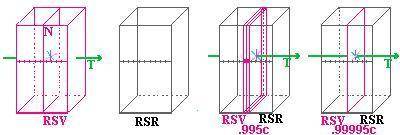
If RSV has a velocity of 99.5% of c, the width of RSV is contracted to 10% along the axis of propagation as measured against RSR. As v approaches the speed of light, the width of RSV approaches zero (at 0.99995c, the width of RSV is one-one hundredth of RSR). As RSV contracts along the axis of propagation, the extension of the x, y, z axes above plane N flattens toward the plane. When v = c, RSV is measured by RSR as a plane with height and breadth but no thickness. The relative plane of RSV will be represented by plane N that has a relative thickness of zero to RSR. Three-dimensional RSQ is situated in N and has no extension beyond the plane of N. Within N, three-dimensional space is still measured by the coordinates of RSQ as if RSR does not exist.
Plane N has a velocity of 299,792,458 meters on the Tk axis for every second of time measured in RSV.
Time Transformation
RSVt = RSRt / √1-(v/c)2 The transformation of time as velocity increases.
When v approaches c, the clocks in RSV, as measured by RSR, slow down. When v equals c, the clocks in RSV, as measured by RSR, stop. The measurement of time within RSV continues to be measured as if RSR does not exist.
Mass Transformation
RSVm = RSRm / √1-(v/c)2 The transformation of mass as velocity increases.
RSV starts with zero mass: RSVm = 0 and RSR measures 0 mass. With zero mass, RSV is allowed by Einstein’s theory of relativity to have a velocity of the speed of light.
RSVtx has a velocity of the speed of light in the forth dimension and exists as a plane in time, N, with height and breadth but no thickness. RSQ is three-dimensional in N. Nx is RSVtx. The axis of propagation, Tk, is perpendicular to N.
RSV is a block of three-dimensional space with a velocity of the speed of light relative to a reference system in the forth dimension, RST, that is considered at rest. RSV has height and breadth perpendicular to the axis of propagation but has no thickness in the direction of propagation on Tk.
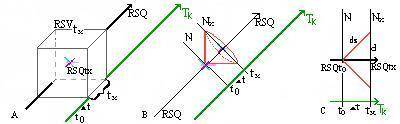
A plane in time diagram is drawn in the forth dimension. Plane N encompassing a three-dimensional space within the forth dimension that has a velocity of 299,792.458 kilometers per second as measured along the axis of propagation, Tk. RST is the reference point in the forth dimension that is considered at rest reference to N and against which the velocity of N is measured. Tk emanates from RST.
Any block of three-dimensional space, which has a velocity c (reference to RST) has height and width but has a relative thickness of zero along the axis of propagation, Tk. All of three-dimensional space that is defined by RSV is within plane N. The three-dimensional, special axes are still perpendicular in RSV and distance is measured in RSV reference to the x, y, and z axes. RSQ is considered stationary within RSV and will be renamed RSS. Plane N represents a block of three-dimensional space with a velocity in the forth dimension of 299,792.458 kilometers per measured second reference to RST. The axis of propagation, Tk, emanates from RST, is perpendicular to N and intersects N at a point.
Reference system V, RSV, is a block of three-dimensional space that has a velocity, v, reference to a block of space that is at rest, RSR. The Lorentz transformations express the measurement of length, mass and time in RSV, as measured by RSR, as RSV approaches the speed of light. Within RSV, the measurement of length, mass and time in RSV remains the same as if RSR does not exist.
RSQ is the three-dimensional reference frame of RSV and is situated in RSV reference to plane N in the following manner: Plane N lies within the plane of the page and the three positive axes of RSQ extend 35° above the plane of the page. The axis of propagation of RSV, Tk, is perpendicular to the plane of the page.
Length Transformation
Plane N, a plane of reference in RSV is perpendicular to the axis of propagation of RSV. RSQ is a three-dimensional, spatial reference frame with x, y and z-axes. Viewing plane N in the plane of the page, zero of RSQ is in plane N, the three positive axes of RSQ extend 35 º above the plane of the page and the three negative axes extend 35 º below the plane of the page. Tk, the axis of propagation of RSV, intersects the x, y and z axes of RSQ at zero and is perpendicular to the plane of the page.
RSVL = RSRL * √1-(v/c)2 - The transformation of length in RSV as velocity increases.
With a velocity of ninety-nine point nine nine five percent of the speed of light, .99995c, RSV has a contraction in length of one hundred to one reference to RSR and time is stretched at a ratio of one to one-hundred as the clocks in RSV run slower compared to clocks in RSR.
If RSV has a velocity of 99.5% of c, the width of RSV is contracted to 10% along the axis of propagation as measured against RSR. As v approaches the speed of light, the width of RSV approaches zero (at 0.99995c, the width of RSV is one-one hundredth of RSR). As RSV contracts along the axis of propagation, the extension of the x, y, z axes above plane N flattens toward the plane. When v = c, RSV is measured by RSR as a plane with height and breadth but no thickness. The relative plane of RSV will be represented by plane N that has a relative thickness of zero to RSR. Three-dimensional RSQ is situated in N and has no extension beyond the plane of N. Within N, three-dimensional space is still measured by the coordinates of RSQ as if RSR does not exist.
Plane N has a velocity of 299,792,458 meters on the Tk axis for every second of time measured in RSV.
Time Transformation
RSVt = RSRt / √1-(v/c)2 The transformation of time as velocity increases.
When v approaches c, the clocks in RSV, as measured by RSR, slow down. When v equals c, the clocks in RSV, as measured by RSR, stop. The measurement of time within RSV continues to be measured as if RSR does not exist.
Mass Transformation
RSVm = RSRm / √1-(v/c)2 The transformation of mass as velocity increases.
RSV starts with zero mass: RSVm = 0 and RSR measures 0 mass. With zero mass, RSV is allowed by Einstein’s theory of relativity to have a velocity of the speed of light.
RSVtx has a velocity of the speed of light in the forth dimension and exists as a plane in time, N, with height and breadth but no thickness. RSQ is three-dimensional in N. Nx is RSVtx. The axis of propagation, Tk, is perpendicular to N.
RSV is a block of three-dimensional space with a velocity of the speed of light relative to a reference system in the forth dimension, RST, that is considered at rest. RSV has height and breadth perpendicular to the axis of propagation but has no thickness in the direction of propagation on Tk.
A plane in time diagram is drawn in the forth dimension. Plane N encompassing a three-dimensional space within the forth dimension that has a velocity of 299,792.458 kilometers per second as measured along the axis of propagation, Tk. RST is the reference point in the forth dimension that is considered at rest reference to N and against which the velocity of N is measured. Tk emanates from RST.
Any block of three-dimensional space, which has a velocity c (reference to RST) has height and width but has a relative thickness of zero along the axis of propagation, Tk. All of three-dimensional space that is defined by RSV is within plane N. The three-dimensional, special axes are still perpendicular in RSV and distance is measured in RSV reference to the x, y, and z axes. RSQ is considered stationary within RSV and will be renamed RSS. Plane N represents a block of three-dimensional space with a velocity in the forth dimension of 299,792.458 kilometers per measured second reference to RST. The axis of propagation, Tk, emanates from RST, is perpendicular to N and intersects N at a point.


