Onto set mapping is the surjective set mapping, and into injective?

  • Context: High School 
  • Thread starter Thread starter mcastillo356
  • Start date Start date
Click For Summary

Discussion Overview

The discussion centers around the definitions and distinctions between "onto" and "into" in the context of set mappings, particularly in relation to surjective and injective functions. Participants explore terminology from different languages and its implications in mathematical contexts, as well as delve into the Schroeder-Bernstein theorem and related concepts in topology and analysis.

Discussion Character

  • Conceptual clarification
  • Debate/contested
  • Mathematical reasoning
  • Homework-related

Main Points Raised

  • Some participants assert that a function is "onto" if it is surjective, meaning every element in the codomain is mapped by some element in the domain.
  • Others argue that "into" can be interpreted as injective, but this interpretation may vary by author, with some suggesting it simply means the image of the function is a subset of the codomain.
  • One participant notes that in German, "auf" corresponds to "onto" (surjective), "in" to "into" (injective), and "nach" to "to" (indicating a subset).
  • There is a discussion about the Schroeder-Bernstein theorem, with participants outlining the requirements for one-to-one mappings and the goal of producing a bijective mapping.
  • Some participants express uncertainty about constructing specific mappings and whether the Axiom of Choice is necessary for certain proofs.
  • There are multiple attempts to clarify the implications of injectivity and how it relates to the mappings discussed.
  • One participant mentions the historical context of the Schroeder-Bernstein theorem, noting its publication by Georg Cantor in 1887.

Areas of Agreement / Disagreement

Participants generally agree on the definition of "onto" as surjective, but there is disagreement regarding the interpretation of "into" and its relationship to injectivity. The discussion on the Schroeder-Bernstein theorem remains unresolved, with differing opinions on the necessity of the Axiom of Choice and the construction of specific mappings.

Contextual Notes

Some participants highlight the ambiguity in the terminology used across different languages and authors, which may lead to confusion in understanding the concepts of injectivity and surjectivity. There are also unresolved mathematical steps related to the construction of bijections and the implications of injective mappings.

mcastillo356
Gold Member
Messages
658
Reaction score
361
TL;DR
I'm almost sure, but need to check it with the forum. It's about the first chapter of "Introduction to topology and modern analysis" I am reading online.
The textbook is being fine. I asked the forum for some introduction to topology, and decided to start with Simmon`s. This naive question is due to ignorance of the words into and onto, which I don't distinguish in Spanish. A quick browsing sugests I'm right.
 
Physics news on Phys.org
Say, we have ##f\, : \,A\longrightarrow B.##

##f## is onto if it is surjective, i.e., ##\forall\,b\in B\,\exists\,a\in A\, : \,b=f(a).##
##f## is into if it is injective, i.e., ##f(a)=f(a')\Longrightarrow a=a'.##

However, the English language is not always very exact when it comes to "in", "to", or "into". I have seen examples where into just meant ##f(A)\subseteq B## without the requirement of being injective. So, onto equals surjective is always true, into equals injective depends on the author. At least to my experience.

In German, we would use "auf" = "onto" = surjective, "in"="into"=injective, and "nach"="to"= ##f(A)\subseteq B.##
 
  • Like
Likes   Reactions: mcastillo356
fresh_42 said:
Say, we have ##f\, : \,A\longrightarrow B.##

##f## is onto if it is surjective, i.e., ##\forall\,b\in B\,\exists\,a\in A\, : \,b=f(a).##
##f## is into if it is injective, i.e., ##f(a)=f(a')\Longrightarrow a=a'.##
Yes.
fresh_42 said:
However, the English language is not always very exact when it comes to "in", "to", or "into". I have seen examples where into just meant ##f(A)\subseteq B## without the requirement of being injective. So, onto equals surjective is always true, into equals injective depends on the author. At least to my experience.
Simmons is being precise. Into means inyective.
fresh_42 said:
In German, we would use "auf" = "onto" = surjective, "in"="into"=injective, and "nach"="to"= ##f(A)\subseteq B.##
That's accurate, indeed.
Thanks, @fresh_42 !
 
mcastillo356 said:
The textbook is being fine. I asked the forum for some introduction to topology, and decided to start with Simmon`s. This naive question is due to ignorance of the words into and onto, which I don't distinguish in Spanish. A quick browsing sugests I'm right.
To be on the set means occupying the whole set in a particular way and the word “onto” follows the definition of a surjective function at all.
To be in the set means occupying the part of the set but it does not mean that every element of the part of the set is occupied only once and this is the main reason for confusion. The word “into” does not completely follow the definition of an injective function.
 
  • Like
  • Informative
Likes   Reactions: PeroK and mcastillo356
Whether you use into and/or onto is upto you!
 
  • Haha
Likes   Reactions: mcastillo356
I'm working on the Schroether-Bernstein theorem, this is, the next step in the textbook "Introduction to topology and modern analysis", by Simmons. We assume that ##f:\,X\rightarrow{Y}## is a one-to-one mapping of ##X## into ##Y##, and that ##g:\,Y\rightarrow{X}## is a one-to-one mapping of ##Y## into ##X##. Our task is to produce a mapping ##F:\,X\rightarrow{Y}## which is one-to-one onto.
Apologies for my reaction to the previous post.
 
  • Like
Likes   Reactions: Gavran
You need to understand the words. As I see it, Simmons uses the following terms:

##f\, : \,X\longrightarrow Y## mapping

##X## is the domain of ##f.##

##f(X)## is the range of ##f.##

##f## maps ##X## into ##Y## means ##f(X)\subseteq Y.##

##f## maps ##X## onto ##Y## means ##f(X)= Y,## surjective.

##f## maps ##X## one-to-one into ##Y## means ##x\neq x' \Longrightarrow f(x)\neq f(x'),## injective.

##f## maps ##X## one-to-one onto ##Y## means ##f## is injective, and surjective, i.e., bijective.

So we have two injective embeddings ##f\, : \,X\hookrightarrow Y## and ##g\, : \,Y\hookrightarrow X## and want to define a bijection ##F\, : \,X \longrightarrow Y,## i.e. a mapping that is also surjective.
 
  • Like
Likes   Reactions: mcastillo356
For example, ##X = Y = \mathbb R## and ##f = g## are both the exponential function. Then how to construct ##F##?
 
PeroK said:
For example, ##X = Y = \mathbb R## and ##f = g## are both the exponential function. Then how to construct ##F##?
In this case you take the identity map. 😉
 
  • #10
PeroK said:
For example, ##X = Y = \mathbb R## and ##f = g## are both the exponential function. Then how to construct ##F##?
No idea. I can only attempt at it: ##F## could be the identity function? @martinbn says so.
Another doubt: The Axiom of Choice is needed?
 
  • #11
mcastillo356 said:
No idea. I can only attempt at it: ##F## could be the identity function? @martinbn says so.
Another doubt: The Axiom of Choice is needed?
No. What do you get from ##g\circ f##?
 
  • #12
mcastillo356 said:
No idea. I can only attempt at it: ##F## could be the identity function? @martinbn says so.
Another doubt: The Axiom of Choice is needed?
I looked it up. The AC is not needed.
 
  • #13
fresh_42 said:
No. What do you get from ##g\circ f##?
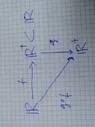
##\mathbb{R}^+##?


Real.webp
 
Last edited:
  • #14
mcastillo356 said:
##\mathbb{R}^+##?


View attachment 365430
No. We have ##f\, : \,X\longrightarrow Y## and ##g\, : \,Y\longrightarrow X.## No real numbers anywhere.

I had ##F=f\circ g\circ f## in mind, but I'm not sure whether this is necessary. Try to figure out what you need, when you assume the existence of an element ##y\in Y## that is not in the range of ##f.##
 
  • Like
Likes   Reactions: mcastillo356
  • #15
fresh_42 said:
No. We have ##f\, : \,X\longrightarrow Y## and ##g\, : \,Y\longrightarrow X.## No real numbers anywhere.

I had ##F=f\circ g\circ f## in mind
Does that work?
 
  • #16
PeroK said:
Does that work?
I don't know, I haven't solved it. The idea was born from the fact that the problem statement introduced ##F.## I thought ##f## would already do since ##fg## should be a permutation.
 
  • #17
fresh_42 said:
I don't know, I haven't solved it. The idea was born from the fact that the problem statement introduced ##F.## I thought ##f## would already do since ##fg## should be a permutation.
I suspect the proof is non trivial!
 
  • #18
PeroK said:
Does that work?
It need not work. The image will be contained in the image of ##f##, which need not be onto.
 
  • #19
PeroK said:
I suspect the proof is non trivial!
Indeed. I looked it up. There is really some work to do. I quote:
This seemingly obvious statement is surprisingly difficult to prove.
 
  • #20
fresh_42 said:
Indeed. I looked it up. There is really some work to do. I quote:
That's why i checked about the AC. Think about how awkward it is to get a bijection between ##\mathbb R## and ##\mathbb R^2##.
 
  • #21
mcastillo356 said:
I'm working on the Schroether-Bernstein theorem, this is, the next step in the textbook "Introduction to topology and modern analysis", by Simmons. We assume that ##f:\,X\rightarrow{Y}## is a one-to-one mapping of ##X## into ##Y##, and that ##g:\,Y\rightarrow{X}## is a one-to-one mapping of ##Y## into ##X##. Our task is to produce a mapping ##F:\,X\rightarrow{Y}## which is one-to-one onto.
You already have the proof of the theorem on page 29 of the book. By the way, the more common statement of the Schroeder-Bernstein theorem is this: if there are injections f : A → B and g : B → A, then there is a bijection h : A → B.
 
  • #22
Gavran said:
You already have the proof of the theorem on page 29 of the book. By the way, the more common statement of the Schroeder-Bernstein theorem is this: if there are injections f : A → B and g : B → A, then there is a bijection h : A → B.
Working hard on it.
 
  • #24
Lemma 2 is difficult to me

Why ##A=A_{0}\sim{B_{1}}\sim{A_{2}}\sim{B_{3}}\sim{A_{4}}\sim{\cdots}##?

Attempt
##A=A_{0}##, ##B_{1}=f(A_{0})##, and so on. Why is this a consequence of injectivity?


Attempt
A set mapping is injective if

$$\forall{a,\,b}\in{X}\quad{f{(a)}=f{(b)}\Rightarrow{a=b}}$$

##A=A_{0}##, ##B_{1}=f(A_{0})##, and so on follows from the definition of injectivity.
 
Last edited:
  • #25
If we have an injective map ##f\, : \,A\rightarrow B## then its restriction on the image ##f'\, : \,A \rightarrow f(A)## is bijective.
 
  • Like
  • Informative
Likes   Reactions: Gavran and mcastillo356
  • #26
Gavran said:
By the way, the more common statement of the Schroeder-Bernstein theorem is this: if there are injections f : A → B and g : B → A, then there is a bijection h : A → B.
The first statement of the theorem was published in 1887 by Georg Cantor.
If M and N are two such sets that components M' and N' can be separated from them, of which it can be shown that |M|=|N'| and |M'|=|N|, then M and N are equivalent sets.
 
  • Informative
Likes   Reactions: mcastillo356
  • #27
fresh_42 said:
Here is another source, in case this is easier.
https://web.williams.edu/Mathematics/lg5/CanBer.pdf
Lemma 5 and Lemma 6 seem easy, but I've had to think about set partitions and equivalence relations.

Attempt

For any equivalence relation on a set ##X##, the set of its equivalence classes is a partition of ##X##. Conversely, from any partition ##P## of ##X##, we can define an equivalence relation on ##X## by setting ##x\sim{y}## precisely when ##x## and ##y## are in the same part in ##P##.

A bijection is an equivalence relation.

Lemma 5

$$A=\bar{A}\cup{\tilde{A}}$$

$$B=\bar{B}\cup{\tilde{B}}$$

Equivalence relation:

$$\tilde{A}=A_o^*\sim{B_1^*}\sim{A_2^*}\sim{B_3^*}\sim{A_4^*}\sim{\cdots}$$

$$\tilde{B}=B_0^*\sim{A_1^*}\sim{B_2^*}\sim{A_3^*}\sim{B_4^*}\sim{\cdots}$$

Set partition:

$$A\simeq{\tilde{A}}=\displaystyle\bigcup_{n\geq{0}}A_n^*\sim\displaystyle\bigcup_{n\geq{0}}B_n^*=\tilde{B}\simeq{B}$$

$$\bar{A}=\displaystyle\bigcap_{n\geq{0}}A_n$$

$$\bar{B}=\displaystyle\bigcap_{n\geq{0}}B_n$$
 
  • Like
Likes   Reactions: Gavran

Similar threads

  • · Replies 2 ·
Replies
2
Views
15K
  • · Replies 13 ·
Replies
13
Views
5K
  • · Replies 7 ·
Replies
7
Views
4K
  • · Replies 4 ·
Replies
4
Views
5K
  • · Replies 6 ·
Replies
6
Views
2K
  • · Replies 8 ·
Replies
8
Views
3K
  • · Replies 2 ·
Replies
2
Views
4K
  • · Replies 5 ·
Replies
5
Views
3K
  • · Replies 7 ·
Replies
7
Views
2K
  • · Replies 3 ·
Replies
3
Views
2K