Discussion Overview
The discussion revolves around the characteristics and design considerations of dock cranes, particularly focusing on their massive structures compared to mobile cranes with similar lifting capacities. Participants explore the reasons behind the size, reach, and specific applications of dock cranes in shipyards.
Discussion Character
- Exploratory
- Technical explanation
- Debate/contested
Main Points Raised
- Some participants note that dock cranes must handle not only heavy but also large objects, which may require multiple lifting points to avoid damage.
- Others argue that the reach of a crane significantly affects its lifting capacity, especially when placing heavy loads at a distance.
- A participant highlights that mobile cranes can only lift their maximum capacity when the boom is at a short length and a steep angle, which limits their effectiveness for large, distant lifts.
- There is a discussion about the use of spreader beams to distribute load and prevent damage during lifting operations.
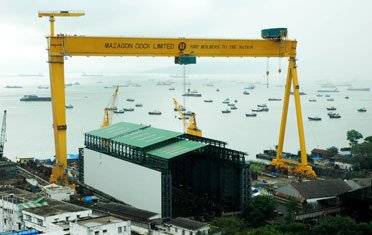
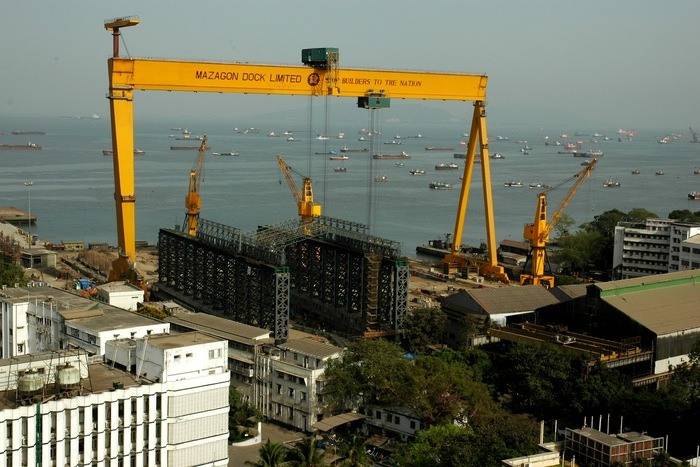
- Some participants question the design of the crane's columns, noting that they are wider at the top and narrower at the base, prompting inquiries about the stress distribution and structural stability.
- A participant describes the necessity for the crane's beam to be deep to prevent buckling under compression, emphasizing the differences in structural integrity between dock cranes and mobile cranes.
- There is a mention of the non-symmetrical design of crane columns, with participants speculating on the design choices and their implications for stability and functionality.
- One participant discusses the role of solid and slender columns in maintaining stability and adapting to variations in load and rail track conditions.
Areas of Agreement / Disagreement
Participants express a range of views on the design and functionality of dock cranes versus mobile cranes, with no clear consensus on the best approach or design principles. The discussion remains unresolved regarding the specific reasons for the non-symmetrical design of crane columns and the implications of structural stability.
Contextual Notes
Participants reference various technical aspects of crane operation and design, including load distribution, structural integrity, and the effects of crane reach on lifting capacity. Some assumptions about load handling and structural behavior are not fully explored or defined.