Amateur solar imaging and technique discussion
Join the discussion
Registration is free. Ask a follow-up in this thread, or start your own.
311 replies · 66K views
Astronomy news on Phys.org
Science Advisor
- 659
- 241
Wow, these are very sharp for single exposures! I imagine if you do start stacking these they will come out very well resolved.davenn said:They are all just single shots
Science Advisor
Gold Member
- 9,747
- 11,967
NFuller said:I imagine if you do start stacking these they will come out very well resolved.
yes, it would very much improve the result
Most of the guys that are into doing that do video clips consisting of around 500 to 1500 frames and then use programs that will take the best ~ 20% of those frames and stack them

Science Advisor
Homework Helper
- 30,594
- 7,548
Good image and convincingly sharp!
Not much Sun visible here today.Thick cloud and flurries of rather wet snow, along with rain.
Time to light the log burner, I think.
Not much Sun visible here today.Thick cloud and flurries of rather wet snow, along with rain.
Time to light the log burner, I think.
Science Advisor
Gold Member
- 9,747
- 11,967
sophiecentaur said:Good image and convincingly sharp!
thanks ... it's still sharper visually than when imaged
sophiecentaur said:Not much Sun visible here today. Thick cloud and flurries of rather wet snow, along with rain.
Time to light the log burner, I think.
been cloudy here for last 4 days. Missed some nice proms 3 days ago
It doesn't snow here at home It does occasionally do so up on the Blue Mountains ~ 8u0km to the west of SydneyDave
Science Advisor
Homework Helper
- 30,594
- 7,548
Calls fo Unsharp Mask, perhaps?davenn said:thanks ... it's still sharper visually than when imaged


Stavros Kiri
- 1,148
- 1,014
My first view of the 2018 sun (haven't been out yet) ...davenn said:2018-01-01 The Sun in Ha ...
[and the 100th post! Al right! Yeah! ... ]
Science Advisor
Homework Helper
- 30,594
- 7,548
Unsharp mask does the biz for most pictures. It's basically a sharpening process (high pass / boost) with a threshold, below which it doesn't operate. So it enhances transitions but you can hold back for low level patterns / noise. The 'radius' button adjusts the range over which you do the enhancing. You always have to check the whole picture or a sharp edge can have a black / white border.davenn said:possibly, yes ... I'm aware of the process but haven't played with it yet
You really have to try it. It does a lot for craters and highlights in eyes.
Science Advisor
Gold Member
- 9,747
- 11,967
well, it's been a productive summer holiday in a number of ways.
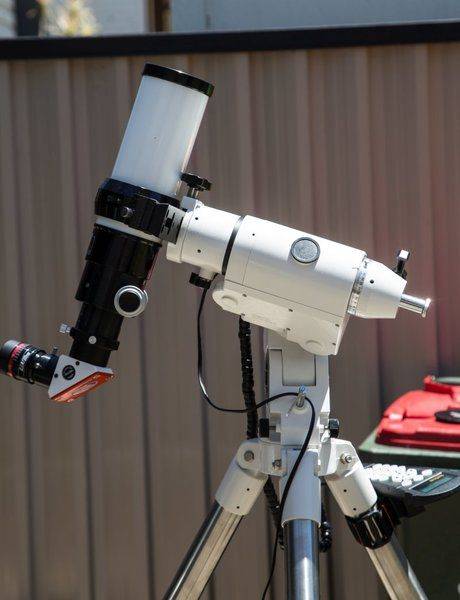
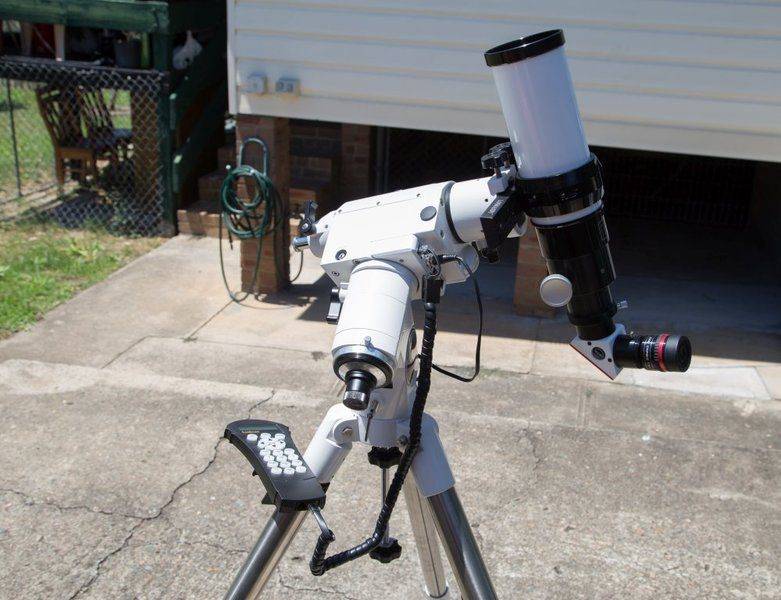
Got a few things done around the place that had been outstanding for a while. One of them was to finally put my HEQ5 PRO GOTO
telescope mount to use ... it's only taken one and a half years

Below a couple of images of the mount with the Lunt LS60 THA solar scope mounted to it
 Dave
Dave
Got a few things done around the place that had been outstanding for a while. One of them was to finally put my HEQ5 PRO GOTO
telescope mount to use ... it's only taken one and a half years
Below a couple of images of the mount with the Lunt LS60 THA solar scope mounted to it
Attachments


Last edited:


Science Advisor
Homework Helper
- 30,594
- 7,548
Science Advisor
Gold Member
- 9,747
- 11,967
sophiecentaur said:@davenn terrific detail. You are getting your money's worth.
cheers mate

and I have just spent another AU$1400 today on a better camera
all the guys on various astro forums are telling me I should be using a monochrome camera for getting much better resolution
so I have purchased the ZWO ASI1600MM
https://www.bintel.com.au/product/zwo-asi1600mm-monochrome/
will be interesting to see the results
Dave
Science Advisor
Gold Member
- 9,747
- 11,967
Hi guys
well the ZWO ASI 1600MM finally arrived ( after the postal system sat on it for 3 days
 )
)
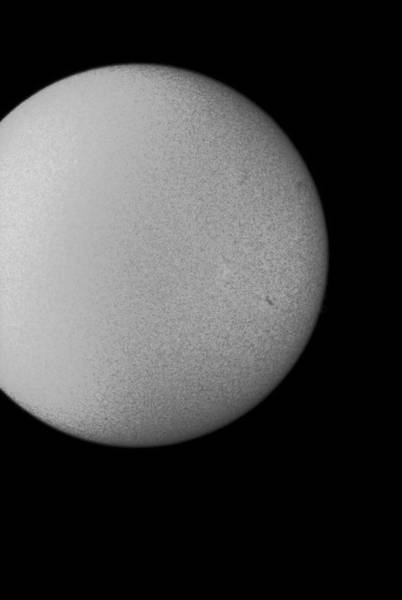
I did some comparisons between it and my ZWO ASI 178MC that had been the main solar cam up till today
The ASI 1600 is a 16MPix Monochrome camera
these first two are unprocessed ( SOOC ) , just resized for the forum
and ALL images are single frame only ( no stacking)
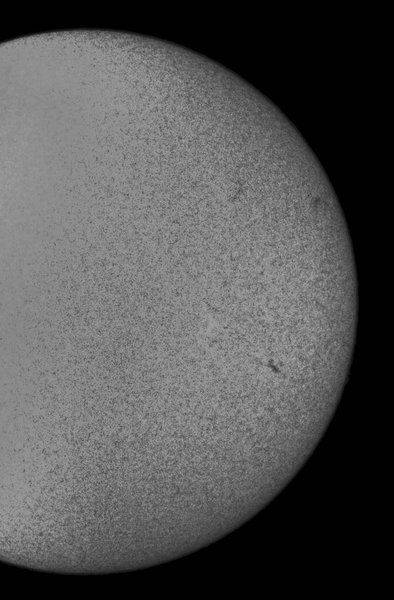
firstly ... the ASI 178MC using mono mode in SharpCap
 Now the ASI 1600MM
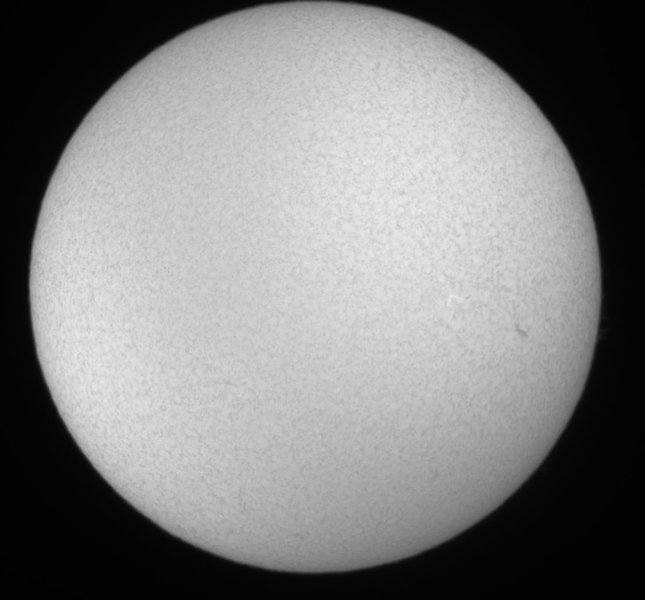 NOTE:, tho the image from the 178MC looks more detailed. Strong brightness variation can be seen across the image compared to the 1600MM
What I discovered in processing was that the 1600MM image processed so much better and resulted in a significant increase in finer details

ASI178 processed ...
ASI1600 processed ...
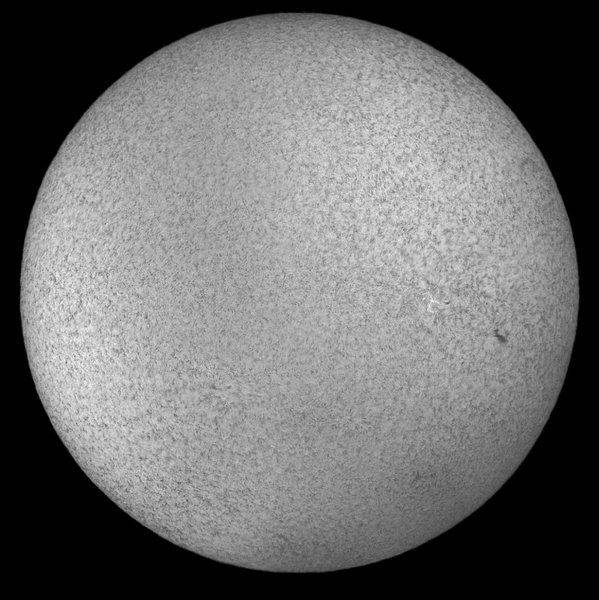
There isn't really any comparison between the two ... the ASI1600 shows much better detail. Specially seen around the Active Region
Next post ... prominences
Dave
well the ZWO ASI 1600MM finally arrived ( after the postal system sat on it for 3 days
I did some comparisons between it and my ZWO ASI 178MC that had been the main solar cam up till today
The ASI 1600 is a 16MPix Monochrome camera
these first two are unprocessed ( SOOC ) , just resized for the forum
and ALL images are single frame only ( no stacking)
firstly ... the ASI 178MC using mono mode in SharpCap
What I discovered in processing was that the 1600MM image processed so much better and resulted in a significant increase in finer details
ASI178 processed ...
ASI1600 processed ...
There isn't really any comparison between the two ... the ASI1600 shows much better detail. Specially seen around the Active Region
Next post ... prominences
Dave
Attachments
-
 Capture_0083 ASI1600.jpg28.2 KB · Views: 603
 -
 180120 ASI178 Cap001.jpg31 KB · Views: 511
 -
 180120 ASI1600 Cap001sm.jpg51 KB · Views: 586
 -
 default_frown.gif1 KB · Views: 560
 -
 default_smile.gif1 KB · Views: 556
 -
 5a6302afdacd6_Capture_0001ASI178.thumb.jpg.d74657519dd0c5dad3fb9c39667e8ae6.jpg11.7 KB · Views: 543
Science Advisor
Gold Member
- 9,747
- 11,967
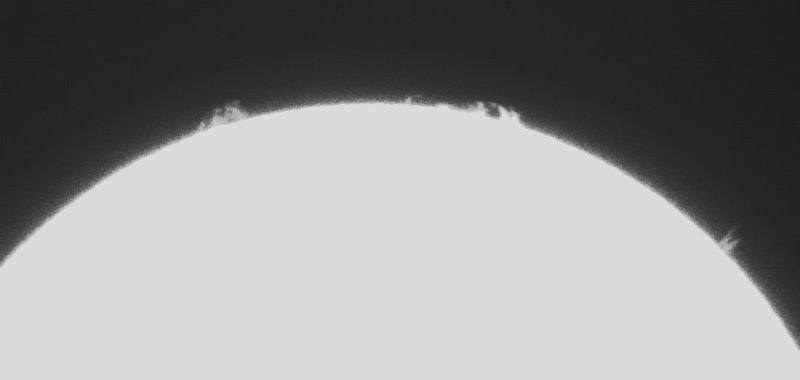
now some limb/prominences
Ohhh golly gosh !
again, these first two are unprocessed ( SOOC ) , just resized for the forum
ASI178MC
 ASI 1600MM
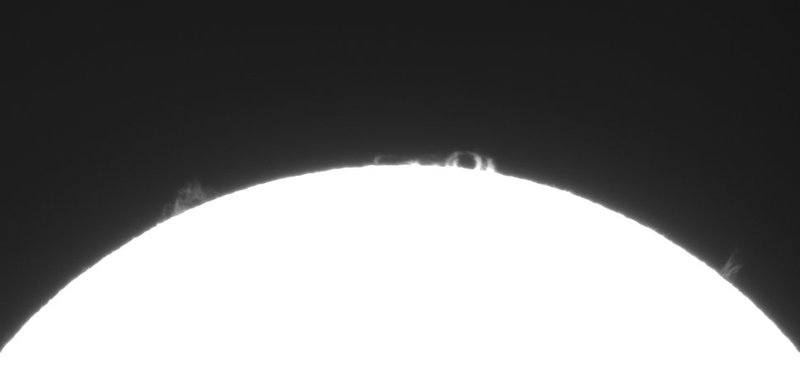 The limb and prominences are just so much sharper for the 1600MM
The 1600MM with a little processing
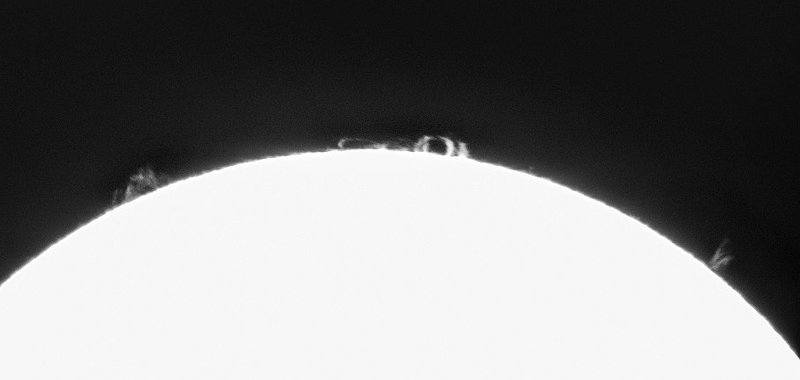
Dave
Ohhh golly gosh !
again, these first two are unprocessed ( SOOC ) , just resized for the forum
ASI178MC
The 1600MM with a little processing
Dave
Attachments


Science Advisor
Gold Member
- 9,747
- 11,967
The ASI 1600MM seems to have a better dynamic range ( well I would expect it to
 )
)
it is easier to pull out prominences and still have a non- overexposed surface
please excuse the poor editing blotchiness in the dark area around the outside of the sun ( I don't claim to be the world's best editor
 )
)
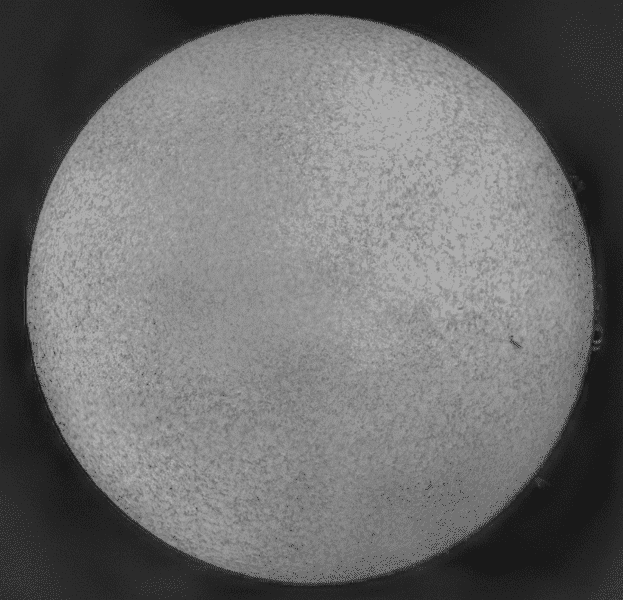 Dave
Dave
it is easier to pull out prominences and still have a non- overexposed surface
please excuse the poor editing blotchiness in the dark area around the outside of the sun ( I don't claim to be the world's best editor
Attachments


Science Advisor
Homework Helper
- 30,594
- 7,548
Nice pictures (as usual) Dave. As with the rest of (technical) life, you get what you pay for.
The detail after enhancement makes you want to touch it. It's that lovely illusion (as with the best TV pictures, viewed at the right distance) that you could just go closer and closer with no limit to the image detail.
The detail after enhancement makes you want to touch it. It's that lovely illusion (as with the best TV pictures, viewed at the right distance) that you could just go closer and closer with no limit to the image detail.
Stavros Kiri
- 1,148
- 1,014
I'm sure it's not just my digital device that ... I magnify, magnify, magnify ... and still get to see a picture of the Sun (huger and huger detail!) ...sophiecentaur said:Nice pictures (as usual) Dave. As with the rest of (technical) life, you get what you pay for.
The detail after enhancement makes you want to touch it. It's that lovely illusion (as with the best TV pictures, viewed at the right distance) that you could just go closer and closer with no limit to the image detail.
Pretty cool!
Science Advisor
Gold Member
- 9,747
- 11,967
sophiecentaur said:Nice pictures (as usual) Dave. As with the rest of (technical) life, you get what you pay for.
The detail after enhancement makes you want to touch it. It's that lovely illusion (as with the best TV pictures, viewed at the right distance) that you could just go closer and closer with no limit to the image detail.
Thanks buddy
So true it looks like the AU$1400 for this latest camera was worth the expense
Stavros Kiri said:I'm sure it's not just my digital device that ... I magnify, magnify, magnify ... and still get to see a picture of the Sun (huger and huger detail!) ...
Pretty cool!
cheers
buddy
and these pix here have been compressed in physical and kb size by the forum software
here's a link to the larger ( but not full size) rendition that I posted on other forums that don't have the restrictions
https://s10.postimg.org/eamdzbxex/180120_ASI1600_Cap001sm.jpg
the finer detail around that active region ( right area centre right, just to the left of that dark filament ) really starts to stand outDave

Science Advisor
Homework Helper
- 30,594
- 7,548
Totes amaze - as they say.
Science Advisor
Gold Member
- 9,747
- 11,967
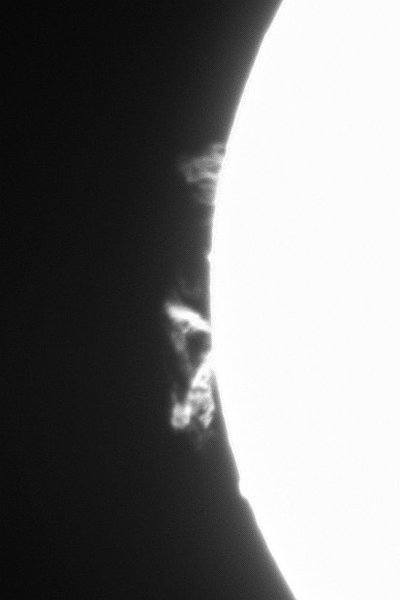
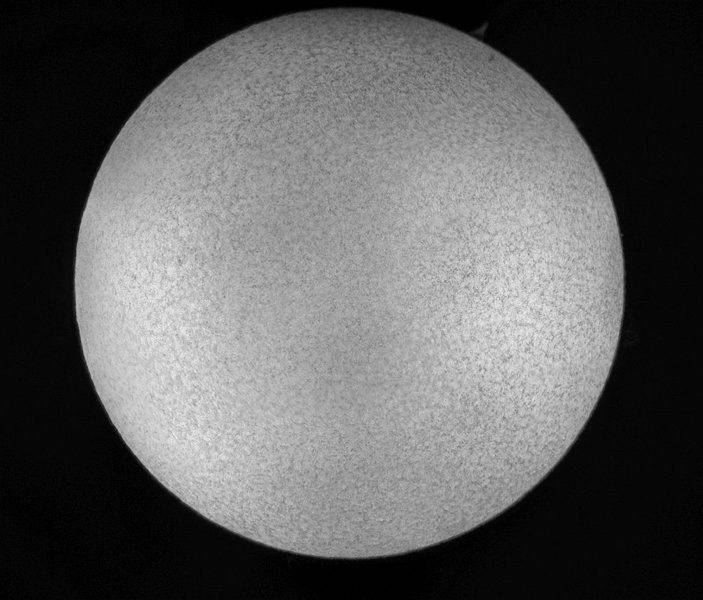
The Sun in Ha, 28/01/2018
Finally some clear(ish) skies at a time of the day that I could do some observing and imaging
Some really nice prominences today ...but the surface was pretty much devoid of interesting features
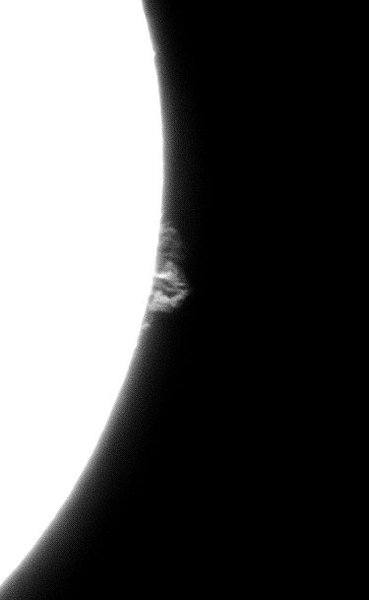
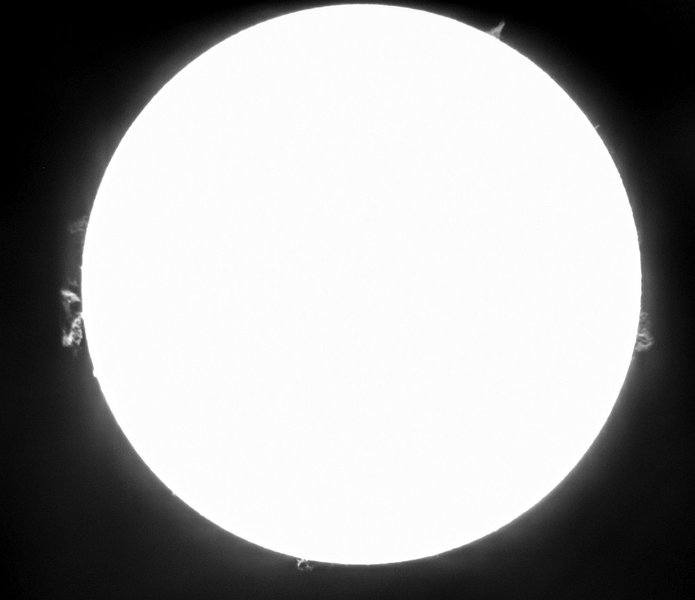
Cheers
Dave
Finally some clear(ish) skies at a time of the day that I could do some observing and imaging
Some really nice prominences today ...but the surface was pretty much devoid of interesting features
Cheers
Dave
Attachments


Last edited:
Stavros Kiri
- 1,148
- 1,014
Wow! It seems it's like "prominence day" today for the sun! ...
Science Advisor
Gold Member
- 9,747
- 11,967
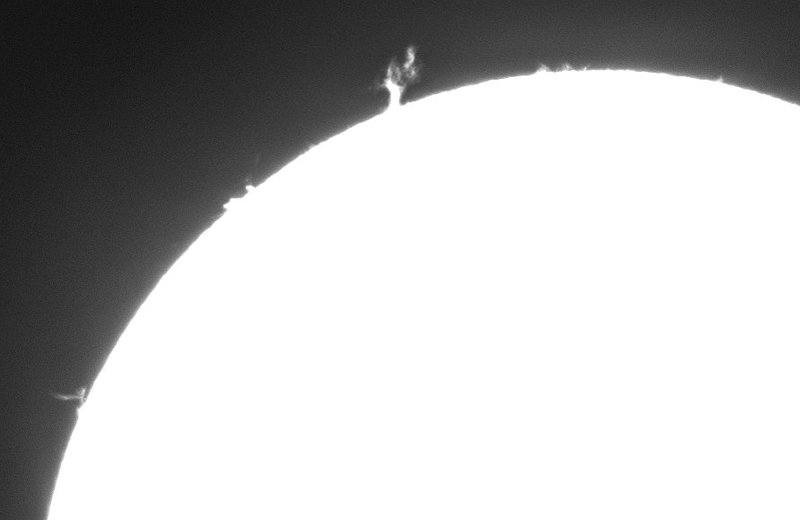
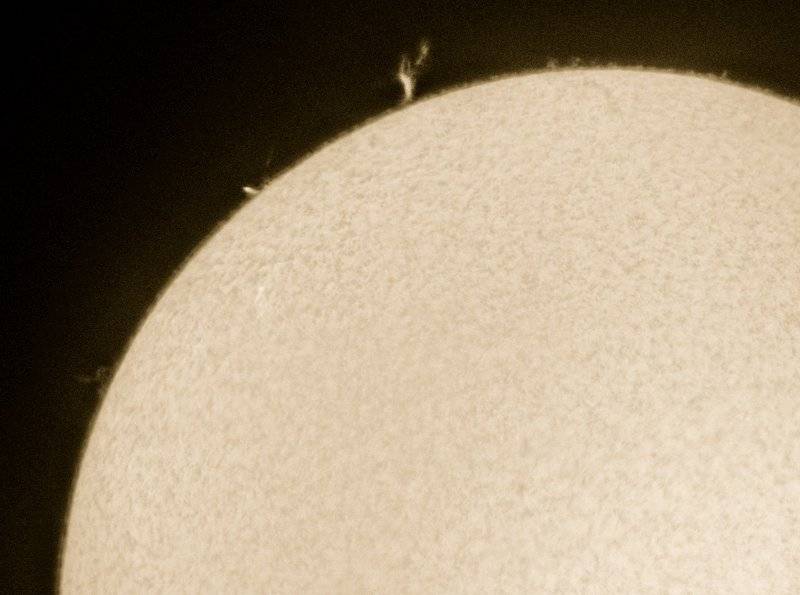
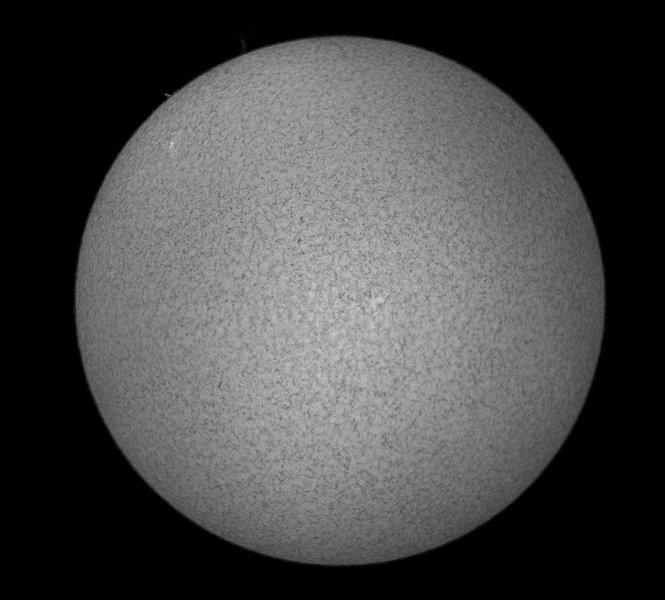
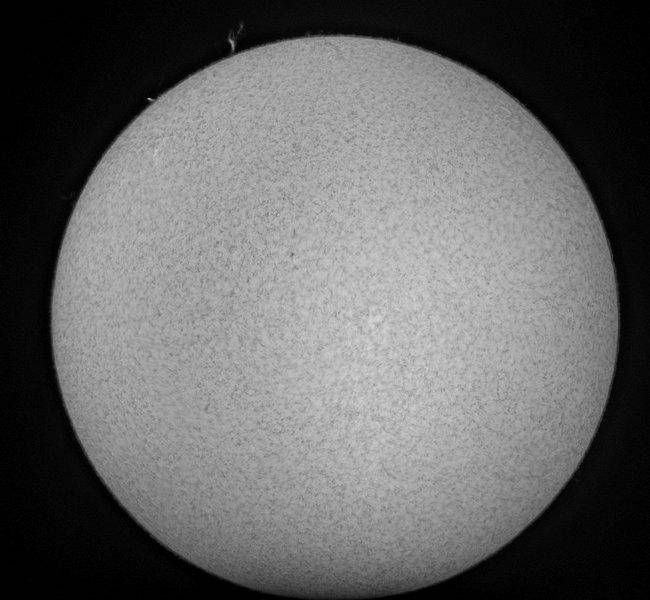
The Sun in Ha -- 4 Feb, 2018
Haven't seen much of the sun for the last week ( since last Sunday's images) Lunt LS60THa, ASI 1600MM camera and SharpCap software.
These are single frame images (no stacking)
A couple of cropped to zoom in on the prominences and a couple of full disk ... varying the exposure allows different features to be more easily seen
cheers
Dave
Haven't seen much of the sun for the last week ( since last Sunday's images) Lunt LS60THa, ASI 1600MM camera and SharpCap software.
These are single frame images (no stacking)
A couple of cropped to zoom in on the prominences and a couple of full disk ... varying the exposure allows different features to be more easily seen
cheers
Dave
Attachments


Science Advisor
Homework Helper
- 30,594
- 7,548
Nice pictures again, Dave. I wonder if it would be worth while tinkering with and stacking multiple exposures to include a bigger range of luminosities. I have a chum who has done this with some regular photographs and increased the contrast range successfully. (Just a thought)