Astrophotography with New Sensor - Improved Alignment & Stabilization

Join the discussion
Ask a follow-up here, or get your own question answered by working scientists, mathematicians and engineers — people, not an autocomplete.
Real named experts · corrections over time · the nuance an AI answer skips
10 replies · 2K views
Back up and running; got these last weekend.
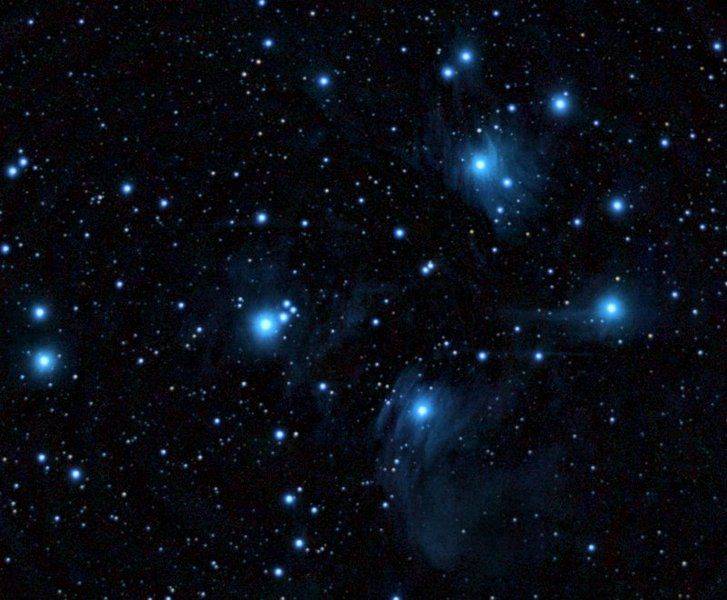
Composite_s_zpslw1d8b7a.jpg


400/2.8, 50 minutes total integration time, 10s ISO 2000 individual frames.
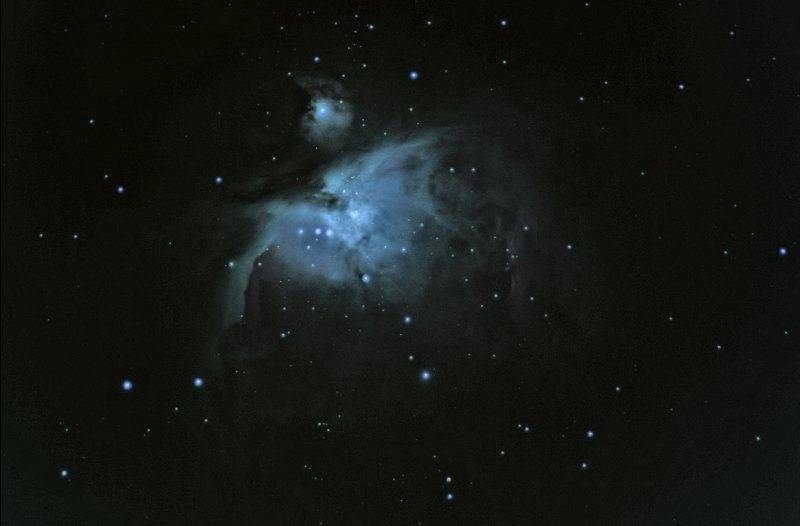
orion_14m_2s_zpspqfr5uzx.jpg


800/5.6, 14 minutes total, 6s ISO 2000 individual frames.

It's been an adjustment to the new sensor, my alignment technique had to improve by about 2x to eliminate residual drift; also the sony had in-camera stabilization which gave me another stop's worth of shutter time.
 
  • Like
Likes   Reactions: DennisN, aamirza, fresh_42 and 1 other person
Astronomy news on Phys.org
Nice stuff.
Is the top one Ursa Major?
The second one is what?
 
rootone said:
Is the top one Ursa Major?

no, that's M45, The Pleiades star cluster

rootone said:
The second one is what?

That's M42, the Orion Nebula ... it shouldn't really be that blue, that nebula has lots of red in it

Maybe Andy can let us know how he was doing the processing ?Dave
 
I struggle with colorimetrics- the sky is tinted red from light pollution, so I try and fix it by post-processing and normalizing the colors such that the sky is a neutral dark grey and bright stars are white, then bumping up the color saturation. I never get the same colors twice... those images do look 'bluer' than I recall setting them, tho.
 
Andy Resnick said:
See, it's pretty easy to alter the colors:

orion_14m_2.tif%20RGB_zps6hcuglwx.jpg


orion_14m_2.tif%20RGB-1_zpsfqvkiy4y.jpg
much more realistic and lots more detail :smile:Dave
 
Andy Resnick said:
...
400/2.8, 50 minutes total integration time, 10s ISO 2000 individual frames. ...

800/5.6, 14 minutes total, 6s ISO 2000 individual frames. ...

Andy, Nice photos, well done.
I'm quite new to this type of imaging, so wondering if you could elaborate on the meaning of these numbers / settings?

Is it: number of shots / f-stop / total time / shutter speed / ISO?

Regards,

Noel.
 
Lino said:
Andy, Nice photos, well done.
I'm quite new to this type of imaging, so wondering if you could elaborate on the meaning of these numbers / settings?

Is it: number of shots / f-stop / total time / shutter speed / ISO?

Sure- sorry for any confusion.

when I write, for example, '800/5.6', that means I used an 800mm focal length lens at an f/# of 5.6. Similarly. '10s ISO 2000' means each exposure lasted 10 seconds and the camera ISO was set to 2000, and I stacked individual frames to give a total exposure time of 50 minutes, or 14 minutes, or whatever.

How has your astrophotography experience been so far? There's a fair number of experts here who have helped me get better.
 
  • Like
Likes   Reactions: davenn
Thanks Andy. I forgot about the focal length. That makes perfect sense.

My experience so far is ... limited. I spend an amount of time in a Dark Sky Reserve in the south west of Ireland (Kerry), which is fantastic. When the skies are clear, it is amazing, but given that it is the south west of Ireland, there aren't many good viewing night :). So great views, but lots of cloudy nights.

Regards,

Noel.
 
  • Like
Likes   Reactions: davenn
Lino said:
Thanks Andy. I forgot about the focal length. That makes perfect sense.

My experience so far is ... limited. I spend an amount of time in a Dark Sky Reserve in the south west of Ireland (Kerry), which is fantastic. When the skies are clear, it is amazing, but given that it is the south west of Ireland, there aren't many good viewing night :). So great views, but lots of cloudy nights.

Regards,

Noel.

start off with some Milky Way pics ... camera, tripod and a wider angle lens, say 50mm or less, preferably down around 20mm give or take a bit
depending on your camera make and model, hopefully it can do long exposures up to 30 sec and are able to swap lenses (dSLR)

One great lens is the Samyang 14mm f2.8, produces really nice wide angle images
here's an example from a thread I started several months ago ...
https://www.physicsforums.com/threads/milky-way-pic-with-new-lens.832236/

get out there and start imaging and show us your results :)
post the camera settings used ... focal length, f-stop, ISO, shutter speed
resize images to around 1000 pixels on the long side and compress to around 80 - 85%
to limit their physical kb size

cheers
Dave
 
davenn said:
start off with some Milky Way pics ... camera, tripod and a wider angle lens, say 50mm or less, preferably down around 20mm give or take a bit
depending on your camera make and model, hopefully it can do long exposures up to 30 sec and are able to swap lenses (dSLR)

One great lens is the Samyang 14mm f2.8, produces really nice wide angle images
here's an example from a thread I started several months ago ...
https://www.physicsforums.com/threads/milky-way-pic-with-new-lens.832236/

get out there and start imaging and show us your results :)
post the camera settings used ... focal length, f-stop, ISO, shutter speed
resize images to around 1000 pixels on the long side and compress to around 80 - 85%
to limit their physical kb size

cheers
Dave
Thanks Dave and excellent photo on the other thread. I'm super impressed that you can get that type of result from a single image. I'll count that as a target to aim for :)

Regards,

Noel.
 
  • Like
Likes   Reactions: davenn