Is Global Warming Responsible for My Amazing Astrophotography?

Click For Summary

Discussion Overview

The discussion revolves around the relationship between global warming and astrophotography experiences, particularly in the context of recent weather patterns affecting imaging conditions. Participants share their personal experiences with astrophotography during warmer winters and explore the implications of these observations on the broader topic of climate change.

Discussion Character

  • Exploratory
  • Debate/contested
  • Technical explanation

Main Points Raised

  • One participant notes the enjoyment of astrophotography during a warm January, highlighting the absence of snow and mild temperatures as beneficial for imaging.
  • Another participant argues that a warm winter cannot be used as evidence for global warming, emphasizing the need for long-term data rather than anecdotal evidence.
  • A different participant mentions NASA's support for global warming theory and reflects on personal experiences of milder winters over the past decades.
  • Some participants discuss the technical challenges of astrophotography, such as focus shift due to temperature instability and the potential benefits of remote control solutions for telescopes.
  • Concerns are raised about the reliability of climate models and the adequacy of short-term data in understanding Earth's climate variability.

Areas of Agreement / Disagreement

Participants express differing views on the implications of current weather patterns for global warming, with some asserting that personal experiences do not constitute evidence, while others reference broader scientific consensus. The discussion remains unresolved regarding the connection between individual astrophotography experiences and global climate trends.

Contextual Notes

Participants acknowledge limitations in the data and modeling related to climate change, pointing out the historical variability of Earth's climate over long timescales compared to recent short-term observations.

Andy Resnick
Science Advisor
Education Advisor
Insights Author
Messages
7,750
Reaction score
3,988
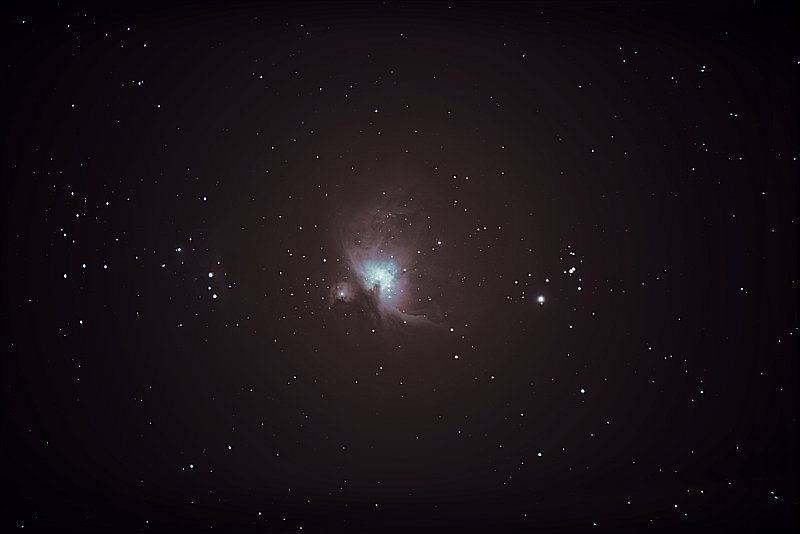
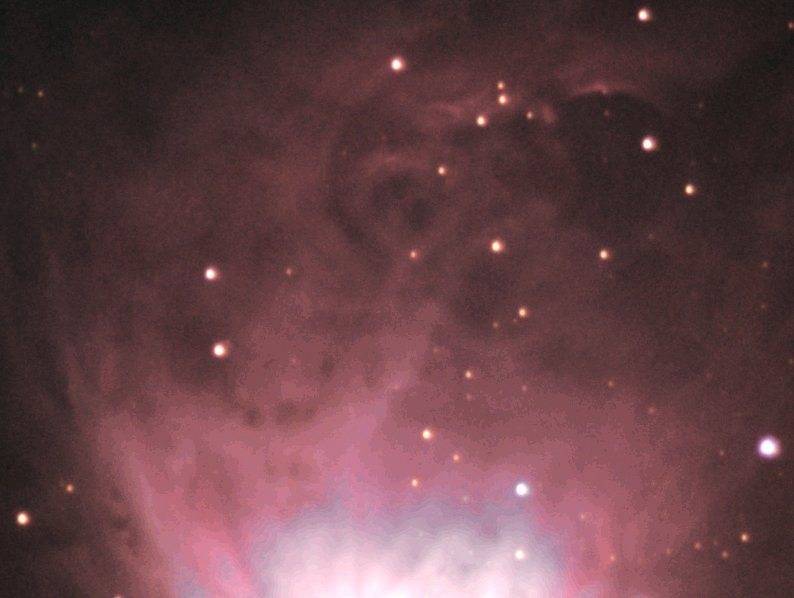
It's awesome because I am able to be outside imaging during January. No snow on the ground and not unreasonably cold. This is the first year I've been able to consistently image Orion- here's a full-frame and 100% crop of Orion Nebula, 21m total exposure, 800/5.6 ISO varied from 640-2000, 6s exposures, minimal post-processing (color, contrast, etc.), the posterization is from the file conversion, I think.
orion%2021m.TIF%20RGB_zpsjceeyws7.jpg


orion%2021m.TIF%20RGB-1_zpsstkpht4j.jpg


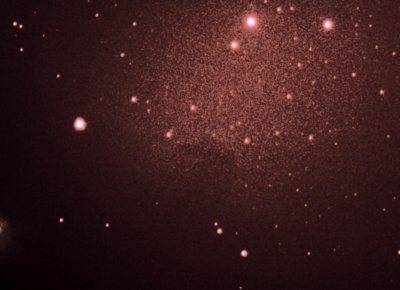
Last night was exceptionally clear (for Cleveland), so I tried to capture the Horsehead nebula knowing that it is a challenge for those of us without specialized filters and sensors. I'm posting this only because you can actually see a faint shadow, 21 minutes at ISO 4000 (!), with post-processing contrast adjustment set practically to a step function:
horsehead%2021m%20iso4000.TIF%20RGB_zpshutayq5p.jpg


Alas, the clouds are moving back in...
 
  • Like
Likes   Reactions: davenn and berkeman
Astronomy news on Phys.org
Come now. A warm winter is no better a proof of global warming than a cold one is a disproof.

This is a global, long-term issue, that can't be judged by how much snow is behind one's window.

Great pictures though. :)
 
  • Like
Likes   Reactions: bapowell
Well, NASA certainly buys into the Global warming theory. And my recollection of severe winters and average temperatures of 40 years seems to also agree with the data. I am originally from the plains in the Midwest where aside from the more severe storms, the winters seem a lot milder.
 
Andy Resnick said:
It's awesome because I am able to be outside imaging during January. No snow on the ground and not unreasonably cold. This is the first year I've been able to consistently image...
What, you don't own a shovel and a jacket? Besides, the telescope and laptop do most of the work while you're inside sitting on the couch! To me this is an issue of commitment...

Nice pics, though. :biggrin:

[more helpful...]
If you haven't looked into remote control solutions, you should. I've still got some ground to cover, but all of my monitoring and much of my control is done from my couch. My telescope is fairly close -- about 20' away, which puts it in range of a USB cable. From there, a hub connects to telescope control and cameras.

One of my biggest current limitations is focus shift due to temperature instability. It means I often have to go outside and refocus as much as once an hour. I'll need to work on that...
 
  • Like
Likes   Reactions: davenn
russ_watters said:
One of my biggest current limitations is focus shift due to temperature instability. It means I often have to go outside and refocus as much as once an hour. I'll need to work on that...

remotely driven focus motor :wink:
they are available... focus motors, that is
 
Thanks for the comments-
Bandersnatch said:
Come now.
CalcNerd said:
Well,

No need to be so serious!

russ_watters said:
Besides, the telescope and laptop do most of the work while you're inside sitting on the couch!

You must suffer for your art! :)

russ_watters said:
If you haven't looked into remote control solutions, you should. I've still got some ground to cover, but all of my monitoring and much of my control is done from my couch. My telescope is fairly close -- about 20' away, which puts it in range of a USB cable. From there, a hub connects to telescope control and cameras.

One of my biggest current limitations is focus shift due to temperature instability. It means I often have to go outside and refocus as much as once an hour. I'll need to work on that...

If I set up a permanent mount, I agree remote control would be nice. You are right about thermal drift- even if I pre-cool the lens, I have to fine-tune the focus every few minutes or so for another hour until everything settles.

Here's after post-processing:
orion%2021m-1_zpsput26jen.jpg
 
  • Like
Likes   Reactions: Drakkith and fresh_42
Andy Resnick said:
If I set up a permanent mount, I agree remote control would be nice.
My mount is semi-permanent in that it is sitting on a tripod on my deck, under a cover, and has been for about 2 years. I don't have an observatory/dome, but by far the hardest/most time consuming part of the setup is the alignment, so leaving the mount outside is a big help.
 
The problem with the global warming issue is sample size and modeling. Earth's climate has historically varied over cycles spanning thousands of years, yet we feign the ability to modify it based on weak short term [about a century] data and undeniably uncertain climate models.
 
  • Like
Likes   Reactions: D English