Discussion Overview
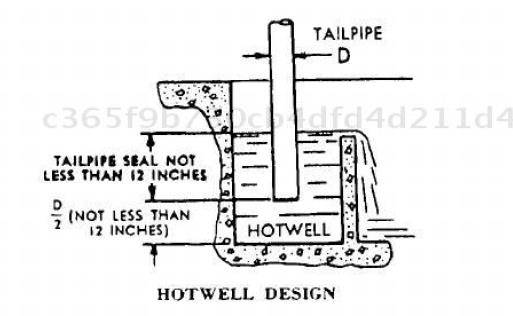
The discussion revolves around the feasibility and design considerations of using a barometric leg to drain a slurry from a vacuum system. Participants explore the challenges associated with the presence of solid particles in the slurry and the implications for maintaining a liquid seal at the bottom of the barometric leg. The conversation includes technical design aspects, potential mechanical solutions, and the overall efficiency of the system.
Discussion Character
- Technical explanation
- Exploratory
- Debate/contested
Main Points Raised
- One participant questions the suitability of a typical "hot well" seal for slurries, suggesting that solids may settle and block it.
- Another participant proposes using a diagonal screw auger or a narrow squirrel cage paddle to remove solids from the sump, emphasizing the need for slow operation to avoid air bubble injection.
- There is a suggestion that a centrifugal pump rated for slurry duty might be a simpler alternative to an auger, with the addition of a recirculation line to maintain the liquid seal.
- Concerns are raised about the density and hardness of the solids, with one participant noting that the solids are similar to common salt and estimating a flow rate of approximately 200 kg/hr.
- Participants discuss the final destination of the slurry being a Nutsche filter and question whether it is efficient to duplicate vacuum systems or if co-location could be beneficial.
- One participant suggests circulating the slurry in the well to keep it in suspension and proposes returning filtered water to the well to aid in this process.
- There is a consideration of minimizing energy consumption and eliminating unnecessary equipment, with questions about the essential nature of the Nutsche filter versus gravity drainage options.
- Participants express openness to suggestions for simplifying the system, including alternatives to the Nutsche filter.
Areas of Agreement / Disagreement
Participants express multiple competing views regarding the design and efficiency of the system, particularly concerning the use of mechanical devices for solid removal and the necessity of the Nutsche filter. The discussion remains unresolved with no consensus on the best approach.
Contextual Notes
Participants acknowledge limitations in their understanding of the solid properties and the specific requirements for the system, which may affect the proposed solutions. There are also unresolved questions about the implications of recirculating water and the overall system efficiency.