MHB Combination/probability question (High School level)

  • Thread starter Thread starter Micky1964
  • Start date Start date
  • Tags Tags
    School
Click For Summary
SUMMARY

The discussion centers on solving a counting and probability problem involving combinations of girls and boys. The correct method involves calculating the combinations for "2 girls and 1 boy" and "3 girls and 0 boys" separately, then summing these results to avoid double counting. Participants emphasize the importance of treating each scenario distinctly to ensure accurate results. The conversation highlights common pitfalls in combinatorial reasoning, particularly in avoiding overcounting specific groups.

PREREQUISITES
  • Understanding of basic combinatorial principles
  • Familiarity with the concept of combinations
  • Knowledge of probability fundamentals
  • Ability to analyze counting problems systematically
NEXT STEPS
  • Study the fundamentals of combinations and permutations
  • Learn how to apply the binomial coefficient in probability problems
  • Explore case separation techniques in combinatorial problems
  • Practice solving various counting problems to reinforce understanding
USEFUL FOR

High school students, educators in mathematics, and anyone interested in mastering combinatorial probability and counting techniques.

Micky1964
Messages
4
Reaction score
0
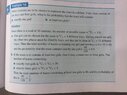
Hi all. I'm doing a counting/probability problem here.
I can see how the correct answer for part b is arrived at by counting the number of combinations for "2 girls" then counting the number of combinations for "3 girls" , and adding these results.
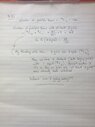
But I've attached my first way of approaching it, which is wrong. Wondering if anyone can tell me why my approach doesn't give the correct answer. I know it's probably something obvious that I'm missing.
Thanks
 

Attachments

  • IMG_2899.JPG
    IMG_2899.JPG
    639.7 KB · Views: 127
  • IMG_2900.JPG
    IMG_2900.JPG
    592.8 KB · Views: 134
Physics news on Phys.org
With your method groups with 3 girls get counted 3 times each rather than once each.
 
romsek said:
With your method groups with 3 girls get counted 3 times each rather than once each.
Thank you for replying. I can see that makes sense now.

So the best approach with these types of problems is to treat each situation separately? ie. find how many ways you can have 2 girls and 1 boy, then find how many ways you can have 3 girls and 0 boys, then add the 2 figures?

Mick
 
Micky1964 said:
Thank you for replying. I can see that makes sense now.

So the best approach with these types of problems is to treat each situation separately? ie. find how many ways you can have 2 girls and 1 boy, then find how many ways you can have 3 girls and 0 boys, then add the 2 figures?

Mick

It's a bit difficult to cite any approach as "best" given the variety of problems that exist but generally separating the cases helps ensure you won't multiply count specific situations.
 
I think it odd that choosing students "to represent the class in a debate" would be done at random!
 
Country Boy said:
I think it odd that choosing students "to represent the class in a debate" would be done at random!
You clearly never went to my High School.

-Dan
 
Yeah, I dropped out in the fourth grade!
 

Similar threads

  • · Replies 3 ·
Replies
3
Views
2K
  • · Replies 3 ·
Replies
3
Views
834
  • · Replies 11 ·
Replies
11
Views
2K
  • · Replies 2 ·
Replies
2
Views
2K
  • · Replies 8 ·
Replies
8
Views
1K
  • · Replies 41 ·
2
Replies
41
Views
5K
  • · Replies 8 ·
Replies
8
Views
3K
  • · Replies 2 ·
Replies
2
Views
2K
  • · Replies 11 ·
Replies
11
Views
3K
  • · Replies 7 ·
Replies
7
Views
2K