Creating Humanoid Alien Sci-Fi: Oxygen Trade-Offs

  • Thread starter Thread starter Bab5space
  • Start date Start date
  • Tags Tags
    Alien
Click For Summary

Discussion Overview

The discussion revolves around the creation of humanoid alien species in science fiction, specifically focusing on the implications of oxygen levels in their home environments and how these factors influence their physiology and behavior. Participants explore the trade-offs associated with higher oxygen content, adaptations to different environments, and the potential for genetic manipulation.

Discussion Character

  • Exploratory
  • Conceptual clarification
  • Debate/contested
  • Technical explanation

Main Points Raised

  • One participant suggests that humanoid aliens could have evolved on a planet with higher oxygen levels, leading to distinct physical traits and abilities compared to humans.
  • Another participant raises the example of Nepalese mountain climbers, questioning why the proposed humanoids could not adapt to Earth's lower oxygen levels over generations.
  • There is a discussion about the potential for giant flora and fauna on a high-oxygen planet, including massive trees and aquatic ecosystems rich in oxygen-producing algae.
  • Concerns are raised about the health implications for humanoids adapting to Earth's environment, including potential genetic changes that might make them more susceptible to health issues on their homeworld.
  • One participant emphasizes the importance of exploring the strengths and weaknesses of alien races in storytelling, suggesting that their behavior should be distinct from humans.
  • Another participant mentions the genetic adaptations seen in Tibetans that allow for better oxygen utilization at high altitudes, proposing that similar adaptations could be engineered for the humanoids.

Areas of Agreement / Disagreement

Participants express a range of views on the adaptability of humanoid aliens to different oxygen environments, with some suggesting potential for adaptation and others highlighting the challenges and health risks involved. The discussion remains unresolved regarding the specifics of these adaptations and their implications.

Contextual Notes

Limitations include assumptions about genetic engineering capabilities, the effects of high oxygen on physiology, and the environmental conditions of the proposed homeworld. There are also unresolved questions about the long-term health impacts of adaptation to different oxygen levels.

Who May Find This Useful

Writers and creators interested in developing alien species for science fiction narratives, particularly those exploring themes of adaptation, environmental influence, and genetic manipulation.

Bab5space
Messages
111
Reaction score
13
Scifi Humanoids by their very nature are'nt very alien. Where they compensate is how well they can interact with human characters.

However, there are internal ways to modify them.

Main question: I researched oxygen and learned that less oxygem breathed makes humans fatigued faster, while too much damages organs and causes all sorts of problems.

So I was thinking of a humanoid race, which besides looking somewhat distinct from us (their color is not natural for us) also was from a homeworld with a higher oxygen content than Earth.

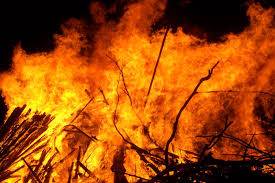
That presents trade offs, since greater oxygen means...
1581828820529.jpeg


Nonetheless I devised offsetting the fires by increasing the amount of rain.

Another trade off is giant animals and dinos, and big insects. That's the kind of life that thrives with more oxygen, since oxygen seems to increase endurance and energy levels. It also means giant trees and plants in general.

Conclusion: The alien humanoids here would be able to walk farther distances and work longer before tiring on the honeworld.

On Earth? Assuming they could still breath enough to live, they would tire quickly. More than us. They would need a breather mask to function at human levels.What do you have to add? Anything I missed? Discuss.
 
Physics news on Phys.org
Consider the Nepalese mountain climbers. They do some incredible feats of mountaineering and yet they are living in an oxygen poor environment. Their bodies have adapted to the environment. Lowlanders have trouble until they get acclimated but can still never quite match the Nepalese.

https://en.wikipedia.org/wiki/Sherpa_people

So now why can't your humanoids adapt to our environment where initially they may feel faint from the air or they have to always wear masks.
 
Last edited:
Bab5space said:
It also means giant trees and plants in general.
Or oceans that cover more of the planet's surface with enormous mats of oxygen producing algae and floating kelp forests where the largely aquatic aliens do gyre and gymbal* among the glistening strands.

*borrowing from Charles Dodgson.
 
  • Like
Likes   Reactions: jedishrfu
jedishrfu said:
Consider the Nepalese mountain climbers. They do some incredible feats of mountaineering and yet they are living in an oxygen poor environment. Their bodies have adapted to the environment. Lowlanders have trouble until they get acclimated but can still never quite match the Nepalese.

https://en.wikipedia.org/wiki/Sherpa_people

So now why can't your humanoids adapt to our environment where initially they may feel faint from the air or they have to always wear masks.
Klystron said:
Or oceans that cover more of the planet's surface with enormous mats of oxygen producing algae and floating kelp forests where the largely aquatic aliens do gyre and gymbal* among the glistening strands.

*borrowing from Charles Dodgson.
Thanks. The reason the sherpas are like that is because their blood is thinner (has less oxygen) and can work with less.

Now I suppose maybe after breeding a few new generations on an Earth world the descendents of the humanoids might adapt naturally.

Or it may even be an engineered given possibility, since if they have the technology for jump drives and constant acceleration, it is reasonable that they also have ways to manipulate genetics to adapt if need be.The catch is that such adapted ones would be more susceptible to health problems on the the homeworld.

I am not saying the symptoms will be this bad... but maybe?

https://en.m.wikipedia.org/wiki/Oxygen_toxicity

The eyes become more shortsighted, vertigo feelings, lung inflammation at the bodies inability to filter out the oxygen where it needs to go, even seizures.

As for their homeworld, a waterworld will not fit the story needs, nor how I want the world to look.

How it looks: Dirt is light red, and grows darker when muddy (yes mud look like our blood). The sky is blue, beaches have pink sand, and trees commonly have reddish bark and are huge.

With the frequent rains, I could have homes be elevated off the ground to cope with flooding.Or if I want things to be far more controlled, no rain at all. Just let a mist come up from the ground periodically to water the plants, and where massive fires break out eventually they would trigger water springs of water that would gush out from below the the surface to extinguish them.

Ironically mass fires and earthquakes would be the main source of flooding due to disturbing the spring network below the planet's crust.
 
The real point of science fiction writing is to create new races and then explore their strengths and weaknesses in your stories.

In the case, of the Sherpa, they have a genetic difference from other humans where the super athlete gene has been turned on creating more hemoglobin not the thinning of blood.

Released in 2010 by UCLA at Berkeley, a study identified more than 30 genetic factors that make Tibetans' bodies well-suited for high-altitudes, including EPAS1, referred to as the "super-athlete gene" which regulates the body's production of hemoglobin,[8] allowing for greater efficiency in the use of oxygen.[9][10]
 
  • Like
Likes   Reactions: Klystron
Strenghths and weaknesses eh?

I guess that comes with the territory.

For me scifi aliens must be distinct in their behavior from common humanity.

As far as strengths and weaknesses, my SF aliens take a concept and answer the what if question of how far they take the concept.

In several ways the aliens are more consistent in certain forms of behavior than humans, while being more intolerant in others.
 

Similar threads

  • · Replies 15 ·
Replies
15
Views
6K