Discussion Overview
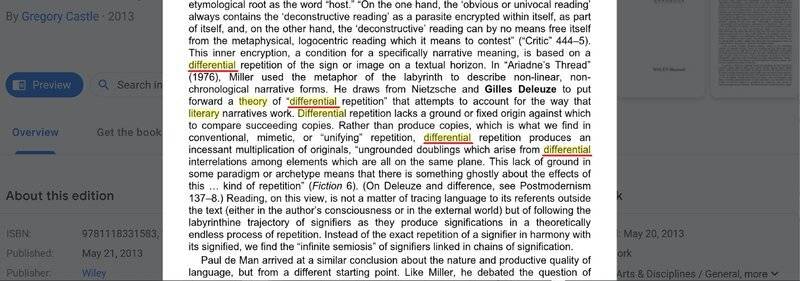
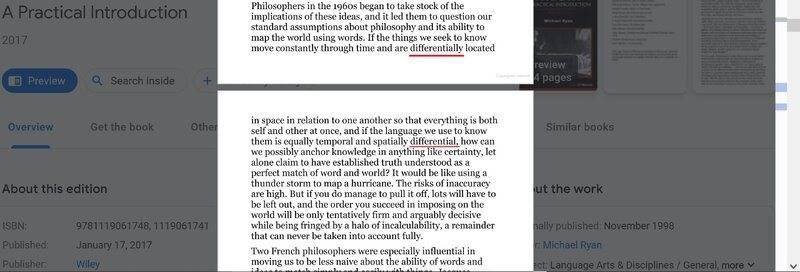
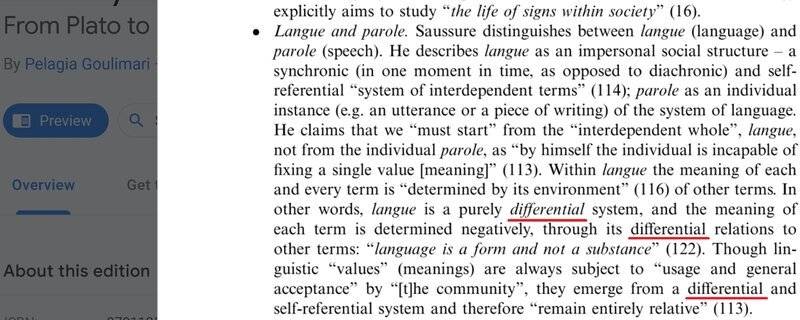
The discussion revolves around the differences between the adjectives 'differential' and 'different' in the context of literary theory and criticism. Participants explore the meanings and implications of these terms, particularly in relation to their usage in academic texts.
Discussion Character
- Exploratory
- Technical explanation
- Debate/contested
- Conceptual clarification
Main Points Raised
- Some participants suggest that 'differential' implies a distinction based on quantitative differences, while 'different' denotes a more general sense of dissimilarity.
- One participant argues that 'differential' may be used to convey a more nuanced understanding of differences within a category, as opposed to the more superficial distinctions indicated by 'different'.
- Another participant expresses skepticism about the necessity of using 'differential' over 'different', suggesting it may reflect a preference for a more complex or pedantic style.
- A participant with some linguistics training proposes that 'differential' emphasizes inherent changes or diversification in the modified noun, while 'different' focuses on distinctness from other examples.
- Some participants note confusion regarding the specific contexts in which 'differential' is preferred and request examples from the texts in question.
- Definitions from Merriam-Webster are cited to clarify the meanings of both terms, highlighting their respective nuances.
Areas of Agreement / Disagreement
Participants express varying interpretations of the terms 'differential' and 'different', with no consensus reached on their usage or implications. The discussion remains unresolved regarding the necessity and appropriateness of each term in specific contexts.
Contextual Notes
Some participants acknowledge limitations in their understanding and express uncertainty about the definitions and applications of the terms in literary theory.