andrewlee123
- 1
- 0
- TL;DR
- How can I determine the contact angle of a sessile droplet precisely from side-view photos? I'd also like some insights into issues about lighting, low-angle measurements, and ambient conditions.
I am studying the contact angle of a sessile droplet (water and alcohol mixtures) on both horizontal and inclined surfaces. I capture side-view images with a 24 MP Canon camera and analyze them with a CNN-based pipeline in Python. However, I have run into several issues:
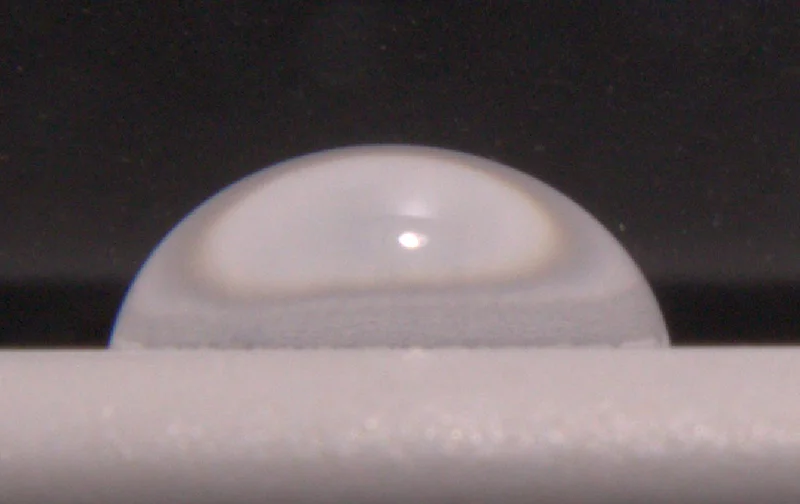
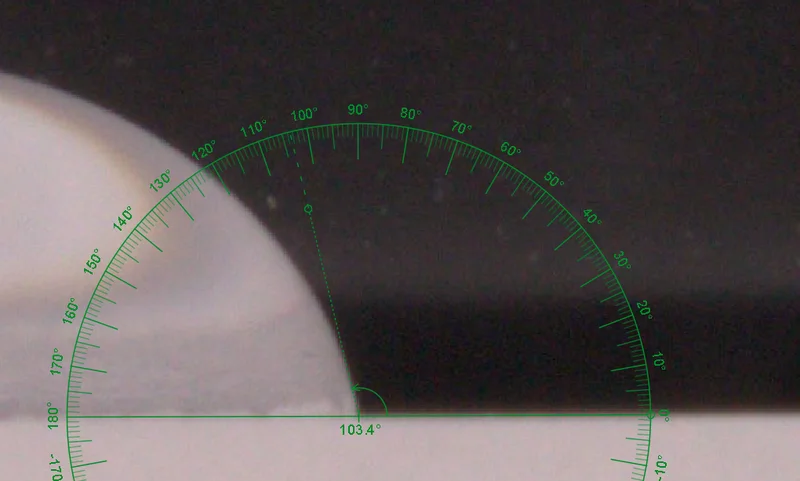
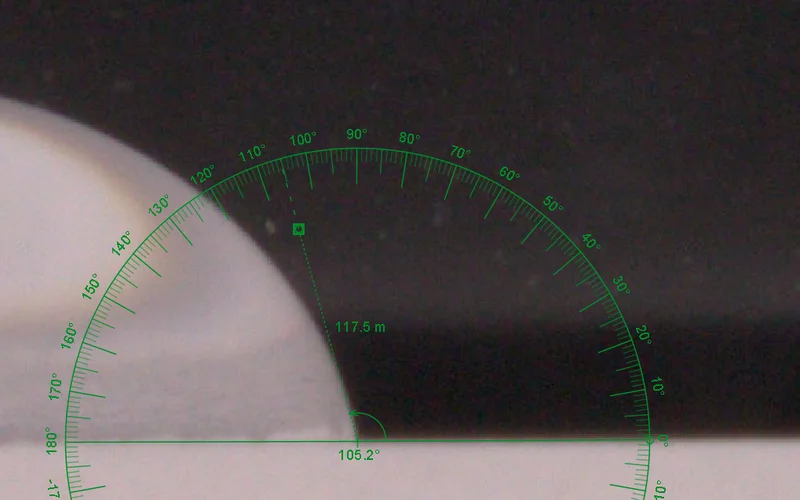
The first picture above shows the side view of the droplet, and I focus on analyzing the right contact angle, as illustrated in the second and third figures. However, I’m unsure which measurement approach is correct - specifically, how close the diagonal lines should be to the contour of the water droplet. Both methods seem reasonable. A similar issue came up when I tried to automate the analysis with code. I also used the image processed by CNN (Sobel operator), but it didn’t really improve the situation:
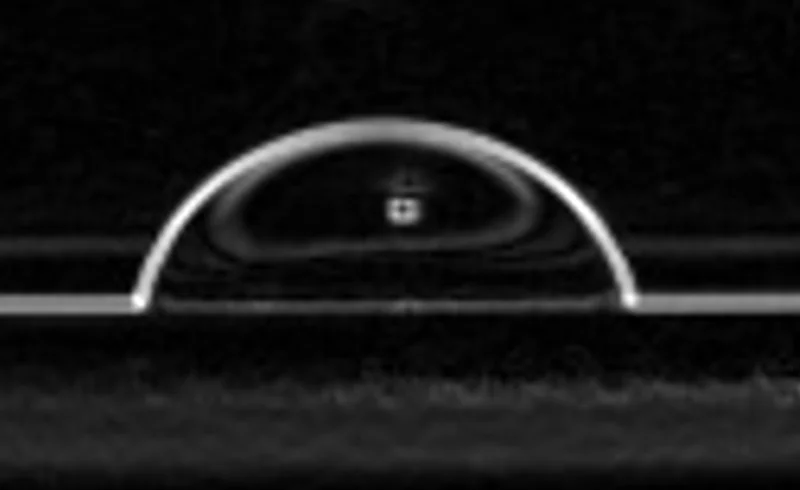
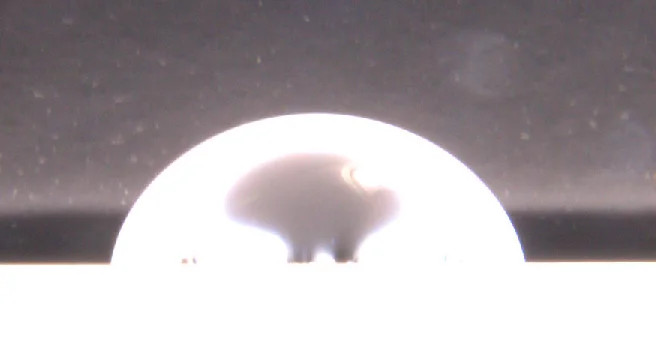
- A 24 MP Canon seems to have enough resolution, but I still find it hard to determine the contour from side-view photos of the droplet, and therefore the contact angle, even after using CNN and other analysis tools in my Python code.
The first picture above shows the side view of the droplet, and I focus on analyzing the right contact angle, as illustrated in the second and third figures. However, I’m unsure which measurement approach is correct - specifically, how close the diagonal lines should be to the contour of the water droplet. Both methods seem reasonable. A similar issue came up when I tried to automate the analysis with code. I also used the image processed by CNN (Sobel operator), but it didn’t really improve the situation:
- Lighting problems: As shown above, different regions of the droplet show different colors. Under strong light, the center of the water droplet even appears noticeably darker than its surroundings. Also, I wonder whether a black background (including the table and the screen behind the droplet) is preferred.
- The contact angle is difficult to measure when it is too small (for an alcohol droplet or a water droplet that evaporates over roughly 7 hours). I understand this is a common technical bottleneck, and the usual solution is to use higher-resolution imaging, but my Canon camera is already the highest-resolution instrument available to me.
- Continuing to the dynamics inside the droplet (e.g., Marangoni flow and the coffee-ring effect), I tried applying fluorescent powder to track the flow of a binary solvent droplet. Unfortunately, the particles seem too heavy to follow the flow, and they tend to overlap or aggregate within the camera’s field of view.