Falcon 9 predicted lunar impact

  • Context: Stargazing 
  • Thread starter Thread starter DaveC426913
  • Start date Start date
  • Featured
Join the discussion
Registration is free. Ask a follow-up in this thread, or start your own.
14 replies · 3K views
DaveC426913
Gold Member
2025 Award
Messages
24,629
Reaction score
8,990
TL;DR
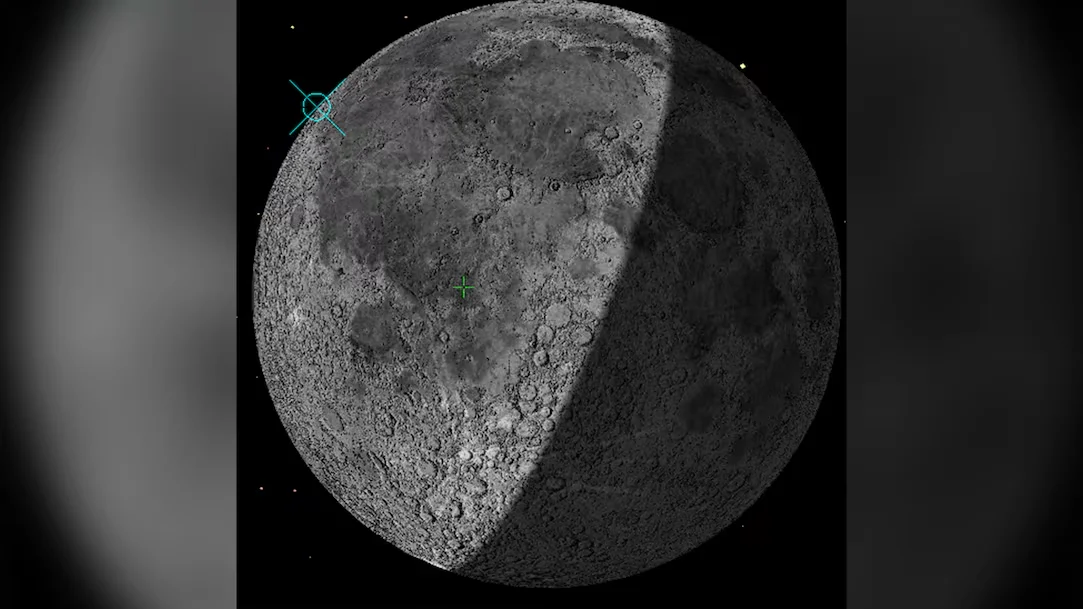
Falcon 9 is expected to impact the Moon's limb at or around Wed Aug. 5 at 2:34:32.9 a.m. ET
https://www.cbc.ca/news/science/falcon9-rocket-moon-impact-9.7290981
1785792575627.webp


"You need to be taking an image every tenth, hundredth of a second, something like that, to try and catch this brief flash," he said. "If you're trying to catch the plumes, that's probably quite a bit easier because we expect the plume to last [in] the order of one to 10 minutes, something like that."

Alas, I always leave it till too late to ensure my gear is in working order for a night sky event.


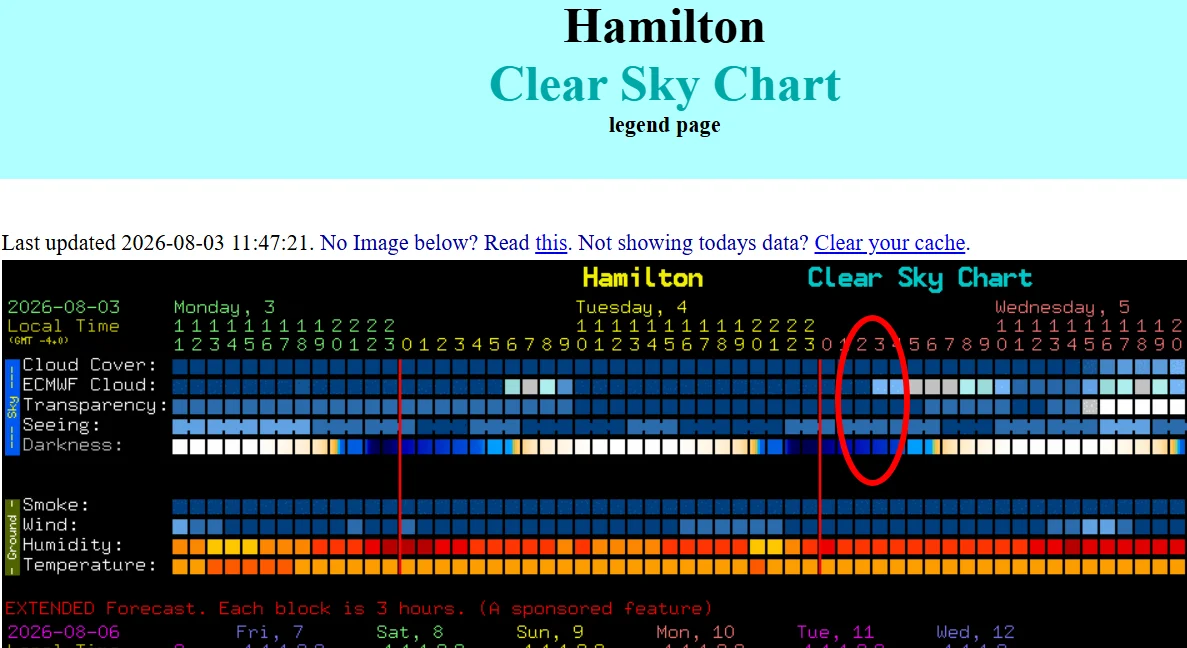
But seeing conditions look pretty favourable for me, so...
1785793058917.webp
 
Reply
  • Informative
  • Like
Likes   Reactions: sbrothy, BillTre and FactChecker
Astronomy news on Phys.org
As the saying goes:"the Moon is not there, if nobody is looking..."
:oldbiggrin:
 
Somebody on Facebook posted their image but said they couldn't see anything.
1785976681834.webp

The problem, it seems is that the plume is way, way too dim next to the well-exposed Moon.

So with a little Photoshop magic, boosting the exposure by scads and scads, there it is.

1785976708318.webp
 
So did it impact or not? Kinda hard to tell from your images...
 
Yes it did, but it was very hard to see.
We must wait a few days for the radar image of the crater it produced.
 
berkeman said:
So did it impact or not? Kinda hard to tell from your images...
Yes. Open the second pic in a new window at full scale.
 
You really have a talent for finding those interesting tidbits! I'm glad I'm following you.
 
Reply
  • Care
Likes   Reactions: DaveC426913
pinball1970 said:
So, I'm guessing the black circle in the center of the photo on the RHS is the impact crater.

But what's all that bright white stuff? Is it the ejected material from the impact? If so, why does it show-up as brighter white if it's just the same regolith as what it fell onto? Did the impact change it in some way (perhaps compact or fuse it)?
 
Reply
  • Like
Likes   Reactions: pinball1970
GRQFT said:
So, I'm guessing the black circle in the center of the photo on the RHS is the impact crater.

But what's all that bright white stuff? Is it the ejected material from the impact? If so, why does it show-up as brighter white if it's just the same regolith as what it fell onto? Did the impact change it in some way (perhaps compact or fuse it)?
I assume the middle part where you have that back and white contrast is the crash site and possibly displaced dust and rock.
There seems to be highlights on other craters however, that could be a slightly different angle, lunar time so light reflects a little more. Not sure.
 
Reply
  • Like
Likes   Reactions: GRQFT
GRQFT said:
so, why does it show-up as brighter white if it's just the same regolith as what it fell onto? Did the impact change it in some way (perhaps compact or fuse it)?
My guess is that subsurface regolith dust is lighter in colour than surface dust - that regolith exposed to the elements for millions of years darkens for some reason.

Also, keep in mind that we are not necessarily seeing a difference in colour value - it could be more an issue of reflectivity - perhaps the ejected material is finer-grained and therefore reflects light slightly better.

Especially if you factor in how much the image exposure might be changed. We have no idea what the actual difference in albedo might be. It could be tiny.
 
Reply
  • Like
Likes   Reactions: GRQFT
Maybe, the dust plume ejected above the surface was illuminated by direct sunlight, while the crater is a hole full of shadow.
 
Baluncore said:
Maybe, the dust plume ejected above the surface was illuminated by direct sunlight, while the crater is a hole full of shadow.
The dust plume should have fallen back within minutes. Presumably we are seeing the ejecta blanket.
 
NASA has released images of impact.

https://science.nasa.gov/solar-syst...s-falcon-9-crater-on-moon-learns-new-details/

NASA_LRO_Falcon9impact_2026_GIF.gif

Caption: This is an animated before-and-after view of the crater formed after a Falcon 9 upper stage struck the Moon’s surface on Aug. 5, 2026. These images were taken between Aug. 11 and 12 by the Narrow-Angle Camera on NASA’s Lunar Reconnaissance Orbiter. These images are enlarged three times from the original, with north facing up, and they cover an area about a quarter of a mile wide.


"... scientists measured its 60‑foot width. Scientists also determined the crater is less than 10 feet deep based on the length of its shadow..."
 
Last edited:
Reply
  • Like
Likes   Reactions: pinball1970 and GRQFT
GRQFT said:
But what's all that bright white stuff? Is it the ejected material from the impact? If so, why does it show-up as brighter white if it's just the same regolith as what it fell onto? Did the impact change it in some way (perhaps compact or fuse it)?
According to the article:

"The images [...] show bright and dark rays stretching out from the crater. The darker streaks are made of surface dust and rocks altered over a long time by solar wind, galactic cosmic rays, and micrometeorite impacts. This weathered material was excavated by the collision from 1.5 feet into the lunar surface. The brighter streaks near the crater rim are made of fresh material excavated from deeper underground."
 
Reply
  • Like
Likes   Reactions: GRQFT