SUMMARY
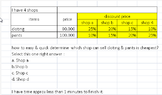
The discussion centers on strategies for quickly determining answers in multiple-choice scenarios, particularly through comparison techniques. A specific example highlights that a 35% discount on a larger amount (100,000) yields a greater overall discount than the same percentage on a smaller amount (80,000). Consequently, the cheapest option is identified as shop D, which offers the most significant discount. Participants express gratitude for the insights shared, emphasizing the importance of these strategies for effective decision-making.
PREREQUISITES
- Understanding of percentage calculations
- Familiarity with discounting principles
- Basic knowledge of comparative analysis
- Experience with multiple-choice problem-solving techniques
NEXT STEPS
- Research effective comparison techniques in decision-making
- Explore advanced percentage calculation methods
- Learn about mental math strategies for quick calculations
- Investigate tools for optimizing multiple-choice test strategies
USEFUL FOR
This discussion is beneficial for students, educators, and anyone involved in test preparation or decision-making processes that require quick and accurate evaluations of options.