Discussion Overview
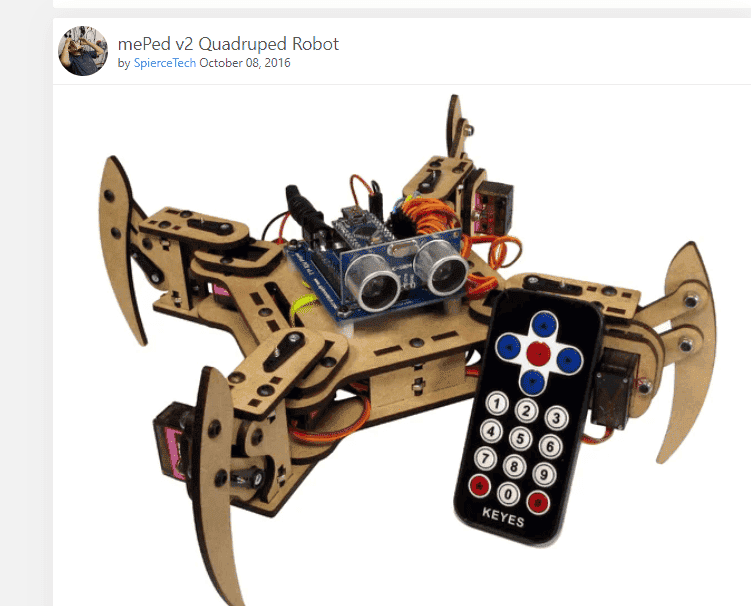
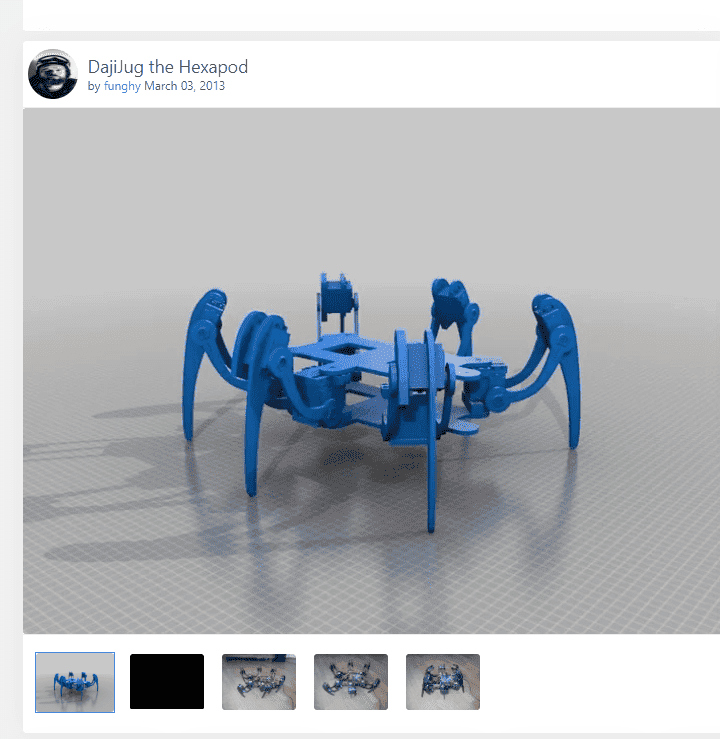
The discussion revolves around evaluating the carrying capacity of quadruped and hexapod robots, focusing on the mechanical design, servo requirements, and load distribution. Participants explore theoretical and practical aspects of robotic leg mechanics, including torque calculations and stability during movement.
Discussion Character
- Exploratory
- Technical explanation
- Debate/contested
- Experimental/applied
Main Points Raised
- One participant questions how to predict the carrying capacity and whether all servos need to be powered constantly to maintain stability.
- Another participant suggests that there is no single equation for the problem and emphasizes the need for a geometric model of the mechanical linkage and load distribution.
- A participant mentions the importance of the number of degrees of freedom in each leg, which affects balance and stability during movement.
- One participant expresses skepticism about the mechanical design of a specific robot, suggesting it may lack controlled leg movement due to its linkage configuration.
- Several participants discuss the need for diagrams and detailed specifications of the robot's linkage and servo torque to further the analysis.
- Resources, including books and articles on walking robots, are shared, with one participant noting a specific chapter that may be helpful despite being in Polish.
- Another participant explains that the vertical movement of the legs is controlled by servos, which will reach a stall torque limit as weight is added to the chassis, affecting movement and control.
- Concerns are raised about the strength and rigidity of the legs under lateral loads when walking on uneven surfaces with added weight.
Areas of Agreement / Disagreement
Participants express various viewpoints on the mechanical design and operational capabilities of the robots, with no consensus reached on specific design equations or the effectiveness of certain configurations. The discussion remains unresolved regarding the optimal approach to evaluate carrying capacity.
Contextual Notes
Participants note limitations in their discussions, such as the need for specific torque specifications and the dependency on the geometric model of the robot's design. There are also references to unresolved mathematical steps in the analysis of the robot's carrying capacity.