How can I find the CDF and PDF of Y?

Click For Summary
To find the CDF and PDF of the random variable Y defined as Y=e^−X, where X is uniform(0,1), the CDF is determined as P(Y 1, with an increasing function in between. The PDF is calculated as 1/y for the range between 1/e and 1, confirming that it integrates to 1 over this interval. The discussion highlights the confusion around the bounds of Y, clarifying that Y lies between 1/e and 1 due to the nature of the transformation from X. The final results align with expectations based on the properties of the uniform distribution. Understanding these relationships is crucial for accurately determining the distributions of transformed random variables.
Jonobro
Messages
7
Reaction score
0
Problem

Let X be a uniform(0,1) random variable, and let Y=e^−X.
Find the CDF of Y.
Find the PDF of Y.
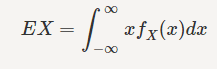
Find EY.

Relevant Equations
5b04f0e6f9.png

http://puu.sh/kAVJ8/0f2b1e7b22.png


My attempt at a solution

If I solve for the range of y I get (1, 1/e), but because Y is not an increasing function, my second bound is smaller than my first. I am really confused as to how I would be able to solve for the CDF and PDF in this case... Any help would be greatly appreciated.
 
Last edited by a moderator:
Physics news on Phys.org
To get CDF:
P(Y<y)=P(e^{-X}<y)=P(-X<lny)=P(X\ge -lny)=1+lny
PDF = \frac{1}{y}
 
This is very helpful. Thanks. However, would the CDF be 0 for y < 1 and 1 for y > 1/e? This part does not really make sense.
 
Mathman's formula is pretty clear for the cdf. It is equal to 0 at y=1/e, and 1 at y=1, and increasing in between.
 
RUber said:
Mathman's formula is pretty clear for the cdf. It is equal to 0 at y=1/e, and 1 at y=1, and increasing in between.
... which is just what we expect since X certainly lies between 0 and 1, hence Y = exp(-X) lies between 1/e and 1. The density of Y is zero left of 1/e and right of 1. And in between it's the derivative of mathman's cumulative distribution function, hence 1/y.

Check: 1/y integrates to 1 when you integrate it from 1/e to 1
 
  • Like
Likes Greg Bernhardt
If there are an infinite number of natural numbers, and an infinite number of fractions in between any two natural numbers, and an infinite number of fractions in between any two of those fractions, and an infinite number of fractions in between any two of those fractions, and an infinite number of fractions in between any two of those fractions, and... then that must mean that there are not only infinite infinities, but an infinite number of those infinities. and an infinite number of those...

Similar threads

  • · Replies 3 ·
Replies
3
Views
2K
  • · Replies 4 ·
Replies
4
Views
2K
  • · Replies 9 ·
Replies
9
Views
2K
Replies
4
Views
2K
  • · Replies 16 ·
Replies
16
Views
3K
  • · Replies 6 ·
Replies
6
Views
5K
  • · Replies 5 ·
Replies
5
Views
2K
  • · Replies 2 ·
Replies
2
Views
3K
  • · Replies 6 ·
Replies
6
Views
2K
  • · Replies 1 ·
Replies
1
Views
2K