How Do Car Wheels Experience Motion and Inertia?

  • Context: High School 
  • Thread starter Thread starter Curly_810
  • Start date Start date
  • Tags Tags
    Car Physics Wheels
Join the discussion
Ask a follow-up here, or get your own question answered by working scientists, mathematicians and engineers — people, not an autocomplete.
Real named experts · corrections over time · the nuance an AI answer skips
3 replies · 2K views
Curly_810
Messages
4
Reaction score
1
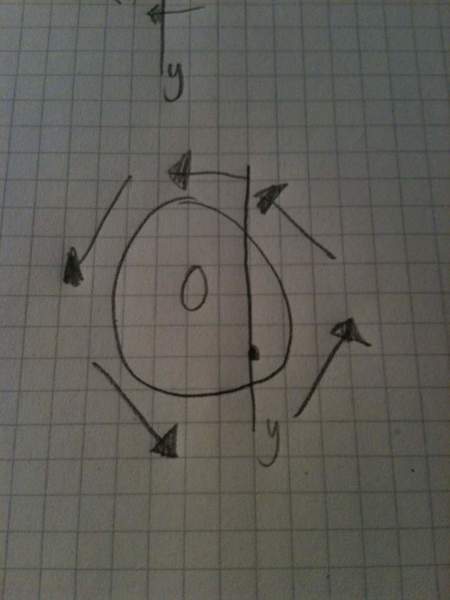
Hello I know this sounds stupid but my friend told me about something that made me think. So what he told me was that every point on a car wheel is still for a very small fraction
of time
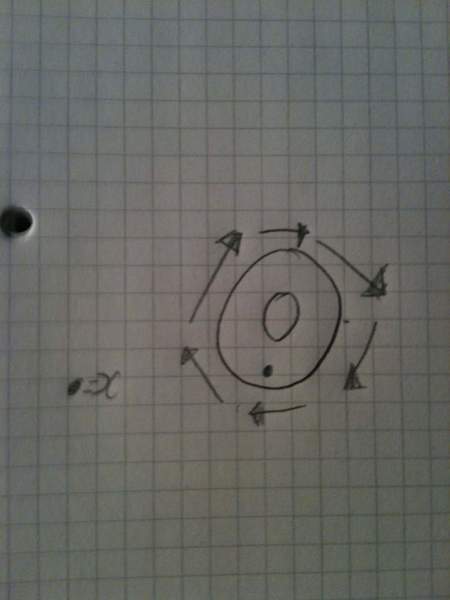
ImageUploadedByPhysics Forums1395443479.326283.jpg


Point x is stationary at this point in time but as the wheel moves forward it revolves around x and stays at place y
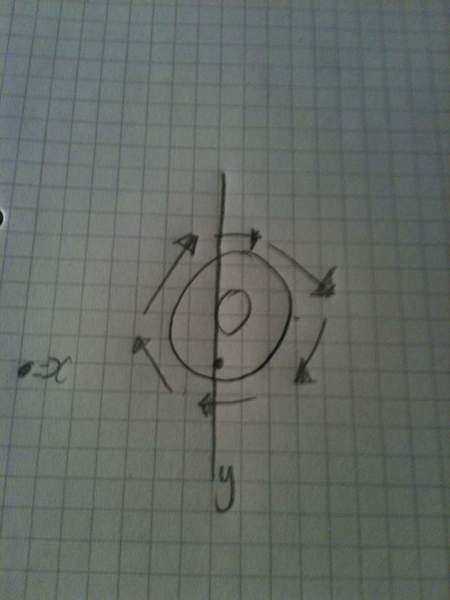
ImageUploadedByPhysics Forums1395443887.692809.jpg


So it looks like this
ImageUploadedByPhysics Forums1395443973.719997.jpg


Does it do this or does it move with the rest of the wheel ?
 
Physics news on Phys.org
"Still" is a concept involving motion. Motion is a relative phenomenon. EVERYTHING is still relative to its own frame of reference and anything in that frame of reference. When you a running down the street, you are standing still relative to your belt buckle.
 
The part of the wheel in contact with the ground is pushing the car forward. It is going slightly backward if the tire slips or stretches at all. At the top, the wheel is going forward. So somewhere in between, very near the bottom, it's forward velocity must be zero. You could reasonable say that it has zero velocity exactly at the bottom. But if you want to be really picky, its forward velocity may not be exactly at the bottom and it might have some downward velocity there. In other words, its forward velocity may not be zero at the exact same time that its downward velocity is zero.
 
You could also say that that point is still relative to the road but not to the car