If maths is about finding patterns

  • Thread starter Thread starter kaleidoscope
  • Start date Start date
  • Tags Tags
    Patterns
Click For Summary
The discussion centers around the concept of whether animals, specifically a parrot, can possess a rudimentary understanding of math through pattern recognition. While some participants argue that pattern recognition is a skill used in math, it does not equate to an understanding of math itself. They highlight that animals, including parrots, can exhibit logical behaviors and recognize patterns, but this does not mean they grasp mathematical concepts as humans do. Anecdotes about crows demonstrate their ability to engage in logical reasoning, such as avoiding traps based on the number of hunters, although it's noted that crows can only numerate up to four objects. The conversation also touches on the cognitive abilities of animals and their capacity for logic, contrasting it with human mathematical understanding. Overall, while animals can show signs of intelligence and logic, their abilities are fundamentally different from human mathematics.
kaleidoscope
Messages
66
Reaction score
0
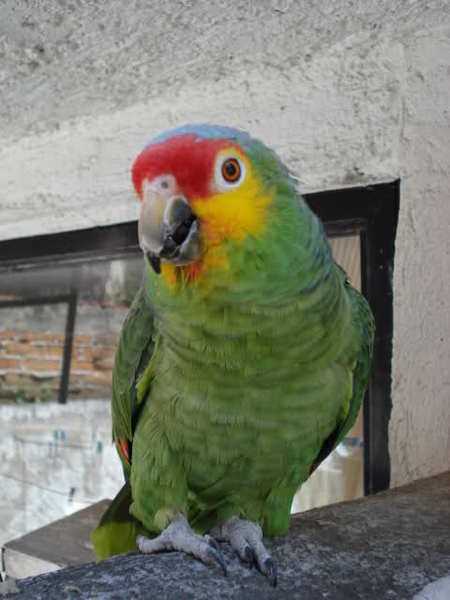
If maths is about finding patterns... then. if my parrot learns by itself that everytime I grab the food bag is time to eat and gets excited, can we say it has a very rudimentary/vestigial sense of math?

nd5081.jpg
 
Physics news on Phys.org
kaleidoscope said:
If maths is about finding patterns... then. if my parrot learns by itself that everytime I grab the food bag is time to eat and gets excited, can we say it has a very rudimentary/vestigial sense of math?

nd5081.jpg

Well...I think he looks pretty dang smart.
 
Plus a constant. Aaaawwk.
 
Math requires deductive logic. Your bird is doing science
 
kaleidoscope said:
If maths is about finding patterns... then. if my parrot learns by itself that everytime I grab the food bag is time to eat and gets excited, can we say it has a very rudimentary/vestigial sense of math?


No. Pattern recognition is one of the skills used in math; not math itself.

For example, pattern recognition is also one of the skills used in reading. Baboons can learn to recognize words as words even when they have no concept what they mean and even when they've never been exposed to that particular word before.

While pattern recognition itself doesn't mean your parrot knows math, your parrot could have a better grasp of math than you might think. This parrot figured out the concept of zero on his own.
 
Are you familiar with this anecdote? No way of knowing if it's true or not:

A nobleman wanted to shoot down a crow that had built its nest atop a tower on his domain. However, whenever he approached the tower, the bird flew out of gun range, and waited until the man departed. As soon as he left, it returned to its nest. The man decided to ask a neighbor for help. The two hunters entered the tower together, and later only one of them came out. But the crow did not fall into this trap and carefully waited for the second man to come out before returning. Neither did three, then four, then five men fool the clever bird. Each time, the crow would wait until all the hunters had departed. Eventually, the hunters came as a party of six. When five of them had left the tower, the bird, not so numerate after all, confidently came back, and was shot down by the sixth hunter.
 
My cat does some really abstract math, btw. She sometimes types stuff on the keyboard. I have no idea what it means. Way over my head.
 
Mathematics is the language of logic. Your parrot has logic, but it does not use any of the human invented language to express it.

Most animals can do >, < logic comparisons. An animal's defense mechanism is different if it is attacked by one opponent or more opponents.
 
dkotschessaa said:
Are you familiar with this anecdote? No way of knowing if it's true or not:

A nobleman wanted to shoot down a crow that had built its nest atop a tower on his domain. However, whenever he approached the tower, the bird flew out of gun range, and waited until the man departed. As soon as he left, it returned to its nest. The man decided to ask a neighbor for help. The two hunters entered the tower together, and later only one of them came out. But the crow did not fall into this trap and carefully waited for the second man to come out before returning. Neither did three, then four, then five men fool the clever bird. Each time, the crow would wait until all the hunters had departed. Eventually, the hunters came as a party of six. When five of them had left the tower, the bird, not so numerate after all, confidently came back, and was shot down by the sixth hunter.

I've heard this story, but I don't know if it's true or not - or at least the original story. Your version seemingly can't be true, because crows can only numerate up to four objects. Which is very high! Human toddlers can only numerate up to 4 or 5 objects until they learn to count. (Or, in other words, maybe your version could be true - if a crow or a human toddler can perceive up to 4 objects, then the next category is "a bunch" with 5 being indistinguishable from 6 or 7).

This is also probably the reason for earliest counting systems being base 5. In other words, you can tally up to 4 marks and immediately perceive what number they represent, but when you get to 5, you make a slash through the four marks and start over with another group of 5 marks.
 

Similar threads

Replies
98
Views
3K
  • · Replies 12 ·
Replies
12
Views
2K
  • · Replies 52 ·
2
Replies
52
Views
2K
  • · Replies 6 ·
Replies
6
Views
4K
  • · Replies 3 ·
Replies
3
Views
2K
  • · Replies 21 ·
Replies
21
Views
1K
  • · Replies 3 ·
Replies
3
Views
4K
Replies
5
Views
3K
  • · Replies 4 ·
Replies
4
Views
1K
  • · Replies 12 ·
Replies
12
Views
2K