Inscribing a circle in an Oblique Square (Drafting)

  • Context: High School 
  • Thread starter Thread starter DaveC426913
  • Start date Start date
  • Tags Tags
    Circle
Click For Summary
SUMMARY

This discussion focuses on the geometric challenge of inscribing a circle within an oblique square, emphasizing the relationship between the ellipse's axes and the square's construction lines. Participants highlight that naively aligning the ellipse's axes with the square's diagonals results in an incorrect orientation. To accurately inscribe the circle, it must tangentially touch the center points of all four sides of the square, leading to an ellipse whose axes are rotated relative to the square. The conversation also touches on the use of ellipse templates and the importance of understanding the underlying geometry rather than relying solely on tools.

PREREQUISITES
  • Understanding of 2D and 3D geometry concepts
  • Familiarity with mechanical drafting techniques
  • Knowledge of ellipse properties and construction methods
  • Basic grasp of eigenvalues and matrix representation in geometry
NEXT STEPS
  • Research techniques for accurately inscribing ellipses in various geometric shapes
  • Explore the mathematical principles behind eigenvalues and their application in geometry
  • Learn about advanced drafting tools and templates for creating ellipses
  • Study the effects of perspective on geometric shapes in drafting
USEFUL FOR

This discussion is beneficial for mechanical drafters, illustrators, and anyone interested in the geometric principles of drafting and design, particularly those working with oblique projections and ellipse constructions.

DaveC426913
Gold Member
2025 Award
Messages
24,200
Reaction score
8,328
This comes up in a drafting and illustration contexts. It's a mix of 2D and 3D geometry.

Since I was about twelve and first learning to draw mag wheels on racecars, I've been inscribing circles inside squares.
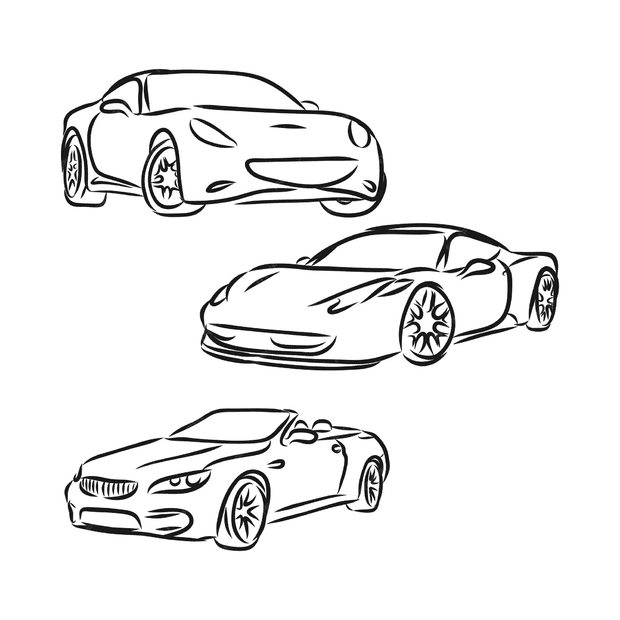
1698246756945.png

(Not mine. Stolen off Google)

I noticed right away that it is not as simple as it might seem.
To replicate this, we start with a square, viewed obliquely (1).

Naively inscribing an ellipse into it with its axes aligned to the square's diagonal will result in the incorrect orientation that looks terrible (2).

To seat the circle correctly in the square, the circle must tangentially touch the centre points of all four sides of the square (3). This new shape is also an ellipse, but its major/minor axes are at an angle to the construction lines of the square.
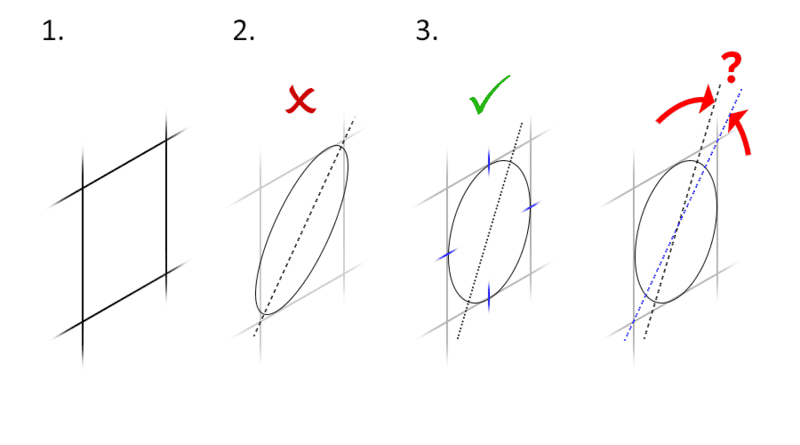
1698247254034.png


My question is: is there a logic to the relationship between the ellipse's actual axes and the square's construction lines?

(There's other aspects to this question, such as:
  • how does the relationship hold up when one and two-point perspective is added to the sketch?

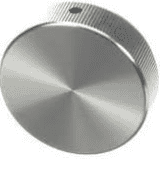
  • is this relationship related to the patterns on reflective disks?
1698247465573.png
1698247503946.png
but one thing at a time...)
 
Mathematics news on Phys.org
For reference, this is how we were taught to do it in High School Mechanical Drafting. Four circular arcs.

It's still a hack, but a more serviceable one.

1698248887843.png
 
Not one taker, eh? :sorry:
 
I think the projection from (x,y,z) space to the 2D (X,Y) space of the paper is \begin{split}<br /> X &amp;= x + y \cos \theta \\<br /> Y &amp;= z + y \sin \theta\end{split} where \theta is the angle between the horizontal (X) axis and the image of the y-axis. Then the image of the circle (y - \frac12)^2 + (z - \frac12)^2 = 1, x = 0 is <br /> (X\sec\theta - \tfrac12)^2 + (Y - X\tan\theta - \tfrac12)^2 = 1 and setting (X,Y) = (u + \tfrac12\cos\theta, v + \tfrac12 (1 + \sin\theta)) reduces this to <br /> u^2\sec^2 \theta + (v - u\tan\theta)^2 = \frac12 or <br /> \begin{pmatrix}u &amp; v \end{pmatrix}<br /> \begin{pmatrix} 2(\sec^2\theta + \tan^2\theta) &amp; - 2\tan\theta \\ - 2\tan\theta &amp; 2 \end{pmatrix}<br /> \begin{pmatrix} u \\ v \end{pmatrix} = 1. If \lambda_1 \geq \lambda_2 &gt; 0 are the eigenvalues of this matrix then 1/\sqrt{\lambda_2} and 1/\sqrt{\lambda_1} are respectively the lengths of the semi-major and semi-minor axes, and the corresponding eigenvectors (which are orthogonal, since the matrix is symmetric) show how the axes of the ellipse are rotated relative to the (u,v) axes (which are parallel to the (X,Y) axes).
 
  • Informative
Likes   Reactions: DaveC426913
DaveC426913 said:
Not one taker, eh? :sorry:
OK, I'll bite.
DaveC426913 said:
For reference, this is how we were taught to do it in High School Mechanical Drafting. Four circular arcs.
I took a semester or maybe a year of mechanical drawing. As I recall, we used an ellipse template to create the illusion of a circle viewed at an angle.

Like this ... https://www.ebay.com/itm/2254658097...a45816c709bf9e38c7770e5fca8ae9a0&toolid=20006
 
Mark44 said:
OK, I'll bite.
I took a semester or maybe a year of mechanical drawing. As I recall, we used an ellipse template to create the illusion of a circle viewed at an angle.

Like this ... https://www.ebay.com/itm/2254658097...a45816c709bf9e38c7770e5fca8ae9a0&toolid=20006
Yes. A template is certainly a way of making a true ellipse.

But note, it does not solve the problem of getting the angle right, which is the more primary focus of this thread.

In fact, arguably, it makes the problem potentially worse, because those templates invariably have the major/minor axes marked, and it's very tempting for a student to line the axes up to the diagonals of the square, as in figure 2. in the OP:

1698438317688.png
 
pasmith said:
.
They ... did not teach me about eigenvalues or matrices in high school... :sorry:
 
DaveC426913 said:
In fact, arguably, it makes the problem potentially worse, because those templates invariably have the major/minor axes marked, and it's very tempting for a student to line the axes up to the diagonals of the square, as in figure 2. in the OP:
The same student might be tempted to shove the pencil into his nose, as well, but that's not a valid argument against pencils or templates. As I recall, there are some templates with different shaped ellipses with some fatter and some thinner.
 
  • Haha
Likes   Reactions: e_jane
Where the idea of “inscribing an ellipse into it with its axes aligned to the square's diagonal” comes from?
 
  • #10
Mark44 said:
The same student might be tempted to shove the pencil into his nose, as well, but that's not a valid argument against pencils or templates.
Granted.

I can't say why we were instructed how to make them using only a compass. Perhaps it had to do with working manually before using tools (like learning your times tables before using a calculator); perhaps they just didn't expect high school students taking a half-credit course to splurge on their own equipment.
Lnewqban said:
Where the idea of “inscribing an ellipse into it with its axes aligned to the square's diagonal” comes from?
Perhaps I was surrounded by non-illustrators.
 

Similar threads

  • · Replies 2 ·
Replies
2
Views
2K
  • · Replies 10 ·
Replies
10
Views
5K
  • · Replies 5 ·
Replies
5
Views
3K
  • · Replies 1 ·
Replies
1
Views
4K
  • · Replies 1 ·
Replies
1
Views
3K