Is there any gravitationally unbound' galactic clusters in observable universe
Click For Summary

Discussion Overview

The discussion revolves around the concept of "gravitationally unbound" galactic clusters in the observable universe, exploring the implications of gravitational interactions and the expansion of space. Participants examine the relationship between gravity and the observed motion of distant galaxies, questioning how these phenomena coexist within the framework of cosmological theories.

Discussion Character

  • Debate/contested
  • Conceptual clarification
  • Exploratory

Main Points Raised

  • One participant suggests that all objects in the universe are gravitationally connected, proposing that even distant galaxies are influenced by gravitational interactions, which raises questions about the nature of their movement as described by Hubble data.
  • Another participant asserts that every object is affected by every other object, emphasizing that the expansion of space does not alter this fundamental gravitational relationship.
  • There is a repeated assertion that gravitationally coherent structures, like the solar system, are not affected by the expansion of space, leading to questions about how distant galaxies can appear to move faster than light due to this expansion.
  • A participant queries whether the expansion of space can overpower gravity when the gravitational attraction between two bodies falls below a certain critical value.
  • One response indicates agreement with the idea that expansion of space may indeed overpower gravity under specific conditions, although it refrains from delving into the mathematical details of General Relativity.

Areas of Agreement / Disagreement

Participants express differing views on the relationship between gravitational forces and the expansion of space, with no consensus reached on how these concepts interact or the implications for distant galaxies.

Contextual Notes

The discussion includes assumptions about gravitational coherence and the effects of cosmic expansion, which remain unresolved. The implications of these concepts on the behavior of galactic clusters are not fully explored.

hitchiker
Messages
31
Reaction score
0
is there any "gravitationally unbound' galactic clusters in observable universe

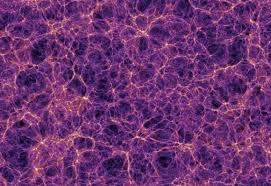
images?q=tbn:ANd9GcSptnWVYk1JSiHBxW6Ccqcr5lhqUai0XNtXNzVvqHfTcDvkvEtM.jpg

my hunch is that everything in the universe is gravitationally tugged on each other ..we can say moon is connected to andromeda galaxy in a way [process]moon->earth->sun->milkyway->andromeda[/process] even the slightest imbalance in mass would cause one to slide on to other slowly overtime...so when Hubble data says farther galaxies are moving away from us due to metric expansion of space(only between gravitationally unbound) does it mean they are gravitationally free standing structures surrounded by billions of lightyear wide flat spacetime ?how could there be flat space time over large scale if matter is homogeniously distributed in universe ?
 
Astronomy news on Phys.org


Every object in the universe is affected, at least to some tiny amount, by every other object. That is true in both classical Newtonian gravity and relativity. Expansion of space has nothing to do with that.


Every object in the universe is affected, at least to some tiny amount, by every other object. That is true in both classical Newtonian gravity and relativity. Expansion of space has nothing to do with that
my understanding from usual reading is that solar system will not be affected by expansion of space because it's gravitationally coherent

BIG BANG THEORY
The universe expands, but coherent objects inside it do not.

so if all matter is connected by gravity. how do distant galaxies are hypothesized to move faster than light because of expansion of space NOTE what BBT says above, if they are gravitationally connected expansion of space shouldn't be effective on them ,
does expansion of space overpower gravity, if gravity between 2 bodies are below certain critical value


hitchiker said:
my understanding from usual reading is that solar system will not be affected by expansion of space because it's gravitationally coherent

BIG BANG THEORY
The universe expands, but coherent objects inside it do not.

so if all matter is connected by gravity. how do distant galaxies are hypothesized to move faster than light because of expansion of space NOTE what BBT says above, if they are gravitationally connected expansion of space shouldn't be effective on them ,
does expansion of space overpower gravity, if gravity between 2 bodies are below certain critical value

See here.


hitchiker said:
does expansion of space overpower gravity, if gravity between 2 bodies are below certain critical value

Without getting into an in depth discussion of the math underlying General Relativity and the expansion of space, yes.
 

Similar threads

  • · Replies 2 ·
Replies
2
Views
3K
  • · Replies 25 ·
Replies
25
Views
4K
  • · Replies 10 ·
Replies
10
Views
3K
  • · Replies 19 ·
Replies
19
Views
6K
  • · Replies 4 ·
Replies
4
Views
8K
  • · Replies 19 ·
Replies
19
Views
5K
  • · Replies 4 ·
Replies
4
Views
8K
  • · Replies 6 ·
Replies
6
Views
6K
  • · Replies 17 ·
Replies
17
Views
14K
  • · Replies 6 ·
Replies
6
Views
2K