Discussion Overview
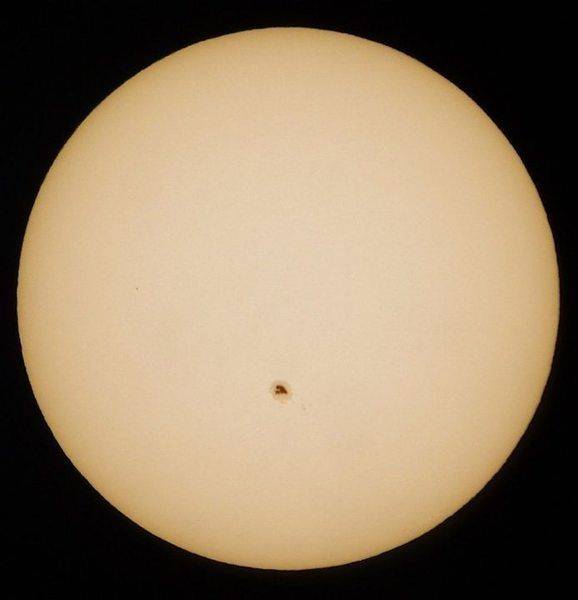
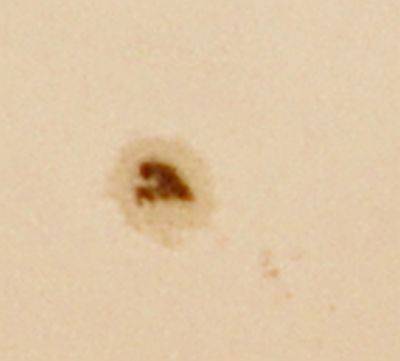
The thread discusses the visibility and characteristics of a large sunspot, AR2529, observed on the solar disk during April 2016. Participants share images, technical details about their photography equipment, and experiences related to solar observation, as well as the implications of the sunspot's activity.
Discussion Character
- Exploratory
- Technical explanation
- Conceptual clarification
- Debate/contested
- Experimental/applied
Main Points Raised
- Some participants note the size of the sunspot, suggesting it is several times larger than Earth's diameter, with estimates around 2-3 Earth sizes.
- Participants share their photographic techniques and equipment, including the use of solar filters to safely observe and capture images of the sun.
- There is a humorous exchange regarding the appearance of the sunspot, with some likening it to a medical condition.
- One participant mentions hearing solar radio static associated with the sunspot's activity, describing it as a Type III radio burst caused by solar flares.
- Another participant raises a question about the occurrence of sunspots in pairs, prompting discussion about the nature of this particular sunspot.
- Several participants express interest in solar filters and where to obtain them, indicating a desire to practice solar observation ahead of future events like the transit of Mercury.
- Information is shared about the sunspot's recent activity, including a significant solar flare and its potential effects on radio communications.
Areas of Agreement / Disagreement
Participants generally agree on the impressive size and visibility of the sunspot, but there are varying interpretations regarding its characteristics and implications. The discussion includes multiple viewpoints on the nature of sunspots and their behavior, indicating that some aspects remain unresolved.
Contextual Notes
Participants mention the limitations of their equipment and the challenges of observing solar phenomena, as well as the dependence on specific filters for safe observation. There are also references to the timing of solar events and their visibility from different locations.
Who May Find This Useful
Astronomy enthusiasts, amateur photographers interested in solar imaging, and individuals preparing for solar events such as eclipses or transits may find this discussion valuable.
 )
)
 cheers
 Dave
Dave

