- 20,002
- 11,122
From @fresh_42's Insight
https://www.physicsforums.com/insights/10-math-things-we-all-learnt-wrong-at-school/
Please discuss!
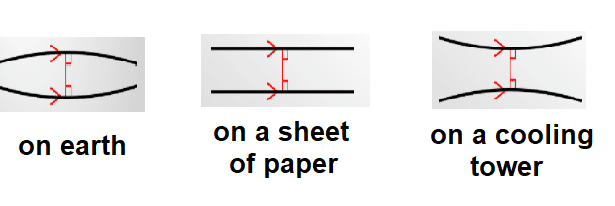
Have you ever stood on a railroad track? Nobody would deny that the rails are in parallel. Do they intersect? Certainly not soon because locomotives normally do not derail. However, you will likely have looked to the horizon while standing on the rails. And - surprise - they do intersect at the horizon, or mathematically: at infinity. But infinity on a ball where we live isn't at infinity. It is actually somewhere. We see that there are possible geometries, in which parallels do intersect.
https://www.physicsforums.com/insights/10-math-things-we-all-learnt-wrong-at-school/
Please discuss!
Have you ever stood on a railroad track? Nobody would deny that the rails are in parallel. Do they intersect? Certainly not soon because locomotives normally do not derail. However, you will likely have looked to the horizon while standing on the rails. And - surprise - they do intersect at the horizon, or mathematically: at infinity. But infinity on a ball where we live isn't at infinity. It is actually somewhere. We see that there are possible geometries, in which parallels do intersect.
Last edited: