The Starlink satellites are launched to a height of ~300 km and raise their orbit to 550 km using ion thrusters. To do so they fly in a low drag configuration, which makes the solar panels very visible around sunset/sunrise. After they reach their operational altitude the current satellites re-orient their solar panels and dim to magnitude 5-6, future satellites might become even dimmer (they are testing a new coating right now - you can't make it black, but they change the directions the light is reflected/scattered to). With 5-6 they are only visible in places with a very dark sky, if the new coating works well they will become completely invisible to the naked eye. Telescopes will still spot them, of course, just like they spot the thousands of other satellites, that is unavoidable.
Only a few batches of satellites are raising their orbit at the same time, and while they do so they have predicable orbits (so astronomers can plan ahead) and they enter the shadow of Earth quite soon due to their low orbits (they are not visible for most of the night). It's not a big deal for professional observations. They would prefer absolutely no satellites apart from orbital telescopes, obviously, but that's not realistic.
If you absolutely need to take an image of a region in the sky at the time a train of satellites will fly through you can still take many images and remove the satellites in software.
davenn said:
I haven't seen a photo of one of these actual satellites before launch
Here is one. With annotations
here.
gleem said:
Professional astronomers since they have been building new terrestrial telescopes since the first satellite was launched.
It is not without impact, but the impact is not as large as some people claim.
Jando said:
Classical conflict of interests: some people want to earn money, others want to do science. The money people usually win.
Some people want internet access. About 3 billion of them do not have internet access at the moment, but such a satellite constellation can provide internet for nearly everyone - they only need a user terminal. I really hope they win. Internet access for everyone is so much more important than a few affected pictures of selected night sky objects.

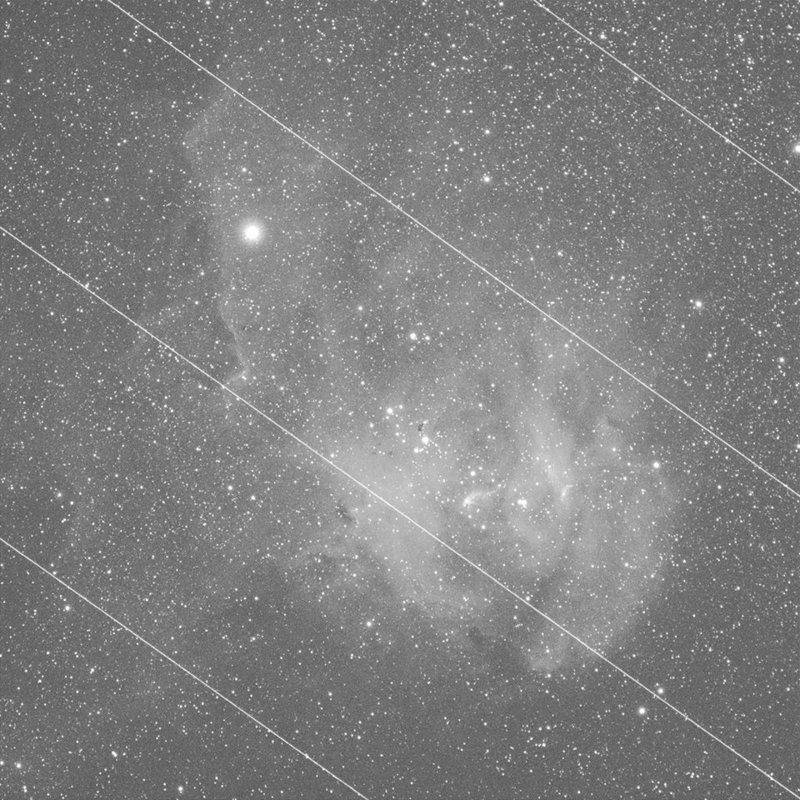 Maybe he should redirect his satellites in a path that avoids blocking celestial objects that astronomers are interested in?


 .
.