Susceptibility of medically implanted chips to EMP

  • Context: Undergrad 
  • Thread starter Thread starter oz93666
  • Start date Start date
  • Tags Tags
    Susceptibility
Click For Summary
SUMMARY

The discussion centers on the vulnerability of miniature implanted electronic devices, such as cardiac pacemakers and insulin pumps, to electromagnetic pulses (EMPs) resulting from nuclear attacks. Participants express concerns that these devices could be disabled during such events, potentially endangering patients. The conversation also explores the feasibility of generating a small EMP using a coil and capacitor to disable these devices, although the consensus is that the human body provides some shielding against EMP effects. Overall, the topic raises significant questions about the safety and reliability of medical implants in extreme scenarios.

PREREQUISITES
  • Understanding of electromagnetic pulses (EMPs)
  • Knowledge of miniature implanted medical devices
  • Familiarity with basic electrical engineering concepts, including capacitors and coils
  • Awareness of the implications of nuclear attacks on electronic systems
NEXT STEPS
  • Research the effects of EMPs on medical devices, focusing on cardiac pacemakers and insulin pumps
  • Explore the design and function of miniature implanted electronic devices in the medical field
  • Investigate methods for generating EMPs, including the use of capacitors and coils
  • Examine safety protocols and regulations surrounding the use of implanted medical devices in emergency scenarios
USEFUL FOR

Medical professionals, electrical engineers, emergency preparedness planners, and anyone involved in the design or regulation of implanted medical devices.

oz93666
Messages
203
Reaction score
46
The medical industry is starting to move towards miniature implanted electronic devices for monitoring the body, automatically delivering drugs to the body, and tracking senile patients.
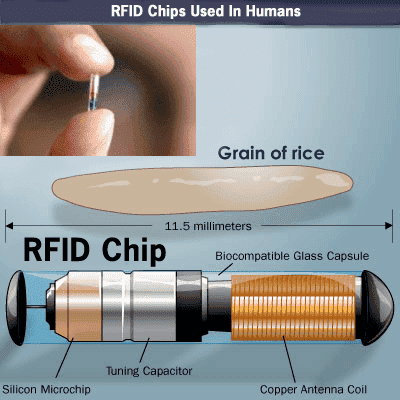
rfid-chip-obamacare.png


My question is , aren't these vulnerable to EMP , In a nuclear attack patients would have their drug delivery system disabled.
Supposed you wanted to disable one of these in your body, could you generate a small EMP with a coil of wire next to the skin , and discharge a capacitor into it ? How big a capacitor and coil would you need?
 
Physics news on Phys.org
oz93666 said:
for monitoring the body, automatically delivering drugs to the body,
Do you have any references on plans for these specific applications? The RFID chip you show is used only for storing information.

oz93666 said:
In a nuclear attack patients would have their drug delivery system disabled.
In a nuclear attack a lot of stuff will be disabled.
 
Last edited:
A.T. said:
In a nuclear attack a lot of stuff will be disabled.
That was my initial reaction as well, and I know that RFID's aren't currently used for anything of tremendous significance (ie: instantly fatal failure), but the thread does bring up an issue that I never even thought of before (to my chagrin). Whether caused by a nuclear blast or some other method, I suspect that a massive EMP could cause dismay to people with things like cardiac pacemakers, neural pacemakers (epilepsy control, etc.), insulin pumps... Are there any technologies other than nukes (like maybe Tokamak reactor containment systems or whatever) that might cause such a thing? It's far outside of my knowledge base, but now I'm curious.
 
oz93666 said:
The medical industry is starting to move towards miniature implanted electronic devices for monitoring the body, automatically delivering drugs to the body, and tracking senile patients.
rfid-chip-obamacare.png


My question is , aren't these vulnerable to EMP , In a nuclear attack patients would have their drug delivery system disabled.
Supposed you wanted to disable one of these in your body, could you generate a small EMP with a coil of wire next to the skin , and discharge a capacitor into it ? How big a capacitor and coil would you need?

As already stated, that's the least of your worries in a nuclear attack.

Why would you want to "disable one of these in your body"?
 
Sensitivity to EMP depends on size - small objects are much less vulnerable than larger objects. The human body provides some additional shielding.
I don't have numbers, but I would expect every nuclear explosion that can disable such a tiny device to be lethal to the body.

Disabling it through the skin might be possible, but without details of the object there is no way to get an estimate for the required device.
 
Danger said:
Are there any technologies other than nukes (like maybe Tokamak reactor containment systems or whatever) that might cause such a thing? It's far outside of my knowledge base, but now I'm curious.

Yes... I'm not too sure how a A/H bomb generates an EMP . I think, in this case it's created by a massive release of charged particles , either +ve or -ve . I think high detonations can take out computers for hundreds of miles, with no damage to buildings. There are electronic weapons I think, using capacitors, that create small EMP that can reach out 100meters or so, It should be possible to construct a small device , is it just a case of discharging high voltage caps. into a coil? There's talk of putting these chips in senile people , to track where they go, stop them getting lost, deliver medication whether or not they want it, I wouldn't want that to happen to me. I wan't to know if it's possible to deactivate them.
 
Discussion of dangerous or illegal activities is not allowed at the PF. Thread is closed for Moderation...
 

Similar threads

Replies
4
Views
10K