What Do Flame Tests Reveal About Sodium and Chloride?

  • Thread starter Thread starter PainterGuy
  • Start date Start date
  • Tags Tags
    Sodium
Click For Summary
SUMMARY

The forum discussion centers on the flame test, specifically its application to sodium and chloride compounds. Participants clarify that the flame test involves introducing a sample to a hot flame to observe emitted light, with sodium chloride being a metal halide that does not exhibit volatility. The discussion also addresses the electron transitions in sodium during the flame test, emphasizing that sodium's bright orange-yellow flame color results from electrons transitioning between the 3p and 3s energy levels. Misinterpretations of the Wikipedia article regarding the volatility of metal halides and the behavior of sodium ions in the flame are also corrected.

PREREQUISITES
  • Understanding of flame tests and their methodology
  • Knowledge of electron configurations, particularly for sodium
  • Familiarity with the properties of metal halides
  • Basic concepts of ionic and atomic behavior in flames
NEXT STEPS
  • Research the principles of flame tests and their applications in qualitative analysis
  • Study the electron transition mechanisms in sodium and other alkali metals
  • Explore the properties and behaviors of metal halides in various chemical reactions
  • Investigate the effects of different flame types on the accuracy of flame test results
USEFUL FOR

Chemistry students, educators, and laboratory technicians interested in qualitative analysis techniques and the behavior of metal halides in flame tests.

PainterGuy
Messages
938
Reaction score
73
Hi,

I was reading about flame test and need your to understand few points.

The test involves introducing a sample of the element or compound to a hot, non-luminous flame, and observing the color of the flame that results. The idea of the test is that sample atoms evaporate and since they are hot, they emit light when being in flame. Bulk sample emits light too, but its light is not good for analysis. Bulk samples emit light with hydrochloric acid to remove traces of previous analytes.[1] The compound is usually made into a paste with concentrated hydrochloric acid, as metal halides, being volatile, give better results. Different flames should be tried to avoid wrong data due to "contaminated" flames, or occasionally to verify the accuracy of the color. In high-school chemistry courses, wooden splints are sometimes used, mostly because solutions can be dried onto them, and they are inexpensive. Nichrome wire is also sometimes used.[1] When using a splint, one must be careful to wave the splint through the flame rather than holding it in the flame for extended periods, to avoid setting the splint itself on fire.
Source: https://en.wikipedia.org/wiki/Flame_test#Process

Q1:
My question is about the part in red in the quoted text above. What does it mean when it says, "with hydrochloric acid to remove traces of previous analytes"?

Q2:
It also says, "The compound is usually made into a paste with concentrated hydrochloric acid, as metal halides, being volatile, give better results."

Sodium is a metal and sodium chloride is a metal halide. It's not volatile. Shouldn't the statement be qualified something like "...as metal halides, being GENERALLY volatile..."?

Q3:
The shown below is an electron configuration for sodium. In the compound sodium chloride the valence electron of sodium has been taken away by chlorine. In other words, sodium is left with its full 2p orbital. Is it electron(s) of 2p orbital which makes energetic transition to 3s orbital and then fall back to original 2p orbital and emit visible light photon?
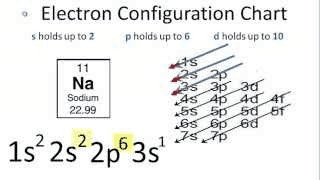
1646718750031.png

Source: https://terpconnect.umd.edu/~wbreslyn/chemistry/electron-configurations/configurationSodium.html
Helpful links:
1: https://www.quora.com/Does-pure-met...ts-I-know-metal-ions-do-how-about-pure-metals
2: https://www.quora.com/What-are-some-recommendations-for-a-chemistry-flame-test
3: https://chemistry.stackexchange.com/questions/75303/why-flame-color-of-salts-is-determined-by-metal
4: https://socratic.org/questions/why-are-chlorides-used-in-flame-test
 
Chemistry news on Phys.org
I have no idea what the wikipedia text says (not that it helps, but you are not alone in being lost).

Halides are typically more volatile than other salts. Anions are relatively small and just -1, compared with most oxoacids which are either much bulkier (with additional oxygen atoms), more charged (-2, -3) or both.

Sodium color: Sodium's familiar bright orange-yellow flame color results from promoted electrons falling back from the 3p1 level to their normal 3s1 level.
 
  • Like
Likes   Reactions: sysprog and PainterGuy
This is just the result of some editing errors.
On 17 march 2021, the Wikipedia page contained 2 versions of "how does a flame test work", that heavily overlapped. . On 25 march a large section of the first version was deleted, just before "Bulk samples emit light with hydrochloric acid", leaving this sentence imcomprehensible. Easiest way to fix, is just to ignore this sentence. Maybe finding the last version that doesn't mention "Bulk samples" would be even better.
 
  • Like
Likes   Reactions: sysprog and PainterGuy
Thank you!

Borek said:
Halides are typically more volatile than other salts. Anions are relatively small and just -1, compared with most oxoacids which are either much bulkier (with additional oxygen atoms), more charged (-2, -3) or both.

I think I was right about the rephrasing of Wikipedia article. Sodium chloride is a halide but it's not volatile therefore the rephrasing "...as metal halides, being GENERALLY volatile..." is not a bad idea. Please see below.

What are Halogens and Halides?
When examining the periodic table, you will find that halogens are the electronegative elements in column 17, including fluorine (F), chlorine (Cl), bromine (Br), iodine (I), and astatine (At).

Halides are chemical compounds that contain halogens. Halides are present in nature with some — namely salts and acids — being essential to human life. Halides can be found in minerals, animals, and plants. The best-known halide is NaCl: table salt.
Source: https://www.nordson.com/en/divisions/efd/blog/102518-halogens-and-halides

Borek said:
Sodium color: Sodium's familiar bright orange-yellow flame color results from promoted electrons falling back from the 3p1 level to their normal 3s1 level.

I don't see how sodium has a valence electron in its 3s1 level in case of sodium chloride. Please see below and please guide me.

The shown below is an electron configuration for sodium. In the compound sodium chloride the valence electron of sodium has been taken away by chlorine. In other words, sodium is left with its full 2p orbital. Is it electron(s) of 2p orbital which makes energetic transition to 3s orbital and then fall back to original 2p orbital and emit visible light photon?
1646718750031-png.png


Source: https://terpconnect.umd.edu/~wbreslyn/chemistry/electron-configurations/configurationSodium.html
 
PainterGuy said:
I don't see how sodium has a valence electron in its 3s1 level in case of sodium chloride. Please see below and please guide me.

Once it gets airborne everything can happen, some ions become just atoms, grabbing electrons from other ions. Not many of these (most sodium is still in form of ions), but the transition is very common and easy to observe.
 
  • Like
Likes   Reactions: PainterGuy and sysprog
Borek said:
Once it gets airborne everything can happen, some ions become just atoms, grabbing electrons from other ions. Not many of these (most sodium is still in form of ions), but the transition is very common and easy to observe.

Thank you but I'm sorry that I don't follow you. If sodium chloride is in powder form, both sodium and chlorine ions act as a one single unit joined together very strongly. I don't see how and where sodium ion would grab an electron to become an atom. On the other hand, sodium atom would react with oxygen in air.
 
PainterGuy said:
If sodium chloride is in powder form, both sodium and chlorine ions act as a one single unit joined together very strongly.

Not exactly. They are separate ions, just ordered in the crystal. There is no "single unit". On evaporation (or dissolution) each one goes on its own. Sure, they do attract each other, but they are not a single unit.

PainterGuy said:
I don't see how and where sodium ion would grab an electron to become an atom.

In the flame there are plenty of charged things that will both grab and donate electrons.

PainterGuy said:
On the other hand, sodium atom would react with oxygen in air.
Yes, once it gets into a cool part of the flame it will stabilize itself in some compound. Not so easily and not so quick in the flame itself, and the amount of sodium atoms created (not all ions will become atoms, only a fraction) and their half time are enough to produce visible sodium light.
 
  • Informative
  • Like
Likes   Reactions: PainterGuy and berkeman

Similar threads

  • · Replies 2 ·
Replies
2
Views
3K
  • · Replies 1 ·
Replies
1
Views
3K
  • · Replies 6 ·
Replies
6
Views
4K
  • · Replies 4 ·
Replies
4
Views
16K