nhmllr
- 183
- 1
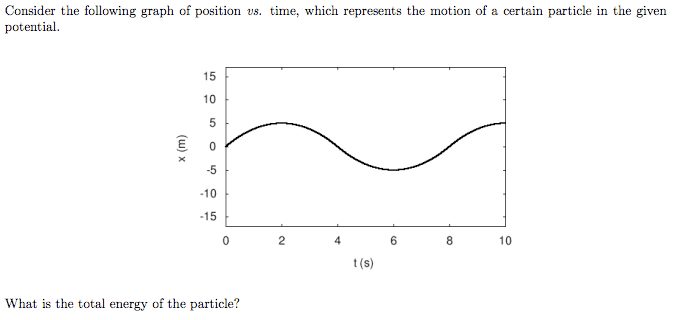
Total energy when positions vs time graph is given
(answer: -5J)
energy initial = energy final
At the crest of each wave, the particle has only potential energy, and at the middle of each wave the particle has only kinetic energy, and these values are equal. By looking at the slope when the graph crosses the horizontal axis, you can determine that it travels at 5m/s then. After this point, I do not know how to continue.
Homework Statement
(answer: -5J)
Homework Equations
energy initial = energy final
The Attempt at a Solution
At the crest of each wave, the particle has only potential energy, and at the middle of each wave the particle has only kinetic energy, and these values are equal. By looking at the slope when the graph crosses the horizontal axis, you can determine that it travels at 5m/s then. After this point, I do not know how to continue.
Last edited: