What's the most likely cause for this carbon seal crack?

  • Thread starter Thread starter Fracture Toughness
  • Start date Start date
  • Tags Tags
    carbon seal Seal
Click For Summary
SUMMARY

The discussion centers on the recurring issue of cracked molded carbon graphite seals in an inline axial piston, variable displacement hydraulic pump. The customer reported a significant reduction in the replacement cycle of these seals after switching parts, with cracks observed primarily at the root of the fillet radius. Material analysis revealed no deviations in hardness, density, or microstructure compared to the previous seal version, indicating a potential quality escape or installation error. The discussion highlights the importance of examining installation practices and the condition of associated components, such as the seal retainer, to determine the root cause of the failures.

PREREQUISITES
  • Understanding of hydraulic pump mechanics and operation
  • Familiarity with carbon graphite seal properties and applications
  • Knowledge of material analysis techniques for mechanical components
  • Experience with hydraulic fluid characteristics and system filtration requirements
NEXT STEPS
  • Investigate the impact of hydraulic shock on pump components and seal integrity
  • Examine installation procedures and alignment practices for hydraulic pumps
  • Research the effects of vibration on static seals in hydraulic systems
  • Analyze the role of the seal retainer and its interaction with the seal during operation
USEFUL FOR

Engineers and technicians involved in hydraulic system design, maintenance professionals working with axial piston pumps, and quality assurance teams focused on seal integrity and performance optimization.

Fracture Toughness
Messages
5
Reaction score
0
TL;DR
Cracked carbon graphite seal that is used in an inline axial piston, variable displacement hydraulic pump.
We have a molded carbon graphite seal that is used in an inline axial piston, variable displacement hydraulic pump. One of our customers reported that, when using the “A” parts in the past, they only needed to replace them due to normal wear. However, after switching to our parts, the replacement cycle seems to be much shorter due to “broken” or “cracked” failures. This issue was identified after hydraulic fluid leakage was observed. According to their records, the same problem has occurred three times over the past few years. We have sold over 1,000 parts to a dozen customers, and this is the only customer that has reported cracking issues. It is unclear whether this is a quality escape on our side or something happening at the customer’s end, but my first goal is to determine the root cause of the cracks.

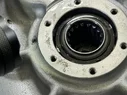
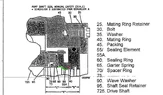
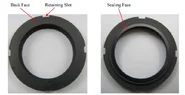
Based on the photos provided, two of the failed seals show cracks initiating from the root of the fillet radius. You can see the tang of the seal retainer engaging with the anti-rotation slots. The shaft seal subassembly is held in position by the seal retainer, which is attached to the mounting flange with fasteners. To me, it appears the cracks may have been caused by some type of impact. Both components are static relative to the shaft, so neither should be rotating. Could vibration be the cause?

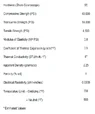
We performed a material analysis on the cracked parts, and no deviations were found. Hardness, density, microstructure, and porosity were checked and compared against the A seal, and the results were equivalent. On the drawing, the ID, OD, slot-to-slot distances, slot width, and fillet radius also show no significant differences compared to the A seal. However, we only performed a 1.5 AQL inspection on this part, and slot-to-slot distance was not measured, so I cannot rule out a quality escape. That said, since this is a molded product, the process should be highly repeatable.

Another possibility is that something went wrong during installation on the customer’s side. But since the A seal did not experience the same issue, I am inclined to believe the root cause may still be on our end.

Pump General Characteristics:

  • Type: Inline axial piston pump
  • Displacement: Variable
  • Rotation Direction: Clockwise (viewed from the coupling shaft end)

Performance Ratings

  • Maximum Continuous Operating Pressure: 209.0 bar (3031 psig)
  • Rated Speed: 3750 rpm
  • Maximum Continuous Speed: 4000 rpm

Installation Data

  • Hydraulic Fluid:
    • Alkyl Phosphate Ester
  • Fluid Temperature Range:
    • -45 °C to +121 °C (-50 °F to 250 °F)
  • System Filtration:
    • 10 µm (400 µin) nominal
    • 25 µm (1000 µin) absolute
 

Attachments

  • our seal property.webp
    our seal property.webp
    20.6 KB · Views: 15
  • cracked seal in the pump.webp
    cracked seal in the pump.webp
    80.7 KB · Views: 48
  • shaft seal subaseembly section.webp
    shaft seal subaseembly section.webp
    62.9 KB · Views: 22
  • subject seal.webp
    subject seal.webp
    22.7 KB · Views: 25
Engineering news on Phys.org
Welcome to PF.

Is the fracture always located at the (tensile stress concentration) corner of the retaining slot?
Does the seal always fracture in the same two places?
Could that retainer be distorted?
Is the retainer replaced at the same time as the seal?
 
  • Like
Likes   Reactions: Fracture Toughness and berkeman
Thank you! The first failure was a fine crack (part still intact) after a couple of hundred hours of operation. The second failure was a complete crack (in 2 pieces) after a couple of thousand hours of operation. The third failure (similar to 2nd failure) should be the one shown in the photo.

I forgot to mention that they are likely still using the A seals. It is certainly possible for the retainer to have defects, especially if it has sharp edges. However, if the A seals are not affected by it, then the likelihood of the retainer having significant defects would be slim, I think. But that's a good point, I should probably confirm that with the customer so I can rule out the retainer 100%. From the photo, there appears to be some clearance between the tang of the retainer and the seal's slot.

They are typically replaced at different intervals based on scheduled maintenance inspections, but they can be replaced at the same time as well.
 
the last two failures appear to develop crack on the same location, the 1st failure is not in the slot. these 3 failures are on 3 different parts and different years
 
What is inserted into that female spline?
 
Is the drive from a short inline spline, with a compliant coupling?
Or is it from a gearbox with rolling bearings?
Or from an offset V-belt drive with support bearings?

What controls the pump flow and outlet pressure?
How long does it take to cut the pump output when pressure rises?

Hydraulic shocks can generate side forces on pump drives.
To what actuators does the pump supply fluid?
Can those actuators collide with something and cause a shock?
 
  • Like
Likes   Reactions: Lnewqban
Following @Baluncore line of thinking, it would be interesting to see how is that female shaft supported by bearings and the condition or age of those.
Any cut view of the pump-coupling-motor assembly would be helpful for us to see.

Normally, bearings and seal go together, and proper alignment of shaft-bearing-seal is not an issue, as all the surfaces are machined in one step and perfectly concentric.

This case should be the same in theory, but any misalignment, vibration, or undesired axial load on the seal lip may be happening as result of one or more causes (like improperly aligned motor-coupling-pump, worn bearings, pumping pistons cyclic loads, shaft surface finishing, etc.).

C2627EFF-27E5-4AD9-9740-BCF9ED29A72B.webp
 
Last edited:
I can only answer some of the questions:
1756847856909.webp

1. Short inline spline + coupling shaft to the engine gearbox; not an offset V-belt drive.

2. It’s pressure-controlled variable displacement: a pressure compensator senses outlet pressure and adjusts the yoke/swashplate to vary displacement. There’s also an electrically depressurizing valve that can lower/limit system pressure. The pump is directly connected to the engine gearbox and the output fluid flow will change in proportion to engine rpm.
 
found a similar pump online:
1756911295329.webp
 

Similar threads

  • · Replies 6 ·
Replies
6
Views
4K
  • · Replies 5 ·
Replies
5
Views
2K
Replies
3
Views
4K