Which frequency counts when striking wood at different rates?

  • Context: High School 
  • Thread starter Thread starter houlahound
  • Start date Start date
  • Tags Tags
    Conceptual Wave
Join the discussion
Registration is free. Ask a follow-up in this thread, or start your own.
2 replies · 2K views
houlahound
Messages
907
Reaction score
223
explain the question by example;

I hit a piece of wood with a mallet and record a pulse ie;
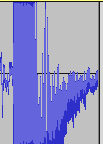
upload_2016-4-13_10-59-9.png


zooming in I get a specific frequency;
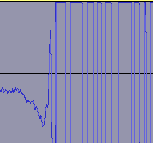
upload_2016-4-13_10-59-49.png


pretend it is a sine wave of frequency 500HzI then beat the wood with a frequency of 10 000Hz (pretend this is a 10 000HZ sine wave beating;
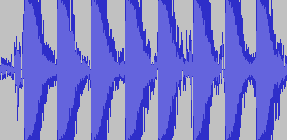
upload_2016-4-13_11-1-45.png
so what is the frequency of the sound 10 000Hz?

all sounds must be produced this way ie something being mechanically struck eg speaker cone moving under varying magnetic field but you also have the "internal" sound of the structure being mechanically struck eg speaker paper, proof; replace the paper speaker cone with a plastic one and use the same source frequency you get a different tone but same frequency.

so which frequency are we quoting?
 
Physics news on Phys.org
houlahound said:
explain the question by example;

I hit a piece of wood with a mallet and record a pulse ie;

View attachment 98996

zooming in I get a specific frequency;

View attachment 98997

pretend it is a sine wave of frequency 500HzI then beat the wood with a frequency of 10 000Hz (pretend this is a 10 000HZ sine wave beating;

View attachment 98999so what is the frequency of the sound 10 000Hz?

all sounds must be produced this way ie something being mechanically struck eg speaker cone moving under varying magnetic field but you also have the "internal" sound of the structure being mechanically struck eg speaker paper, proof; replace the paper speaker cone with a plastic one and use the same source frequency you get a different tone but same frequency.

so which frequency are we quoting?
With electrical resonant circuits we do not see this action. If I drive A 500 Hz resonant LC circuit with 10,000 Hz I do not see 500 Hz. Even if I place a non linear device like a diode in the circuit I do not see 500 Hz. The 500Hz you are seeing must be excited by a component of the exciting source at 500 Hz, such as noise or the impulse of swiching on.
 
There is a difference between hitting the wood once generating what you call pulse and hitting it repeatedly by a mechanical vibrator of 10,000 Hz frequency.
In the first case the natural frequency of the wood surface is produced which is damped with time that is why you have pulse. In the other case the wooden surface is forced to vibrate with the applied frequency. all speakers and all which reproduce sound are in forced motion. They cannot be and should not be in resonant motion with applied periodic forec also of the same frequency then the system will break down. normal sounds are a mixed bag of frequencies in the range of 20 Hz to 20k Hz.