Discussion Overview
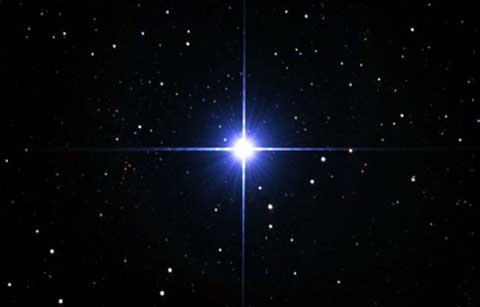
The discussion revolves around the phenomenon of star twinkling, exploring the optical and atmospheric factors that contribute to this effect. Participants also examine the appearance of diffraction spikes in star images and the differences in twinkling behavior between stars and planets.
Discussion Character
- Exploratory
- Technical explanation
- Debate/contested
Main Points Raised
- Some participants propose that twinkling is primarily caused by atmospheric turbulence affecting the light from stars as it passes through varying air layers.
- Others argue that diffraction spikes in star images are related to the optical design of telescopes, particularly the configuration of secondary mirrors and diaphragm blades.
- A participant mentions that planets do not twinkle in the same way as stars due to their proximity, which allows them to appear as disks rather than points of light.
- Concerns are raised about the variability of atmospheric distortion and its impact on the visibility of twinkling, suggesting that under certain conditions, stars may not twinkle.
- Some participants express skepticism about the reliability of using twinkling as a distinguishing feature between stars and planets, citing personal experiences.
- Technical calculations are presented regarding the angular size of planets and how it relates to atmospheric effects, with references to specific formulas.
- Participants discuss the optical effects of different diaphragm blade configurations on the appearance of stars in photographs, noting that the number of blades can influence the number of diffraction spikes observed.
Areas of Agreement / Disagreement
Participants generally agree that atmospheric turbulence plays a significant role in star twinkling, but there is disagreement regarding the implications of this for distinguishing stars from planets. The discussion remains unresolved on the reliability of twinkling as a distinguishing feature and the exact nature of diffraction spikes.
Contextual Notes
Limitations include varying interpretations of atmospheric effects, the influence of telescope design on observed phenomena, and the subjective nature of visual observations regarding twinkling.
Who May Find This Useful
Astronomy enthusiasts, students studying optics and atmospheric science, and individuals interested in the visual phenomena associated with celestial observations may find this discussion relevant.