Will anyone alive today see a permanent colony on the Moon or Mars?

  • Thread starter Thread starter BWV
  • Start date Start date

Will anyone alive today live to see a permanent colony on Mars or the Moon?

  • Yes

    Votes: 3 15.8%
  • No

    Votes: 16 84.2%

  • Total voters
    19
BWV
Messages
1,665
Reaction score
2,006
Curious if there is a consensus here
 
Physics news on Phys.org
So, by, say, 2126?

That is a long time.

Where were we in 1926? Oh yeah.
1769649753181.webp
 
DaveC426913 said:
So, by, say, 2126?

That is a long time.

Where were we in 1926? Oh yeah.
View attachment 369234
True but flying presents no problems with human biology
 
BWV said:
True but flying presents no problems with human biology
But the women. Their uteruses. Falling out everywhere. 😲
 
BWV said:
True but flying presents no problems with human biology
What do you mean? We'll suffocate if we fly too high!

Anyway, I voted no. Mars is nigh on impossible. The moon is possible, but there's no good reason to do it and it would cost too much.
 
  • Agree
Likes   Reactions: PeroK
DaveC426913 said:
So, by, say, 2126?

That is a long time.

Where were we in 1926? Oh yeah.
View attachment 369234
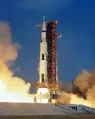
This is where we were before 1976:

Saturn V.webp

By that logic we should be on Mars by now.
 
DaveC426913 said:
So, by, say, 2126?

That is a long time.
The poll question could be a trick question and actually be about radical expansion of the human lifespan. :wink:
 
  • Like
Likes   Reactions: russ_watters and PeroK
We also need a solid definition of a "permanent colony".
Must it be self-sustaining, independent of Earth, or can it be like the space station, with a changing crew, supplied with food and fuel?
 
  • Like
  • Agree
Likes   Reactions: Klystron and BillTre
PeroK said:
It's not clear how anyone could return from Mars.
Maybe the Moon would make a good penal colony, like Britannia's Botany Bay, or Van Diemens Land in Australia, or France's Devil's Island in French Guiana. The USA has operated the Guantánamo Bay Detention Camp since 1903, maybe it is time for it to be moved off-planet.
 
  • Like
Likes   Reactions: PeroK
  • #10
Frabjous said:
The poll question could be a trick question and actually be about radical expansion of the human lifespan. :wink:
Sure, and furthermore if you think people will be able to upload their consciousness into robots and live forever feel free to vote ‘yes’ ;)
 
  • #11
I cast my vote assuming "permanent colony" implies people in general would be living their full life on Mars or on the Moon, including raising family, as opposed to "permanent presence" which more implies a rotating crew like with ISS.
 
  • Like
Likes   Reactions: Klystron, BillTre, russ_watters and 1 other person
  • #12
I voted no for colony but I do not think it would out of the question to have a permanent scientific base there.
 
  • Like
Likes   Reactions: Klystron, BillTre, russ_watters and 1 other person
  • #13
The problem is that no one knows how fast technology in a certain area will develop. Extrapolating from the past is not possible because initial linear (or even exponential) progress must slow down and eventually become logarithmic at best. Further progress requires a technological leap that is impossible to predict.

Travel times between London and New York, say, fits this pattern. Boat times got faster, but it required the completely new technology of airplanes to cut the journey from a week or so to eight hours. This improved to less than 4 hours with Concorde. So, in 1976, everyone expected London to New York to be about an hour by 2026. Whereas, it's gone back up to about 8 hours and commercial supersonic flight has gone for the time being.

So, even when something is technologically possible, it may not be commercially viable. If we wanted to, we could fly people around on small supersonic jets, but it's not commercially viable. Not to mention the potential impact on the global climate.

When will travel from London to New York be down to one hour or so is impossible to guess. Maybe by 2126? Maybe not. If we can't predict that, then the prediction of a Martian colony by 2126 is unreasonable.

All we can say is that a Martian colony is unpredictably far in the future. And not in the foreseeable future.
 
Last edited:
  • Like
Likes   Reactions: Ken Fabian, jbriggs444, BWV and 3 others
  • #14
PS the same goes for a Moon Base. Who is going to make that a commercial priority? If and when that happens is impossible to predict.
 
  • #15
PeroK said:
This is where we were before 1976:

View attachment 369240

By that logic we should be on Mars by now.
The Moonshot was an anomaly, driven by Cold War testosterone.
 
  • Like
Likes   Reactions: Ken Fabian
  • #16
Filip Larsen said:
I cast my vote assuming "permanent colony" implies people in general would be living their full life on Mars or on the Moon, including raising family, as opposed to "permanent presence" which more implies a rotating crew like with ISS.
For what it's worth, this criteria doesn't alter my answer. I don't think there's a difference in challenge level.
 
  • #17
Baluncore said:
We also need a solid definition of a "permanent colony".
Must it be self-sustaining, independent of Earth, or can it be like the space station, with a changing crew, supplied with food and fuel?
Must we? At what point did the American colonies become "permanent" and "self sustaining"?
 
  • #18
PeroK said:
The problem is that no one knows how fast technology in a certain area will develop....

When will travel from London to New York be down to one hour or so is impossible to guess. Maybe by 2126? Maybe not. If we can't predict that, then the prediction of a Martian colony by 2026 is unreasonable.

All we can say is that a Martian colony is unpredictably far in the future. And not in the foreseeable future.
I see it as more an "if" than a "when". Because it's a physics/technology problem more than a scale or even economics problem* I'd say that the odds are low for either.

*For Mars; for the Moon we could do it now if we felt like spending the money.
 
  • #20
Every time I see @Andy Resnick's name, I think "is that the highly-acclaimed sci-fi novelist? No, I'm thinking of Nebula Award winner and five-time Hugo Award winner Mike Resnick . I wonder if they're related..."

It never seems the right time or place to ask. But now that we're talking about Mars... it seems on-topic.


(I came upon Mike Resnick via his standalone novel "A Miracle of Rare Design".)
 
  • #21
russ_watters said:
Must we? At what point did the American colonies become "permanent" and "self sustaining"?
Were the first nations permanent, or was their culture often wiped out by the arrival of the next wave of European colonists?
 
  • #22
Baluncore said:
Were the first nations permanent, or was their culture often wiped out by the arrival of the next wave of European colonists?
By that analogy, presuming that no overriding economic reason will exist for a Mars colony, a discovery of microbial life on the planet would likely nix the idea of humans on the planet permanently. Hard to imagine anything of scientific value greater than its preservation and study
 
  • Like
Likes   Reactions: russ_watters
  • #23
I believe it will probably happen by 2100*. A scientific research station satisfies Webster's definition of a colony. It might start like McMurdo Station in Antarctica, which has been operating since 1956. Considering the clutter of satellites orbiting the Earth, the Moon, it would seem to be a great place for astronomical research. And there is the possibility of commercial value that we might discover in the next decade.
* Provided we don't find a way to stop or reverse human progress.
 
  • Like
Likes   Reactions: russ_watters
  • #24
Doubtful, there is just no economic reason to. All other exploration and colonization was generally tied to a solid economic thesis.

If when we went to the moon in the 60's we discovered it was really a big ol ball of unobtanium and we could set up shop and send it back for a profit we would have already colonized it.
 
  • Like
Likes   Reactions: PeroK and russ_watters
  • #25
there seems to be real scientific value to a telescope on the dark side of the moon that could take much longer exposures than orbiting space telescopes and it would be free of Earth's EM noise, but whether this requires a habitable moon base is another question

https://en.wikipedia.org/wiki/Lunar_Crater_Radio_Telescope
 
  • #26
Baluncore said:
Maybe the Moon would make a good penal colony, like Britannia's Botany Bay, or Van Diemens Land in Australia, or France's Devil's Island in French Guiana. The USA has operated the Guantánamo Bay Detention Camp since 1903, maybe it is time for it to be moved off-planet.
I feel this reply may be a setup for an old SF reader, but will take the bait. SF author Robert Heinlein in 1966 posited a future Lunar penal colony populated by prison guards made up of Federated Nations (aka UN) dragoons and a Warden appointed by a Lunar Authority watching over aging deportees and their rather prosperous descendants. "The Moon is a Harsh Mistress".

Written as a prequel to Heinlein's juvenile novel "The Rolling Stones", "Mistress" incorporates many of the objections to off-world colonies in this thread using some fancy literary footwork. Humans survive underground on Luna, drilling and sealing "cubit" and mining ice deposits to replenish fresh water. Colonists undergo "irreversible physiological changes" from low gravity after a few months making deportation a life sentence. An excellent gimmick IMO.

This sets the stage for an isolated "locked room" Lunar culture with avant garde marital customs and fanciful language variants. Fascinated by international 20th Century politics, the author leads us, central characters, and a self-aware AI computer to an inevitable revolution against the Lunar Authority.
 
  • Like
  • Skeptical
Likes   Reactions: PeroK, russ_watters and BillTre
  • #27
russ_watters said:
For what it's worth, this criteria doesn't alter my answer. I don't think there's a difference in challenge level.
Whereas I think they are vastly different - the difference between using the pre-existing resources and industrial capabilities of a globally connected Earth economy and the relying on hypothetical resources and industrial capabilities of a Mars settlement in isolation.

We don't even know if there is a usable copper deposit (substitute for any of a score or more of other essential minerals) on Mars - with strong likelihood there isn't any. Which isn't saying the element is absent, just not in the form of a concentrated ore body that can be readily exploited.

But I happen to think colonies are an emergent outcome of doing profitable things in other places that rely on human presence, within the larger existing (Earth) economy, and doing it for a long time. Not having all those resources counted as free (or nearly so) like air, water, fertilse soils, biology is a huge handicap even without the absence of low cost transport for trade.
 
  • Like
Likes   Reactions: PeroK
  • #28
BWV said:
there seems to be real scientific value to a telescope on the dark side of the moon that could take much longer exposures than orbiting space telescopes and it would be free of Earth's EM noise, but whether this requires a habitable moon base is another question

https://en.wikipedia.org/wiki/Lunar_Crater_Radio_Telescope
Nah, just put it at L2 and equip it with a good shield. Oh.
 
  • #29
Ken Fabian said:
using the pre-existing resources and industrial capabilities of a globally connected Earth economy
But are you accounting for the fabulously expensive transport costs?

Up out of one gravity well, across 50 million miles and down into another?
 
  • #30
Baluncore said:
Were the first nations permanent, or was their culture often wiped out by the arrival of the next wave of European colonists?

Ken Fabian said:
Whereas I think they are vastly different - the difference between using the pre-existing resources and industrial capabilities of a globally connected Earth economy and the relying on hypothetical resources and industrial capabilities of a Mars settlement in isolation.

We don't even know if there is a usable copper deposit...
I'll rephrase/expand: I don't think there's a definable point where an outpost becomes a colony becomes a permanent colony, nor do I think self-sufficiency is very meaningful as part of a definition of such. In today's global economy are any countries 100% self sufficient?

I'm not sure what the point is regarding a usable copper deposit, especially since solid state electronics last a very long time and can be recycled. And we don't need much. Humans need a lot of air (recyclable), water (recyclable) and food. So, growing food would be the main thing needed for self-sufficiency. But if it's cheaper to send up the food vs the infrastructure to grow the food, why would that matter? It's just a technicality.

But if you really want it, for what it's worth, I think "permanent" for a current settlement means there's no definable end-date*. The ISS has a usable lifespan, so it is not permanent. I suppose you could build an entirely brand-new space station, dock it with ISS and transfer the occupants to it before de-orbiting ISS, but I'd consider that cheating. Other end of the spectrum; an 18th century house near me was recently demolished, which made me sad, but I don't think that makes Pennsylvania a temporary colony. No, I don't know where the line is. That's my point: I think it's way in the other direction if it even exists.

*It gets harder to judge if a historic settlement/civilization has an end date, but we don't have to worry about that for current/future permanent settlements, because they're forever until they aren't.
 

Similar threads

  • · Replies 2 ·
Replies
2
Views
2K
  • · Replies 25 ·
Replies
25
Views
4K
  • · Replies 3 ·
Replies
3
Views
3K
Replies
18
Views
5K
  • · Replies 11 ·
Replies
11
Views
27K
  • · Replies 1 ·
Replies
1
Views
4K
  • · Replies 6 ·
Replies
6
Views
3K
  • · Replies 60 ·
3
Replies
60
Views
11K
  • · Replies 9 ·
Replies
9
Views
12K
  • · Replies 1 ·
Replies
1
Views
5K