A question about 'properties of multivariate normal distributions'.

Click For Summary
SUMMARY

The discussion revolves around proving that a vector Z consists of p independent standard normal distributions, leading to the conclusion that the dot product Z'Z results in a chi-square distribution with p degrees of freedom (χ²). The proof is established through the definition of the chi-square distribution as the sum of the squares of independent standard normal variables. Participants emphasized the importance of providing clear visual aids, such as inline images, to facilitate understanding.

PREREQUISITES
  • Understanding of multivariate normal distributions
  • Familiarity with chi-square distribution
  • Knowledge of vector operations, specifically dot products
  • Basic statistical concepts related to independent random variables
NEXT STEPS
  • Study the properties of multivariate normal distributions
  • Learn about the derivation of the chi-square distribution from standard normal variables
  • Explore vector calculus, focusing on dot products and their applications in statistics
  • Investigate statistical proofs involving independent random variables
USEFUL FOR

Statisticians, data scientists, and students in advanced statistics or probability courses who are looking to deepen their understanding of multivariate distributions and chi-square statistics.

rof
Messages
4
Reaction score
0
hello guys,
i have a question and looking for an answer quickly...

question;

prove that,
XxZdUxc.png

Z is a vector.thank you.
 
Physics news on Phys.org
rof said:
hello guys,
i have a question and looking for an answer quickly...

question;

prove that,

Z is a vector.thank you.

Hi rof! Welcome to MHB! ;)

The chi-square distribution is defined as the sum of the squares of p independent standard normal distributions.
So your proof follows from the definition.
 
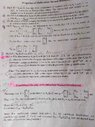
this is the full question paper. (if that helps you to understand the nature of the question)
the answer i want is to question number 5.

View attachment 5906

thank you
 

Attachments

  • QnBxP5g.jpg
    QnBxP5g.jpg
    89.9 KB · Views: 108
Last edited by a moderator:
rof said:
this is the full question paper. (if that helps you to understand the nature of the question)
the answer i want is to question number 5.http://i.imgur.com/l2CpJz3.jpgthank you

That link is broken...and rather than using a free online image hosting service (many of which don't work well), it is better to attach images inline so that everyone can see them and they are not subject to the image hosting service taking them down.
 
MarkFL said:
That link is broken...and rather than using a free online image hosting service (many of which don't work well), it is better to attach images inline so that everyone can see them and they are not subject to the image hosting service taking them down.

i corrected it by editing the post as soon as i posted it, but somehow editing didnt happen.

here is the link;
http://i.imgur.com/QnBxP5g.jpg

5th question
 
rof said:
i corrected it by editing the post as soon as i posted it, but somehow editing didnt happen.

here is the link;
http://i.imgur.com/QnBxP5g.jpg

5th question

I went ahead and edited your previous post to attach the image inline. (Yes)
 
rof said:
this is the full question paper. (if that helps you to understand the nature of the question)
the answer i want is to question number 5.

thank you

Your vector $\mathbf Z$ consists of $p$ independent standard normal distributions.
When we calculate the dot product $\mathbf Z' \mathbf Z$, we get the sum of the squares of those $p$ independent standard normal distributions.
That is a $\chi_p^2$ distribution by definition.
 
thanks all for taking time to read my question and providing answers.
good luck to all... :)
 

Similar threads

  • · Replies 1 ·
Replies
1
Views
2K
  • · Replies 5 ·
Replies
5
Views
3K
  • · Replies 2 ·
Replies
2
Views
2K
  • · Replies 3 ·
Replies
3
Views
2K
  • · Replies 6 ·
Replies
6
Views
2K
  • · Replies 11 ·
Replies
11
Views
13K
  • · Replies 5 ·
Replies
5
Views
2K
  • · Replies 7 ·
Replies
7
Views
2K
  • · Replies 24 ·
Replies
24
Views
4K