Nice job. For comparison, I have a proof in my GR book
http://www.lightandmatter.com/genrel/ , section 7.4, but it's really very similar. Some other statements and proofs of the theorem that I've seen:
Birkhoff's original proof, in Birkhoff, Relativity and Modern Physics, 1923. A horrible, long monstrosity with an out of date attitude toward the significance of coordinates.
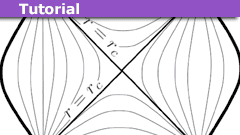
Hawking and Ellis: "Any C^2 solution of Einstein's empty space equations which is spherically symmetric in an open set V, is locally equivalent to part of the maximally extended Schwarzschild solution in V." The part about "maximally extended" is a good point -- I always tend to think about just part of the Schwarzschild spacetime (2 of the 4 regions) and forget that it can be extended.
http://arxiv.org/abs/gr-qc/0408067 -- "Schwarzschild and Birkhoff a la Weyl," Deser and Franklin. Birkhoff's thm is equivalent to proving that the m in the Schwarzschild metric is constant.
As you point out, the existence of the ##\partial_t## Killing vector doesn't mean that the spacetime is static. However, it *is* asymptotically static, which is kind of the only nontrivial thing being proved. If we knew in advance that it was asymptotically static, then Birkhoff's theorem would amount to no more than the usual derivation of the Schwarzschild metric. Essentially we're seeing that there's no such thing as gravitational monopole radiation.
For a really rigorous proof, I think one needs to deal with the possibility that the metric coefficients blow up or go to zero, and show that these would be only coordinate singularities-- but I don't do that either, just mention it in a footnote.