AI vs. Humans as Processors in an Environment

  • Thread starter Thread starter BillTre
  • Start date Start date
  • #61
256bits said:
Should the concept of agent be terminated at the single cell, or continue down into the cell internal structure including the proteins and chemicals within that react to their local environment .
If it's useful in helping to understand what they do, sure.

"Agent" is a model. It's a tool for human understanding. It's something we use to describe the world, including ourselves.
 
Physics news on Phys.org
  • #62
PeterDonis said:
The best heuristic I can give is that anything that can do something, even something very simple, on its own, without being told what to do, is an agent. A thermostat, for example, tells your heating or A/C to turn on and off, without being told when to do it. So it's an agent--an extremely simple one.
An agent cohort myself, if I must commit.

Just wondering if the agency concept and classifications can explain anything more easily than a cause and effect approach that the physical sciences has depended upon to explain the world. EDIT I see your above posting - makes sense/

Control systems and machines have a whole branch of science dedicated to design and analyse that has worked so.
Would Boeing ever use the agent concept to produce their planes?
Or ASML use agency concepts to explain how their $300 million UEV ( low x-ray ) machine is so precise that the laser within has an error along the lines of pinpointing the edges of a dime on the moon from earth?
These are complex machines, the ASML being said to be the most complex ever produced, and yet both not fully or completely having an AI brain controlling their operation would have to be designated as being closer to the simple model of the agency spectrum.
Point being that complexity may not signal the intelligence of the machine as outlined in the agency model.
 
  • #63
256bits said:
Just wondering if the agency concept and classifications can explain anything more easily than a cause and effect approach that the physical sciences has depended upon to explain the world.
For any system where it's computationally intractable to predict its behavior using physical laws, yes, if it can be modeled as an agent, that's a benefit. Humans, of course, are the obvious example: nobody predicts any human's behavior using physical laws. But we predict each other's behavior pretty well, in general, by modeling each other as agents.

There's an intermediate level of modeling, which Daniel Dennett called the design stance, where you aren't using physical laws directly, you're treating the system as having an abstract design and being made out of physical parts that will do what they're designed to do, but without any attribution of agency. For a thermostat, this stance works as well as modeling it as a very simple agent, because its design is so simple and uses such simple physical parts: a temperature sensor, a couple of switches and relays, and some logic gates. But even then we're not using physical laws directly.
 
  • Like
Likes   Reactions: BillTre and 256bits
  • #64
256bits said:
Would Boeing ever use the agent concept to produce their planes?
Autopilots in planes are examples of simple agents. And actually nowadays they're not even all that simple, they can do more than just "fly the plane straight and level on this course", which was their original purpose.
 
  • Like
Likes   Reactions: russ_watters and BillTre
  • #65
256bits said:
their $300 million UEV ( low x-ray ) machine
Which needs a human operator to do anything, right? So no, it would not be an agent. It doesn't do anything without being told to by a human operator.
 
  • #66
Someone may appreciate this, even if not directly applicable to the opening OP,

Dune by Brian Hebert was a series of books, the first being Dune: The Butlerian Jihad. One of the characters is named Serena Butler, whose murder of her son is the catalyst for the uprising of the humans against their machine overlords. So, some speculation as to why the name Butler and Butlerian Jihad.
Rewind to Samuel Butler , 1863. The publication of a letter to the editor " Darwin among the Machines". Whether this is from where Hebert selected the Butler name, it still is an interesting read of imagination of machines as being a separate group of species.

https://diogenesii.wordpress.com/wp-content/uploads/2013/06/darwin-among-the-machines.pdf
 
  • Sad
Likes   Reactions: PeroK
  • #67
256bits said:
Can one believe at the same time in evolution and its processes of randomness of natural selection, and teleology
The normal evolutionary process can be conceived of as having two parts: the production of variability (random to some degree or not) and the selection of the variants for those that are well adapted to their situation (meaning they are more likely to live long and prosper). In this way variants of control mechanisms can be produced (at "random"). However, those that most functionally benefit the organism (or living system) will propagate to a greater extent and come to dominate in succeeding generations. The step of selecting of the "good" or "bad" variants has been compared to an engineering step.

This is pure natural selection.

256bits said:
which in its final extension leads to some sort of divine intervention?
This part is not required.

256bits said:
Ie-the universe has a purpose.
One might say the purpose of the universe is to make self-assembling or self-propagating entities before its heat death, or one might not say that.

Divine intervention not required.
 

Attachments

  • Screenshot 2026-05-30 at 12.40.40 PM.webp
    Screenshot 2026-05-30 at 12.40.40 PM.webp
    86.5 KB · Views: 1
  • #68
sbrothy said:
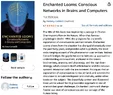
"Enchanted Looms" is another good book about this subject.
Looked this up.
View attachment 372201
It seems to be a similar to the wetware book but focused on the nervous system and the possibly emergent process of consciousness.
 
  • Like
Likes   Reactions: sbrothy
  • #69
256bits said:
Can one believe at the same time in evolution and its processes of randomness of natural selection, and teleology which in its final extension leads to some sort of divine intervention? Ie-the universe has a purpose.
Plenty of people claim to believe both, for whatever that's worth.
 
  • #70
jack action said:
From the link I gave above, note that the first four classes of intelligent agents are pretty similar, each one having an add-on over the simpler one. The model for the fifth one is completely different, though. This might help reconcile the facts that every automated machine is an agent, and that there is also a big difference between the decision processes of a human (or even an equivalent AGI) and a thermostat.


I probably just have a very layman-ish access to the topic. I'm well aware it's a discussion I'm never going to "win" (which was also never my point). It just seemed almost outrageous to me to compare the agency of a roomba and a human. I realize though that that's not what you're doing. Darn my idiot intution! Why do I get myself mixed into these discussions?!

Ah well, I learn something every time. It's not a complete waste of time (for me at least :woot:).
 
  • #71
jedishrfu said:
Yes MS destroyed many promising companies in their rise to dominance.

Zip tools when MS introduced a compressed filesystem. I don't think users responded well to this new os since disk failures become unrecoverable for text files that looked encrypted.

OS/2 when MS repackaged the code to sell Windows NT. IBM made sure MS didn't get access to the networking part of OS/2 and also sold separately as a product. When Windows NT would have a system fault the error would say OS/2 error.

Lattice C initially resold by MS until they expanded their compiler portfolio with multiple languages including C. Lattice faded away a few years later.

M$ have a history of either buying up their competition or downright squashing it, for instance by copying their product and giving it away for free. Not many startups can survive that.

And who can forget United_States_v._Microsoft_Corp.
 
  • #72
  • #73
sbrothy said:
Darn my idiot intution! Why do I get myself mixed into these discussions?!
As a wise man once said, Confusuous perhaps, or it could have been Sydney Sweeneey, I forget.
"A man who asks can only be fool for a minute. A wise man who doesn't ask is a fool for life."
Or something like that, you get the drift/

Anyways,
Ye old style of thinking, with humans superior to all else.
Humans - have agency, purpose, free will, make choices, etc.
Animals - act only on instinct.
Machines - totally dumb

along comes New Materialism
The divide between humans and animals erodes. Animals really do have some agentic qualities. And recently plants.

Along comes AI
Machines are also brought into the fold.
Since human-machine interactions can effect each others 'self' --- *self in quotes* -> as of now theoretically it is still more human centric, ( or supposed to be, contrary to the tech's and pundit's doom and gloom marketing scheme to attract $/ See post 66 to where that can lead for their version of the future )
And if AI, then why not all machines.

The Biology and Economics described their field with agency lines for ages with good reason.
How can one get away from statements such as "The Heart pumps the blood."
The philosophy has extended itself into other fields. Any fruit to pick off from the tree, some are not so sure, while others try it out.

https://en.wikipedia.org/wiki/New_materialism
 
  • Like
Likes   Reactions: BillTre

Similar threads

  • · Replies 58 ·
2
Replies
58
Views
6K
  • · Replies 7 ·
Replies
7
Views
4K
Replies
10
Views
5K
  • · Replies 6 ·
Replies
6
Views
4K
  • · Replies 3 ·
Replies
3
Views
1K
  • · Replies 11 ·
Replies
11
Views
3K
  • · Replies 25 ·
Replies
25
Views
3K
Replies
7
Views
6K
Replies
3
Views
3K
  • · Replies 2 ·
Replies
2
Views
2K