Best Engineering in the Past 100 years

  • Thread starter Thread starter anorlunda
  • Start date Start date
  • Tags Tags
    Engineering Years
Click For Summary
SUMMARY

The forum discussion centers on the best engineering achievements of the past 100 years, highlighting significant milestones such as putting a man on the Moon, the development of global power grids, unmanned space probes, and the Texas Instruments Speak & Spell. Participants also nominate influential engineers, with Enrico Fermi recognized for his contributions to the Manhattan Project. Other notable mentions include the Global Positioning System (GPS) and the personal computer, which have transformed navigation and communication.

PREREQUISITES
  • Understanding of engineering principles and milestones
  • Familiarity with significant technological advancements in the last century
  • Knowledge of influential engineers and their contributions
  • Awareness of the impact of technology on society
NEXT STEPS
  • Research the engineering principles behind the Apollo program and lunar landings
  • Explore the development and impact of global power grids
  • Study the evolution of personal computers and their societal implications
  • Investigate the advancements in unmanned space probes and their missions
USEFUL FOR

Engineers, technology enthusiasts, historians, and anyone interested in understanding the transformative impact of engineering on modern society.

anorlunda
Staff Emeritus
Science Advisor
Homework Helper
Insights Author
Messages
11,326
Reaction score
8,754
We commonly see lists of "best science" both here on PF and elsewhere. I think it is time for a little friendly rivalry from the engineering side.

I arbitrarily chose 100 years as the period. The wheel and Roman aqueducts were great engineering but not much fun for us to talk about because we don't know much about the engineers.

Part 1, best achievements. My nominees are:
  1. Putting a man on The Moon. The most astounding achievement in all of human history. Lots of science of course, but mostly engineering sweat went into making it happen.
  2. Power grids of the world. By grid, I mean the whole infrastructure to generate, deliver and consume electric power. I'm biased because that was my career. Even without bias, nothing else is even close in delivering benefit for mankind. None of the other advances mentioned in this thread were likely to happen without electric power. [Strictly speaking, grids began 140 years ago, but I'm stretching my own rule.]
  3. Unmanned space probes. Also those things from Voyager to Cassini and others too numerous to mention by name. Marvelous, admirable engineering.
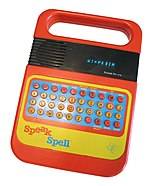
  4. The Texas Instruments Speak & Spell. Of course that is a surprise entry. In 1978 I put one of those things in the hands of my sister who is severely impaired developmentally disabled. She loved it so much that it eventually wore out from so much use. She also learned to spell every one of those words. To me, the Speak & Spell is symbolic of the whole idea of affordable digital electronics + software designed to be owned and used by ordinary people, not just technophiles. I view our smartphones and other modern gadgets as symbolic descendants of the Speak & Spell.
150px-Speak-Spell.jpg


------------------------------------------------------------------------------------------------------
Part 2 is to nominate an individual as the best engineer of the past 100 years.

My nominee is Enrico Fermi (despite the fact that he was trained as a physicist, not as an engineer.) because of his outstanding work on The Manhattan Project. Read about Fermi in "The Making of the Atomic Bomb" by Richard Rhodes.
------------------------------------------------------------------------------------------------------
What engineering achievements or milestones and which individual would you nominate? Give us a small paragraph on each to explain.
 

Attachments

  • 150px-Speak-Spell.jpg
    150px-Speak-Spell.jpg
    6.1 KB · Views: 1,544
  • Like
Likes   Reactions: BillTre, QuantumQuest, Charles Link and 6 others
Engineering news on Phys.org
I'll nominate the Global Positioning System (GPS), because there are lots of great innovations involved, and it is such a game-changer for navigation and other endeavors. In a strange twist, it also has helped to reduce collateral casualties in military bombing attacks. I know I couldn't make it to many of my shifts in strange places without navigation aided by GPS on my phone...

:smile:

https://en.wikipedia.org/wiki/Global_Positioning_System
 
  • Like
Likes   Reactions: scottdave, BillTre, mfb and 2 others
1) Best engineering achievement of last 100 years:
The design and (relatively) inexpensive implementations of a "personal computer";
  • mobile by one human thus portable.
  • seamlessly communicates with other such devices over public networks,
  • provides access to knowledge and data -bases across world wide web (www).
  • usable by nearly all humans with basic training and language skills.
  • identical device used by specialists only requiring additional software packages.
 
  • Like
Likes   Reactions: DennisN, BillTre, mfb and 3 others

Attachments

  • upload_2019-1-13_15-47-57.jpeg
    upload_2019-1-13_15-47-57.jpeg
    29 KB · Views: 1,592
  • Like
Likes   Reactions: Klystron
How about a smart phone? I think a device that knows where you are, can tap into the world's store of knowledge, can communicate with most of the rest of the people in the world, and fits in your pocket would be viewed as miraculous by people from even 100 years ago.
 
  • Like
Likes   Reactions: mfb, Ibix, Klystron and 1 other person
Klystron said:
1) Best engineering achievement of last 100 years:
The design and (relatively) inexpensive implementations of a "personal computer";
  • mobile by one human thus portable.
  • seamlessly communicates with other such devices over public networks,
  • provides access to knowledge and data -bases across world wide web (www).
  • usable by nearly all humans with basic training and language skills.
  • identical device used by specialists only requiring additional software packages.
Part 2: paraphrase Nominate the most illustrious engineer or engineering team during this period:
  1. trace back personal computer (PC) mathematical origins to Poisson, Cantor, von Neumann, many others.
  2. dedicated engineering teams such as the mouse invention at SRI International, soft-wired analog computers (1940's on), and integrated circuits (IC) mounted on printed circuit boards (PCB) (1960's);
  3. software and computer architecture inventors such as Wirth, Knuth, et.al. From Wikipedia History computer architecture:
    • The first documented computer architecture was in the correspondence between Charles Babbage and Ada Lovelace describing the analytical engine.
    • When building the computer Z1 in 1936, Konrad Zuse described in two patent applications for his future projects that machine instructions could be stored in the same storage used for data, i.e. the stored-program concept.[3][4]
    • Two other early and important examples are:

note: As a child I asked my father "Who invented television?". After giving credit for particular components such as the cathode ray tube (CRT), the vacuum tube in general and super-heterodyne receiver, my father replied "No single engineer invented television. Many people worked on system components. We saw a need and filled it with available technology.".
https://en.wikipedia.org/wiki/Superheterodyne_receiver
 
Klystron said:
trace back personal computer (PC) mathematical origins to Poisson, Cantor, von Neumann, many others.
Klystron said:
software and computer architecture inventors such as Wirth, Knuth, et.al. From Wikipedia History computer architecture:
Not sure I agree with this. The invention of the Personal Computer may have depended on there being giant computers around, but so much more went into the Personal Computer, IMO. It's like saying that the invention of the transistor depended on the invention of glass from melted sand...
 
  • Like
Likes   Reactions: Klystron
Putting a man on the Moon is darned cool.

But the invention of the personal computer has transformed the world. It's the parent of all phones, Speak & Spells, GPS systems and the internet.
 
  • Like
Likes   Reactions: anorlunda, Klystron and berkeman
  • #10
berkeman said:
Not sure I agree with this. The invention of the Personal Computer may have depended on there being giant computers around, but so much more went into the Personal Computer, IMO. It's like saying that the invention of the transistor depended on the invention of glass from melted sand...

No, I mean: yes. I rushed my answer to the second part of the original question. Particularly after the distinction "smart phone" from "small computer". Where to draw lines in the technological sands and say "This led to small hand-held computers" considering small computers are themselves components of so much modern tech?
 
Last edited:
  • #11
I lean in the direction @anorlunda took:

For the greatest good to the greatest portion of the world population, A 3-way tie between: Vaccinations, Power grids of the world, and Antibiotics

For the most astounding engineering feat: Putting a man on The Moon. With a close second being the launch of Sputnik, the first artificial satellite. (as a teenager I tuned into the Sputnik beacon on the shortwave radio in my bedroom)
 
  • Like
Likes   Reactions: BillTre, Klystron and anorlunda
  • #12
Tom.G said:
I lean in the direction @anorlunda took:

For the greatest good to the greatest portion of the world population, A 3-way tie between: Vaccinations, Power grids of the world, and Antibiotics

For the most astounding engineering feat: Putting a man on The Moon. With a close second being the launch of Sputnik, the first artificial satellite. (as a teenager I tuned into the Sputnik beacon on the shortwave radio in my bedroom)

Vaccinations could be considered more than 100 years old: https://en.wikipedia.org/wiki/Smallpox_vaccine (I thought it was around the time of Jenner, 1800, but to my surprise it could be argued to be even older).
 
  • #13
Not unusual with deep engineering ideas, this original post contains complexity and subtlety beyond the principle statements. Having two sections {concept, engineer} makes it even more interesting. I'm tempted to arbitrarily divide Engineering into two 'camps', named 'large systems' and 'small devices'.

Large Systems: greatest feats: include OP -Texas Instruments +highway system
  1. lunar exploration
  2. power grid
  3. space exploration -- unmanned probes, HST (see below)
  4. modern health care with vaccination programs
  5. global transportation networks.
  6. automated factories.
Small Devices: great feats:
  1. Texas Instruments "speak and spell"
  2. TI early mini-computers
  3. personal computers (+networks)
  4. smart phones (networks)
  5. television (networks)
  6. artificial satellites -- sputnik,..., Global Positioning System (GPS), Hubble Space Telescope (HST)
  7. robots: humanoid (human form and emulation) & machine-like.
 
Last edited:
  • Like
Likes   Reactions: Demystifier and anorlunda
  • #14
Although Klystron mentioned it in passing, I think one of the very most significant feats in the last 100 years in terms of the impact it has had on the demographics and economy of the United States is the Eisenhower Interstate Highway System. It is the biggest single infrastructure underpinning all the rest of the achievements.

You might say that it is silly to think that the highway system had much to do with, for example, putting a man on the moon, but I would strongly disagree. People generally don't realize the extent to which the growth of the American economy since WWII is based on the highway system.
 
  • Like
Likes   Reactions: scottdave, BillTre, Borg and 3 others
  • #15
anorlunda said:
Part 1, best achievements.

It isn't clear what "best" means: hardest to achieve? Biggest impact? Coolest? I guess that's part of the fun, each poster can decide what "best" means to them.

As far as "biggest impact" the already mentioned power grid, computer/phone, medical advances are hard to argue with. Also in this category I would place transportation advances (automobile and aviation). I think a major transformation of the past 100 years has been the shrinking of the globe; we have gone from being villagers to citizens of the world. True, this is mostly an effect on the first-world population but I think it led to many of the other changes including the internet: if you are a 5th generation subsistence farmer in say, upstate New York, you probably don't care too much what your counterparts in China, Burma, or Australia are thinking about. Broadened horizons due to travel (first, by car from the farm to the big city, and then later by airplane to "overseas") led to more interest in other people and other cultures. Fuzzy, incorrect, biased, and frightful notions of other people in other places are being replaced by first hand knowledge gained by people leaving their homes.

EDIT -- Looks like phinds beat me to it :)
 
  • Like
Likes   Reactions: anorlunda and Klystron
  • #16
gmax137 said:
I think a major transformation of the past 100 years has been the shrinking of the globe; we have gone from being villagers to citizens of the world.

I'd day er, say the Boeing 707 earns a spot in the 'engineering accomplishments,
they fixed the troubles with Britain's "Comet" by hanging the engines out below and ahead of the wing , where turbine-self-disassembly left the wing spar intact.

The venerable DC3 shrunk the continent but the 707 ushered in globe-trotting..
 
Last edited:
  • Like
Likes   Reactions: anorlunda, BillTre, Asymptotic and 1 other person
  • #17
jim hardy said:
they fixed the troubles with Britain's "Comet" by hanging the engines out below and ahead of the wing , where turbine-self-disassembly left the wing spar intact.
How many times was this actually an issue?
Did 707s have spontaneous turbine self-disassembly that did not result in involuntary landscape intersection?
 
  • #18
jim hardy said:
I'd day the Boeing 707...

You probably meant to type... ? . " I'd say the Boeing 707... "
But, speaking of 707s...

On 14 January 2019 ... :frown:

.
 
  • Like
Likes   Reactions: jim hardy
  • #19
DaveC426913 said:
How many times was this actually an issue?

Apparently Comet's troubles were not engines but stress cracking in the fuselage, mea culpa.

from a search on "uncontained engine failures"

https://en.wikipedia.org/wiki/Turbine_engine_failure said:
Notable uncontained engine failure accidents[edit]
  • National Airlines Flight 27: a McDonnell Douglas DC-10 flying from Miami to San Francisco in 1973 had an overspeed failure of a General Electric CF6-6, resulting in one fatality.[10]
  • Two LOT Polish Airlines flights, both Ilyushin Il-62s, suffered catastrophic uncontained engine failures in the 1980s. The first was in 1980 on LOT Polish Airlines Flight 7 where flight controls were destroyed, killing all 87 on board. In 1987, on LOT Polish Airlines Flight 5055, the aircraft's inner left (#2) engine, damaged the outer left (#1) engine, setting both on fire and causing loss of flight controls, leading to an eventual crash, which killed all 183 people on board. In both cases, the turbine shaft in engine #2 disintegrated due to production defects in the engines' bearings, which were missing rollers.[11]
  • Cameroon Airlines Flight 786: a Boeing 737 flying between Douala and Garoua, Cameroon in 1984 had a failure of a Pratt & Whitney JT8D-15 engine. 2 people died.[12]
  • British Airtours Flight 28M: a Boeing 737 flying from Manchester to Corfu suffered an uncontained engine failure and fire on takeoff. The takeoff was aborted and the plane turned onto a taxiway and began evacuating. 55 passengers and crew were unable to escape and died of smoke inhalation. The accident led to major changes to improve the survivalibility of aircraft evacuations.[13]
  • United Airlines Flight 232: a McDonnell Douglas DC-10 flying from Denver to Chicago in 1989. The failure of the rear General Electric CF6-6 engine caused the loss of all hydraulics forcing the pilots to attempt a landing using differential thrust. 111 fatalities. Prior to the United 232 crash, the probability of a simultaneous failure of all three hydraulic systems was considered as low as one in a billion. However, the statistical models used to come up with this figure did not account for the fact that the number-two engine was mounted at the tail close to all the hydraulic lines, nor the possibility that an engine failure would release many fragments in many directions. Since then, more modern aircraft engine designs have focused on keeping shrapnel from penetrating the cowling or ductwork, and have increasingly utilized high-strength composite materialsto achieve the required penetration resistance while keeping the weight low.
  • Baikal Airlines Flight 130: a starter of engine No. 2 on a Tu-154 heading from Irkutsk to Domodedovo, Moscow, failed to stop after engine startup and continued to operate at over 40,000 rpm with open bleed valves from engines, which caused an uncontained failure of the starter. A detached turbine disk damaged fuel and oil supply lines (which caused fire) and hydraulic lines. The fire-extinguishing system failed to stop the fire, and the plane diverted back to Irkutsk. However, due to loss of hydraulic pressure the crew lost control of the plane, which subsequently crashed into a dairy farm killing all 124 on board and 1 on the ground.[14][15]
  • Delta Air Lines Flight 1288: a McDonnell Douglas MD-88 flying from Pensacola, Florida to Atlanta in 1996 had a cracked compressor rotor hub failure on one of its Pratt & Whitney JT8D-219 engines. 2 died.[16]
  • Qantas Flight 32: an Airbus A380 flying from London Heathrow to Sydney (via Singapore) in 2010 had an uncontained failure in a Rolls-Royce Trent 900 engine. The failure was found to have been caused by a misaligned counter bore within a stub oil pipe leading to a fatigue fracture. This in turn led to an oil leakage followed by an oil fire in the engine. The fire led to the release of the Intermediate Pressure Turbine (IPT) disc. The airplane, however, landed safely. This led to the grounding of the entire Qantas A380 fleet.[17]
  • British Airways Flight 2276: a Boeing 777-200ER flying from Las Vegas to London in 2015 suffered an uncontained engine failure on its #1 GE90 engine during takeoff, resulting in a large fire on its port side. The aircraft successfully aborted takeoff and the plane was evacuated with no fatalities.[18]
  • Southwest Airlines Flight 3472: a Boeing 737-700 flying from New Orleans to Orlando in 2016 suffered an uncontained engine failure on its #1 engine during climb resulting in a puncture to left side of the fuselage causing a loss of cabin pressure and damage to the wing and empennage. The aircraft diverted to Pensacola International Airport, FL for a safe landing on runway 17 about 20 minutes later without further incident. There were no injuries.[19]
  • Southwest Airlines Flight 1380: a Boeing 737-700 flying from New York to Dallas in 2018 suffered an uncontained engine failure on its #1 engine during climb resulting in a puncture to left side of the fuselage causing a loss of cabin pressure and damage to the wing and empennage. The aircraft diverted to Philadelphia International Airport, PA for a safe landing. There was one fatality.[20]
  • American Airlines Flight 383: a Boeing 767-300ER flying from Chicago to Miami in 2016 suffered an uncontained engine failure on its #2 engine during takeoff resulting in a large fire which destroyed the outer right wing. The aircraft aborted takeoff and was evacuated with 21 minor injuries, but no fatalities.[21]
  • Air France Flight 66: an Airbus A380, registration F-HPJE performing flight from Paris Charles de Gaulle (France) to Los Angeles, CA (USA), was enroute at FL370 about 200nm southeast of Nuuk (Greenland) when it suffered a catastrophic engine failure in 2017. The crew descended the aircraft to FL310 and diverted to Goose Bay, NL (Canada) for a safe landing about 2 hours later.[22]

from https://www.nbcnews.com/storyline/a...ed-serious-airbus-a380-engine-failure-n806301

upload_2019-1-15_0-46-38.png
 

Attachments

  • upload_2019-1-15_0-46-38.png
    upload_2019-1-15_0-46-38.png
    66.3 KB · Views: 1,466
  • #20
Ford Model T. keep it simple guys.
 
  • Like
Likes   Reactions: Klystron, anorlunda and jackwhirl
  • #21
DaveC426913 said:
Did 707s have spontaneous turbine self-disassembly that did not result in involuntary landscape intersection?

If an involuntary landscape intersection includes an emergency landing, which should be the case, probably not... the above airplane did have a spontaneous unscheduled turbine self-disassembly...
Wikipedia said:
It was substantially damaged by an uncontained engine failure on 3 August 2009... an emergency landing was made at Ahvaz
Lithobraking would seem to be one causative factor leading to the deconstructive deceleration, and fatalities, in today's crash...

.
 
Last edited:
  • #22
Oh, and BTW, to keep this thread basically on topic... if we're going to talk "engineers", I"d day say during his time, Kelly Johnson was right up there...

Wikipedia said:
Hall Hibbard, Johnson's Lockheed boss, referring to Johnson's Swedish ancestry once remarked to Ben Rich: "That damned Swede can actually see air."
220px-Skunk_works_Logo.svg.png


Skunk Works ...

.
 

Attachments

  • 220px-Skunk_works_Logo.svg.png
    220px-Skunk_works_Logo.svg.png
    4 KB · Views: 865
  • Like
Likes   Reactions: anorlunda and Asymptotic
  • #23
The Bic ball point pen.

Actually ball point pens were around years before.
The first patent in 1888, and manufacture, but that item was unsuccessful for a variety of reasons.
Improvements along the way did lead to a ball point pen for sale.

What Bic did was drive the market price down with competition through an advertising campaign " Writes the First time, Every Time".
As a result kids in school, and every one on the street could now afford a practical pen, and to not have to experience the messy filling of a fountain pen from a bottle of ink , although there was fountain pen with disposable capsule used in school and throughout as late as the 70s or 80s, in NA.

As an aside, the mixing of inks components was also key to the ball point pen success.
 
  • Like
Likes   Reactions: anorlunda and Klystron
  • #24
If it can still be included in the past 100 years, my vote is for indoor plumbing. Nothing else comes close.

But other engineering achievements that should be considered are:
1. Manmade fiber manufacture
2. Desalination of water
3. Oil and gas production and refining
4. Advances in automotive technology
5. Pharmaceuticals manufacture
6. One word...Plastics
7. Nuclear Power technology
 
  • Like
Likes   Reactions: DennisN, anorlunda, BillTre and 1 other person
  • #25
Well I don't think you might enjoy this one very much, but I think the Haber process for Ammonia synthesis has to be mentioned (1909).

Ammonia synthesis loop is crucial for the production of fertilizers (it was a real problem at the beginning of the 20th century) and without this achievement the population growth in the last 100 years would not have been possible.

From wikipedia:

https://en.wikipedia.org/wiki/Haber_process said:
With average crop yields remaining at the 1900 level the crop harvest in the year 2000 would have required nearly four times more land and the cultivated area would have claimed nearly half of all ice-free continents, rather than under 15% of the total land area that is required today.[19]

Due to its dramatic impact on the human ability to grow food, the Haber process served as the "detonator of the population explosion", enabling the global population to increase from 1.6 billion in 1900 to today's 7 billion.[20] Nearly 50% of the nitrogen found in human tissues originated from the Haber-Bosch process.

Plus, I think it is the very first process every Chemical Engineer sees. When I first studied it I was really impressed! I think it embraces all the principles of Chemical Engineering and it is IMHO the most iconic process of the discipline.
 
  • Like
Likes   Reactions: Asymptotic, anorlunda, BillTre and 6 others
  • #26
This thread made me think of a History Channel series called "The men who built America". The series had its failings and a lot of it was more than 100 years ago. However, it was interesting to see how the steel, oil, rail, electricity and automobile industries all came together at the turn of the century.
 
  • Like
Likes   Reactions: anorlunda and jim hardy
  • #27
Borg said:
This thread made me think of a History Channel series called "The men who built America". The series had its failings and a lot of it was more than 100 years ago. However, it was interesting to see how the steel, oil, rail, electricity and automobile industries all came together at the turn of the century.
I agree. Also interesting to see how the "robber barons" competed with each other really viciously.
 
  • Like
Likes   Reactions: Borg
  • #28
A personal list of the five things I'd find it hardest to live without:

1) The electric kettle. I was in Sicily at Christmas and the apartment we rented had no kettle. We had to boil water using a pan on the gas cooker. What a palaver just to make a cup of tea!
2) The modern bicycle. I live in London and there is no better way to get around.
3) Modern climbing equipment: crampons, ice axes, ropes, camming devices. And, especially, if it wasn't for walking poles, my knees would be shot by now and I'd be a retired mountaineer. These collectively open up a whole world that would otherwise be inaccessible without undue risk.
4) The shower. I read somewhere that those who prefer baths have a (Freudian) subconscious desire to return to the womb. All I know is that as soon as I am in a bath I want to get out.
5) The personal computer and the Internet. It would be dishonest not to include this.
 
  • Like
Likes   Reactions: Klystron and OmCheeto
  • #29
MidgetDwarf said:
Ford Model T. keep it simple guys.
Produced since 1908, thus >100 years. Besides, it was the production line that was the revolution there, wasn't it?

I vote for the transistor.
 
  • Like
Likes   Reactions: DennisN, anorlunda and Klystron
  • #30
jackwhirl said:
Produced since 1908, thus >100 years. Besides, it was the production line that was the revolution there, wasn't it?

I vote for the transistor.
both good points.
 

Similar threads

Replies
12
Views
3K
Replies
23
Views
3K
  • · Replies 3 ·
Replies
3
Views
3K
  • · Replies 5 ·
Replies
5
Views
2K
  • · Replies 5 ·
Replies
5
Views
2K
  • · Replies 7 ·
Replies
7
Views
14K
Replies
5
Views
3K
  • · Replies 3 ·
Replies
3
Views
4K
  • · Replies 11 ·
Replies
11
Views
13K
  • · Replies 7 ·
Replies
7
Views
5K