Compare aerodynmics of two cars

  • Thread starter Thread starter Jurgen M
  • Start date Start date
  • Tags Tags
    Cars Compare
Click For Summary
SUMMARY

The Mercedes CLA has a drag coefficient (Cd) of 0.22 for the 180 Blue Efficiency model and 0.23 for the standard 180 model, making it one of the most aerodynamic production cars. In contrast, the CLS C218 has a higher Cd of 0.26, attributed to its wider tires, lack of a flat bottom, and other aerodynamic features. While the CLS has a more streamlined silhouette, its design elements, including a larger frontal area and increased weight, contribute to higher drag and fuel consumption. Modifications to the CLS, such as using narrower tires and a flat bottom, could potentially improve its Cd, but it would still likely consume more fuel than the CLA.

PREREQUISITES
  • Understanding of drag coefficients (Cd) in automotive design
  • Familiarity with aerodynamic principles affecting vehicle performance
  • Knowledge of vehicle weight and its impact on fuel efficiency
  • Awareness of modifications that can enhance vehicle aerodynamics
NEXT STEPS
  • Research aerodynamic modifications for the CLS C218 to improve Cd
  • Explore the impact of tire width on vehicle drag and fuel efficiency
  • Learn about the effects of vehicle weight on aerodynamics and performance
  • Investigate advanced aerodynamic features in modern vehicle design
USEFUL FOR

Automotive engineers, car enthusiasts, and anyone interested in optimizing vehicle aerodynamics and fuel efficiency.

Jurgen M
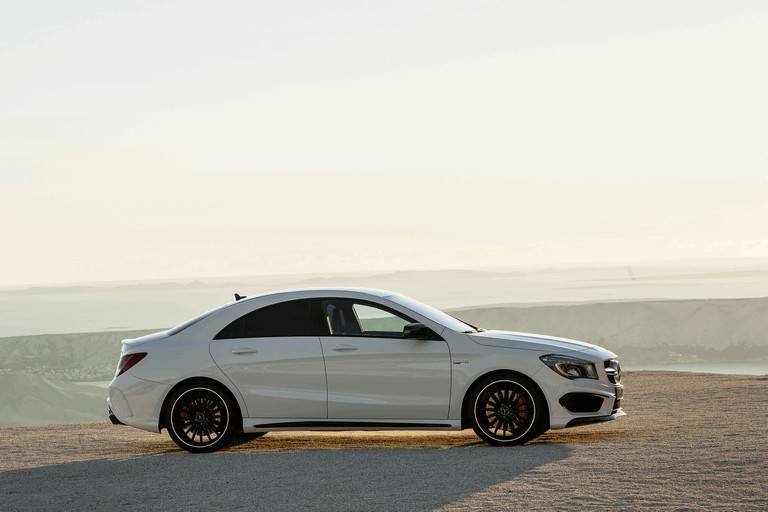
Mercedes CLA has Cd =0.22(180 Blue Efficiency) and Cd=0.23(180).
CLS C218 has 0.26, but CLS has wide tires, no flat bottom and other aero features like CLA.

aero features of CLA:
https://www.car-engineer.com/mercedes-cla-is-the-most-aerodynamic-production-car-of-the-world/

If we compare just body shape ,do you think CLS has better Cd from CLA, for example if we put narrow tires, flat bottom etc maybe CLS will have even better Cd then CLA?

I ask this because CLA is short, rear roofline looks to stubby, rear window+trunk slope is too steep,this can cause flow separation or too steep slope induce low pressure at rear window+trunk.

CLS is longer, more streamlined siluetthe,rear end slope is not so steep.
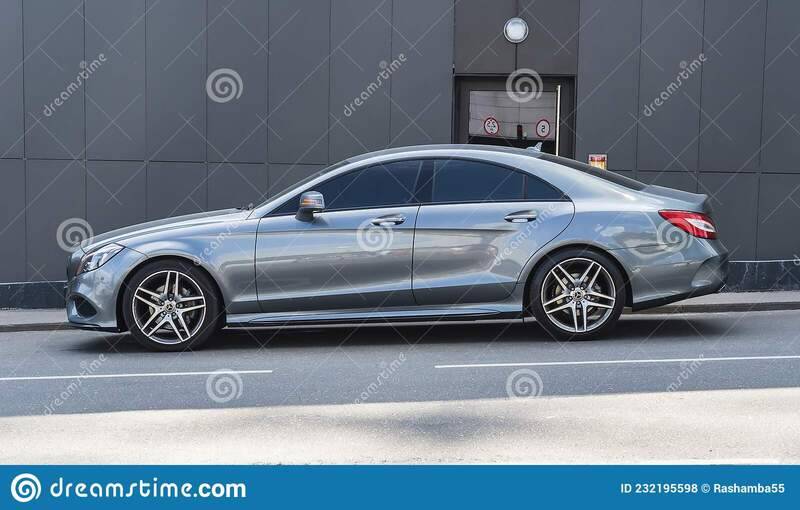
all-building-facade-moscow-russia-august-232195598.jpg
mercedes-benz-cla-c117-45-amg-2013-379557.jpg
 
Physics news on Phys.org
Jurgen M said:
...
If we compare just body shape ,do you think CLS has better Cd from CLA, for example if we put narrow tires, flat bottom etc maybe CLS will have even better Cd then CLA?

I ask this because CLA is short, rear roofline looks to stubby, rear window+trunk slope is too steep,this can cause flow separation or too steep slope induce low pressure at rear window+trunk.

CLS is longer, more streamlined siluetthe,rear end slope is not so steep.
Modifying the CLS C218 car, you could reduce the factory's Cd.

1) The CLS has wide tires because it weights around 1950 kgf, compared to the 1540 kgf of the CA.
2) It also has a frontal footprint area about 4% bigger than the CA.
3) Being longer, it has more drag caused only by skin friction.

Because those three factors mentioned above only, it will still use more fuel after you improve its Cd to match the CA's Cd of 0.22.
 
Lnewqban said:
Modifying the CLS C218 car, you could reduce the factory's Cd.

1) The CLS has wide tires because it weights around 1950 kgf, compared to the 1540 kgf of the CA.
2) It also has a frontal footprint area about 4% bigger than the CA.
3) Being longer, it has more drag caused only by skin friction.

Because those three factors mentioned above only, it will still use more fuel after you improve its Cd to match the CA's Cd of 0.22.
I mean if we compare only car body, which will have better Cd..
 

Similar threads

  • · Replies 21 ·
Replies
21
Views
3K
  • · Replies 82 ·
3
Replies
82
Views
28K
  • · Replies 1 ·
Replies
1
Views
4K
  • · Replies 2 ·
Replies
2
Views
8K